


Non-secretory multiple myeloma: from biology to clinical management
- PMID: 28008276
- PMCID: PMC5171196
- DOI: 10.2147/OTT.S122241
Non-secretory multiple myeloma: from biology to clinical management
Abstract
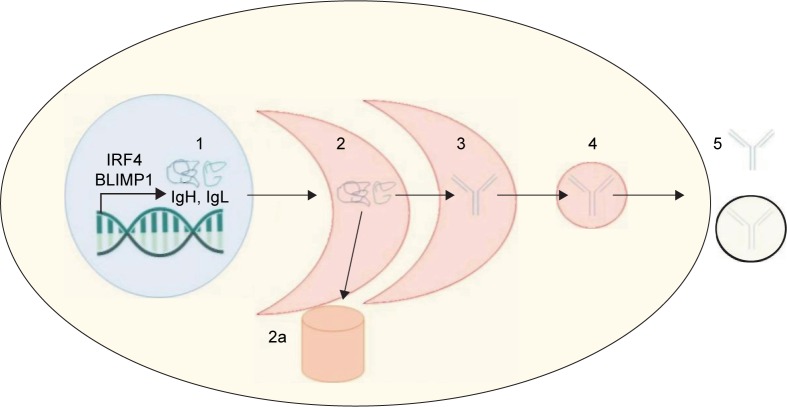
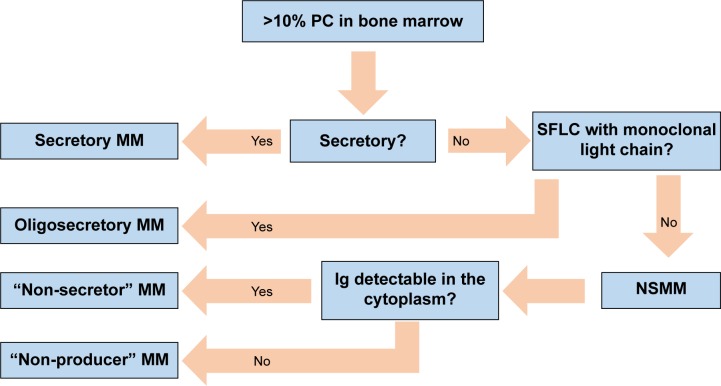
Multiple myeloma (MM) is the second most common hematologic malignancy in the US. It is typically characterized by production of large amounts of defective immunoglobulin (Ig). Diagnosing MM and monitoring treatment response, including eventual relapse, are largely based on sequential measurements of Ig. However, a small subset of MM called non-secretory multiple myeloma (NSMM) produces no detectable Ig. This subset of true NSMM has become even smaller over time, as the advent of the serum free light chain assay has resulted in the majority of NSMM patients being recategorized as light-chain MM - that is, MM cells that produce only the light-chain component of Ig. True forms of NSMM, meaning MM that secretes no monoclonal proteins whatsoever, constitute a distinct entity that is reviewed; definition of NSMM using current detection methods, discuss the biology underpinning NSMM development, and share recommendations for how NSMM should be managed clinically with respect to detection, treatment, and monitoring.
Keywords: immunoglobulin; multiple myeloma; non-secretory.
Conflict of interest statement
Dr Tuchman reports receiving research support, honoraria and speakers’ bureau from Takeda Pharmaceuticals Inc. The authors report no further conflicts of interest in this work.
Figures
References
-
- NIH Myeloma – SEER Stat Fact Sheets. [Accessed July 31, 2016]. Available from: http://seer.cancer.gov/statfacts/html/mulmy.html.
-
- Slifka MK, Ahmed R. Long-lived plasma cells: a mechanism for maintaining persistent antibody production. Curr Opin Immunol. 1998;10(3):252–258. - PubMed
-
- Mehta J, Singhal S. Hyperviscosity syndrome in plasma cell dyscrasias. Semin Thromb Hemost. 2003;29(5):467–471. - PubMed
Publication types
LinkOut - more resources
Full Text Sources
Other Literature Sources
