


Randomized Trial of the Family Intervention: Telephone Tracking-Caregiver for Dementia Caregivers: Use of Community and Healthcare Resources
- PMID: 28008609
- PMCID: PMC5510656
- DOI: 10.1111/jgs.14684
Randomized Trial of the Family Intervention: Telephone Tracking-Caregiver for Dementia Caregivers: Use of Community and Healthcare Resources
Abstract
Objectives: To examine the effects of a telephone-delivered intervention, Family Intervention: Telephone Tracking-Caregiver (FITT-C), on community support and healthcare use by dementia caregivers.
Design: Randomized, controlled trial.
Setting: Academic medical center.
Participants: Dyads (n = 250) of distressed informal dementia caregivers and care recipients.
Intervention: Caregivers were randomly assigned to receive the FITT-C (n = 133) or telephone support (TS; n = 117). Both groups received 16 telephone contacts from a master's-level therapist over 6 months. The FITT-C intervention provided psychoeducation, problem solving, and other directive approaches based on assessment of critical areas (e.g., mood, behavior, family functioning, social support). TS provided supportive therapeutic strategies.
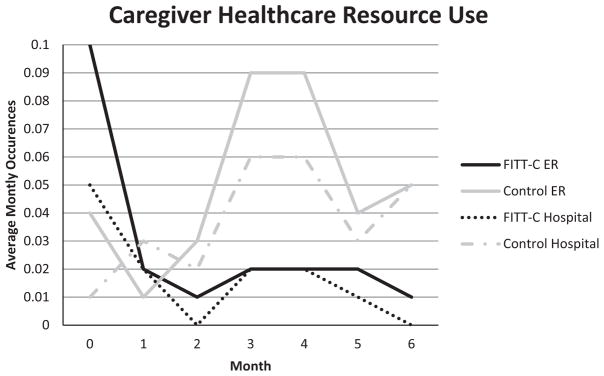
Measurements: Outcome variables were caregiver report of community support service use, number of visits to the emergency department (ED) for caregivers and care recipients, and hospital stays for caregivers during the interventions.
Results: Intervention groups did not differ in demographic characteristics, use of support services, or use of healthcare resources at baseline. Caregivers who received the FITT-C used community support services at end of treatment significantly more than those receiving TS (P = .02). FITT-C caregivers had a significantly lower rate of ED visits (rate difference 9.5%, P = .048) and hospital stays (rate difference 11.4%, P = .01) over the 6-month course of the intervention than TS caregivers. Care recipient use of community or medical resources did not differ according to group.
Conclusion: An entirely telephone-delivered intervention was effective in increasing caregiver engagement in community resources and reducing caregiver use of hospital-based healthcare resources. Results highlight the potential effect of FITT-C on healthcare use.
Keywords: caregiver; dementia; healthcare use; telephone intervention.
© 2016, Copyright the Authors Journal compilation © 2016, The American Geriatrics Society.
Figures
References
Publication types
MeSH terms
Grants and funding
LinkOut - more resources
Full Text Sources
Other Literature Sources
Medical
