


Esophageal Cancer: Associations With (pN+) Lymph Node Metastases
- PMID: 28009736
- PMCID: PMC5405457
- DOI: 10.1097/SLA.0000000000001594
Esophageal Cancer: Associations With (pN+) Lymph Node Metastases
Abstract
Objectives: To identify the associations of lymph node metastases (pN+), number of positive nodes, and pN subclassification with cancer, treatment, patient, geographic, and institutional variables, and to recommend extent of lymphadenectomy needed to accurately detect pN+ for esophageal cancer.
Summary background data: Limited data and traditional analytic techniques have precluded identifying intricate associations of pN+ with other cancer, treatment, and patient characteristics.
Methods: Data on 5806 esophagectomy patients from the Worldwide Esophageal Cancer Collaboration were analyzed by Random Forest machine learning techniques.
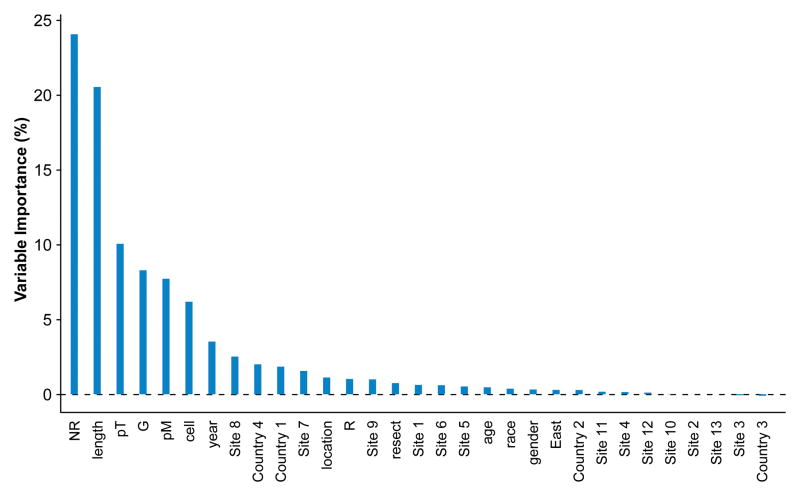
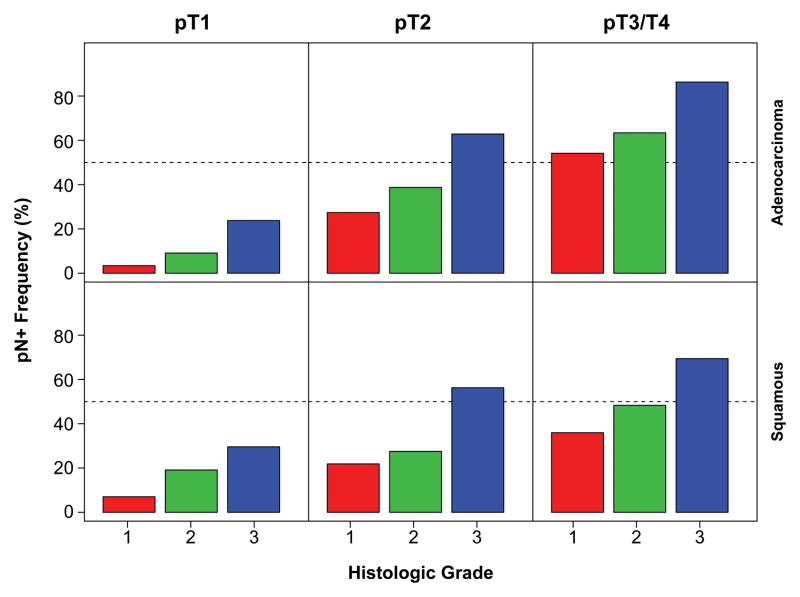
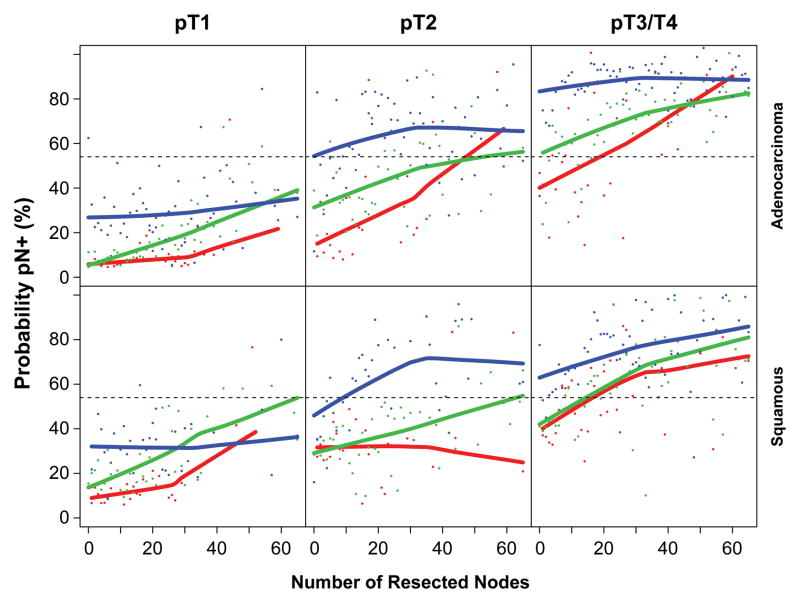
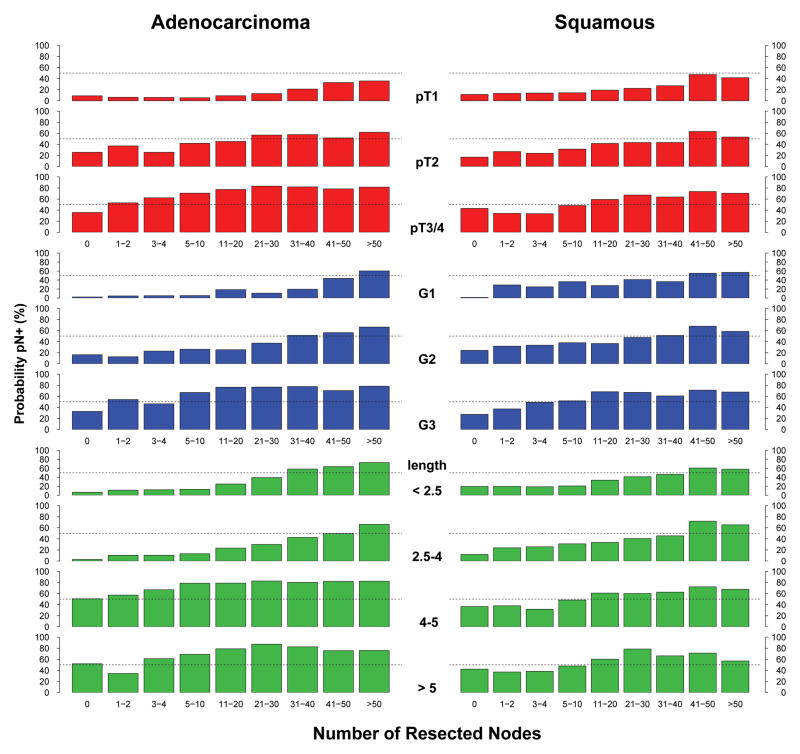
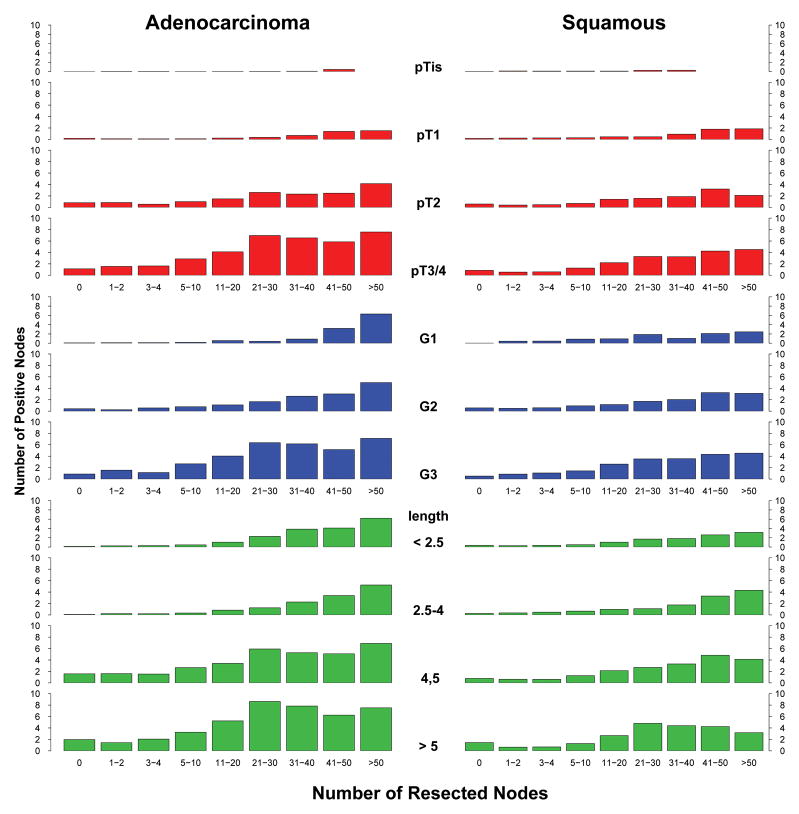
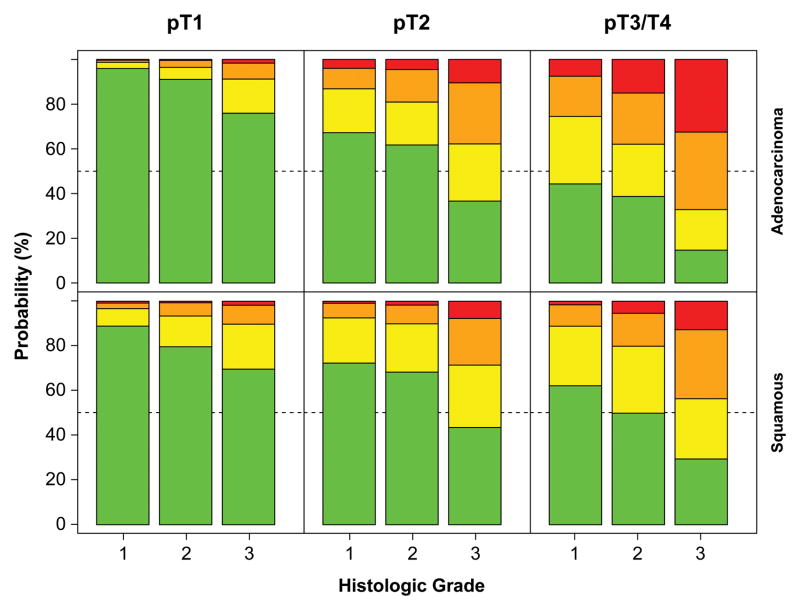
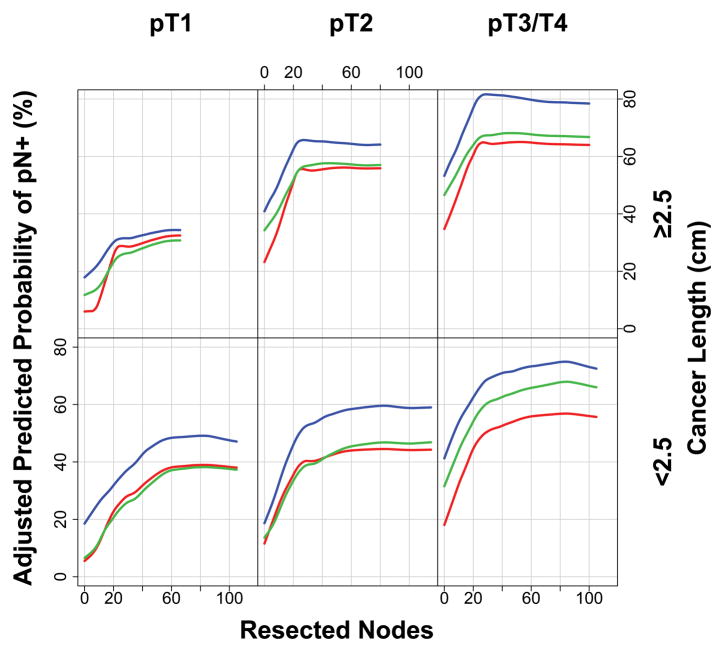
Results: pN+, number of positive nodes, and pN subclassification were associated with increasing depth of cancer invasion (pT), increasing cancer length, decreasing cancer differentiation (G), and more regional lymph nodes resected. Lymphadenectomy necessary to accurately detect pN+ is 60 for shorter, well-differentiated cancers (<2.5 cm) and 20 for longer, poorly differentiated ones.
Conclusions: In esophageal cancer, pN+, increasing number of positive nodes, and increasing pN classification are associated with deeper invading, longer, and poorly differentiated cancers. Consequently, if the goal of lymphadenectomy is to accurately define pN+ status of such cancers, few nodes need to be removed. Conversely, superficial, shorter, and well-differentiated cancers require a more extensive lymphadenectomy to accurately define pN+ status.
Conflict of interest statement
Figures
References
-
- Rice TW, Zuccaro G, Jr, Adelstein DJ, et al. Esophageal carcinoma: depth of tumor invasion is predictive of regional lymph node status. Ann Thorac Surg. 1998;65:787–92. - PubMed
-
- Rice TW, Rusch VW, Apperson-Hansen C, et al. Worldwide Esophageal Cancer Collaboration. Dis Esophagus. 2009;22:1–8. - PubMed
-
- Breiman L. Random forests. Machine Learning. 2001;45:5–32.
-
- Rice TW, Rusch VW, Ishwaran H, et al. Cancer of the esophagus and esophagogastric junction: data-driven staging for the 7th edition of the American Joint Committee on Cancer/International Union Against Cancer Staging Manuals. Cancer. 2010;116:3763–73. - PubMed
Publication types
MeSH terms
Grants and funding
LinkOut - more resources
Full Text Sources
Other Literature Sources
Medical
