


Outside in: The matrix as a modifier of muscular dystrophy
- PMID: 28011285
- PMCID: PMC5262521
- DOI: 10.1016/j.bbamcr.2016.12.020
Outside in: The matrix as a modifier of muscular dystrophy
Abstract
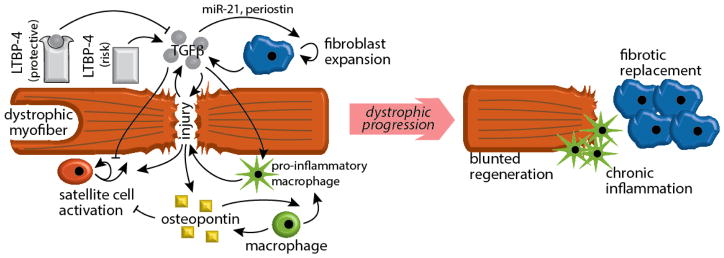
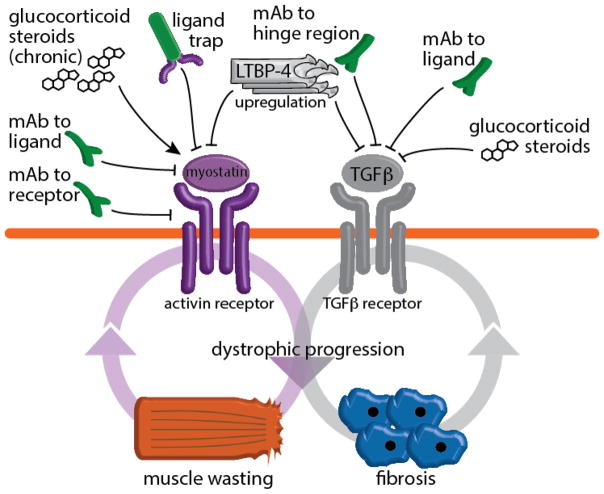
Muscular dystrophies are genetic conditions leading to muscle degeneration and often, impaired regeneration. Duchenne Muscular Dystrophy is a prototypical form of muscular dystrophy, and like other forms of genetically inherited muscle diseases, pathological progression is variable. Variability in muscular dystrophy can arise from differences in the manner in which the primary mutation impacts the affected protein's function; however, clinical heterogeneity also derives from secondary mutations in other genes that can enhance or reduce pathogenic features of disease. These genes, called genetic modifiers, regulate the pathophysiological context of dystrophic degeneration and regeneration. Understanding the mechanistic links between genetic modifiers and dystrophic progression sheds light on pathologic remodeling, and provides novel avenues to therapeutically intervene to reduce muscle degeneration. Based on targeted genetic approaches and unbiased genomewide screens, several modifiers have been identified for muscular dystrophy, including extracellular agonists of signaling cascades. This review will focus on identification and possible mechanisms of recently identified modifiers for muscular dystrophy, including osteopontin, latent TGFβ binding protein 4 (LTBP4) and Jagged1. Moreover, we will review the investigational approaches that aim to target modifier pathways and thereby counteract dystrophic muscle wasting.
Keywords: Duchenne Muscular Dystrophy; Genetic modifiers; Investigational medicinal products; Jagged1; LTBP4; Monoclonal antibodies; Myostatin; Notch; Novel drugs; Osteopontin; SPP1; TGFβ.
Copyright © 2016 Elsevier B.V. All rights reserved.
Conflict of interest statement
EMM has provided consulting services for Novartis, Invitae, Mitobridge, Summitplc, AstraZeneca, and Pfizer and served as a data safety monitor for Eli Lilly and Fibrogen, and has patent application 13/957,100 “Mitigating tissue damage and fibrosis via latent TGFβ protein (LTBP4).
Figures
References
-
- Emery AE. The muscular dystrophies. Lancet. 2002;359:687–695. - PubMed
-
- Monaco AP, Bertelson CJ, Liechti-Gallati S, Moser H, Kunkel LM. An explanation for the phenotypic differences between patients bearing partial deletions of the DMD locus. Genomics. 1988;2:90–95. - PubMed
-
- Mercier S, Toutain A, Toussaint A, Raynaud M, de Barace C, Marcorelles P, Pasquier L, Blayau M, Espil C, Parent P, Journel H, Lazaro L, Andoni Urtizberea J, Moerman A, Faivre L, Eymard B, Maincent K, Gherardi R, Chaigne D, Ben Yaou R, Leturcq F, Chelly J, Desguerre I. Genetic and clinical specificity of 26 symptomatic carriers for dystrophinopathies at pediatric age. Eur J Hum Genet. 2013;21:855–863. - PMC - PubMed
-
- Flanigan KM, Dunn DM, von Niederhausern A, Soltanzadeh P, Gappmaier E, Howard MT, Sampson JB, Mendell JR, Wall C, King WM, Pestronk A, Florence JM, Connolly AM, Mathews KD, Stephan CM, Laubenthal KS, Wong BL, Morehart PJ, Meyer A, Finkel RS, Bonnemann CG, Medne L, Day JW, Dalton JC, Margolis MK, Hinton VJ, Weiss RB C. United Dystrophinopathy Project. Mutational spectrum of DMD mutations in dystrophinopathy patients: application of modern diagnostic techniques to a large cohort. Hum Mutat. 2009;30:1657–1666. - PMC - PubMed
Publication types
MeSH terms
Substances
Grants and funding
LinkOut - more resources
Full Text Sources
Other Literature Sources
Research Materials
Miscellaneous
