


Problems with health information technology and their effects on care delivery and patient outcomes: a systematic review
- PMID: 28011595
- PMCID: PMC7651955
- DOI: 10.1093/jamia/ocw154
Problems with health information technology and their effects on care delivery and patient outcomes: a systematic review
Abstract
Objective: To systematically review studies reporting problems with information technology (IT) in health care and their effects on care delivery and patient outcomes.
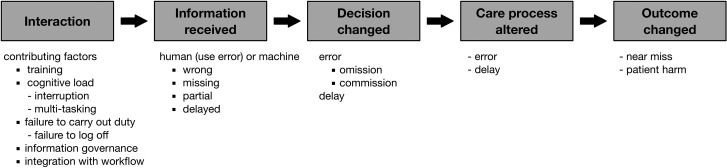
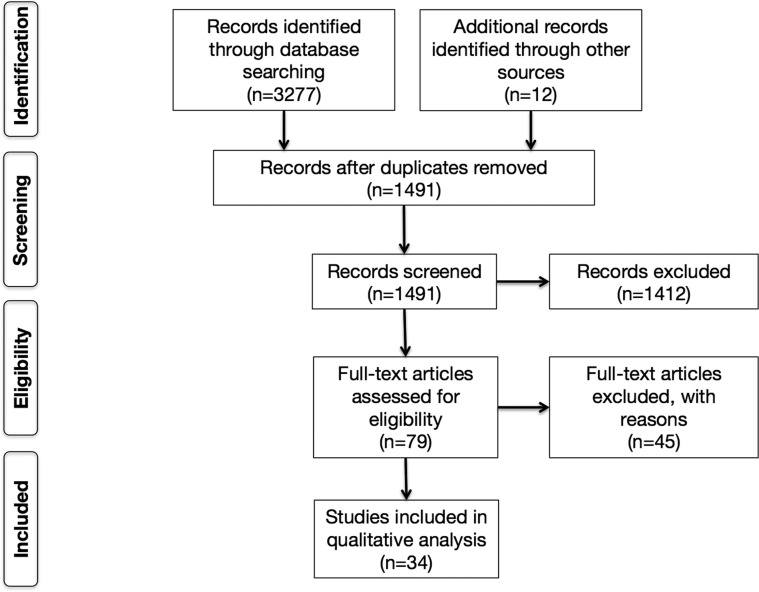
Materials and methods: We searched bibliographic databases including Scopus, PubMed, and Science Citation Index Expanded from January 2004 to December 2015 for studies reporting problems with IT and their effects. A framework called the information value chain, which connects technology use to final outcome, was used to assess how IT problems affect user interaction, information receipt, decision-making, care processes, and patient outcomes. The review was conducted in accordance with the Preferred Reporting Items for Systematic Reviews and Meta-Analyses (PRISMA) statement.
Results: Of the 34 studies identified, the majority ( n = 14, 41%) were analyses of incidents reported from 6 countries. There were 7 descriptive studies, 9 ethnographic studies, and 4 case reports. The types of IT problems were similar to those described in earlier classifications of safety problems associated with health IT. The frequency, scale, and severity of IT problems were not adequately captured within these studies. Use errors and poor user interfaces interfered with the receipt of information and led to errors of commission when making decisions. Clinical errors involving medications were well characterized. Issues with system functionality, including poor user interfaces and fragmented displays, delayed care delivery. Issues with system access, system configuration, and software updates also delayed care. In 18 studies (53%), IT problems were linked to patient harm and death. Near-miss events were reported in 10 studies (29%).
Discussion and conclusion: The research evidence describing problems with health IT remains largely qualitative, and many opportunities remain to systematically study and quantify risks and benefits with regard to patient safety. The information value chain, when used in conjunction with existing classifications for health IT safety problems, can enhance measurement and should facilitate identification of the most significant risks to patient safety.
Keywords: adverse events; health information technology; patient safety; systematic review; unintended consequences.
© The Author 2017. Published by Oxford University Press on behalf of the American Medical Informatics Association. All rights reserved. For Permissions, please email: journals.permissions@oup.com
Figures
References
-
- Bates DW, Gawande AA. Improving safety with information technology. New Engl J Med. 2003;348(25):2526–34. - PubMed
-
- IOM (Institute of Medicine). 2012. Health IT and Patient Safety: Building Safer Systems for Better Care. Washington, DC: The National Academies Press. - PubMed
-
- Sparnon E, Marella WM. The role of the electronic health record in patient safety events. PA-PSRS Patient Saf Advis. 2012;9(4):113–21.
-
- ECRI Institute PSO. 2012. ECRI Institute PSO DEEP DIVE: Health Information Technology. Plymouth Meeting, PA.
-
- Sparnon E. Spotlight on electronic health record errors: papers or electronic hybrid workflows. Pa Patient Saf Advis. 2013;10(2):55–58.
Publication types
MeSH terms
LinkOut - more resources
Full Text Sources
Other Literature Sources
Medical
