


Impact of self-funding on patient experience of oral anticoagulation self-monitoring: a qualitative study
- PMID: 28011812
- PMCID: PMC5223672
- DOI: 10.1136/bmjopen-2016-013123
Impact of self-funding on patient experience of oral anticoagulation self-monitoring: a qualitative study
Abstract
Objective: To explore the impact self-funding has on patient experience of oral anticoagulation therapy self-monitoring.
Design: Semistructured, qualitative interviews were conducted. Transcripts were analysed thematically using constant comparison.
Setting: England.
Participants: Interviewees were participants of the Cohort Study of Anticoagulation Self-Monitoring (CASM). Cohort members were recruited as they bought a monitor from the major manufacturer in the UK. A purposive sample was invited to be interviewed on completion of the 12-month cohort follow-up.
Data: Patient narratives on their experiences of self-monitoring their oral anticoagulation therapy in non-trial conditions.
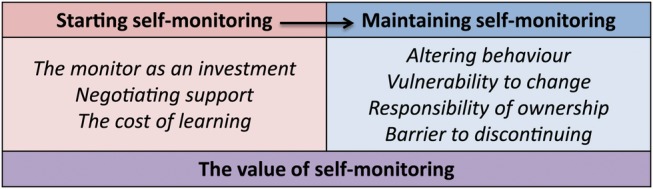
Results: 26 interviews were completed. Interviewees viewed purchasing the monitoring device as a long-term commitment balancing the limitations of clinic-based monitoring against the cost. They were unable to try out the monitor prior to purchase and therefore had to be confident in their own ability to use it. The variable provision of self-monitoring equipment caused resentment, and interviewees were uncomfortable negotiating with healthcare professionals. High test strip usage while learning how to use the monitor caused anxiety that was exacerbated by worries about their cost. However, self-funding did mean that interviewees felt a sense of ownership and were determined to persevere to overcome problems.
Conclusions: Self-funding has negative implications in terms of equity of access; however, the money invested acts as a barrier to discontinuation. If oral anticoagulation therapy self-monitoring devices and consumables were provided free of charge in routine care, the training and support available in England may need to be reviewed to prevent discontinuation rates rising to those observed in clinical trials.
Keywords: QUALITATIVE RESEARCH; self-funding; self-monitoring.
Published by the BMJ Publishing Group Limited. For permission to use (where not already granted under a licence) please go to http://www.bmj.com/company/products-services/rights-and-licensing/.
Conflict of interest statement
Conflicts of Interest: None declared.
Figures
References
-
- Sawicki PT. A structured teaching and self-management program for patients receiving oral anticoagulation: a randomized controlled trial. Working Group for the Study of Patient Self-Management of Oral Anticoagulation. JAMA 1999;281:145–50. - PubMed
-
- Gadisseur AP, Kaptein AA, Breukink-Engbers WG et al. . Patient self-management of oral anticoagulant care vs. management by specialized anticoagulation clinics: positive effects on quality of life. J Thromb Haemost 2004;2:584–91. - PubMed
Publication types
MeSH terms
Substances
LinkOut - more resources
Full Text Sources
Other Literature Sources
Medical
