


Development of a Global Respiratory Severity Score for Respiratory Syncytial Virus Infection in Infants
- PMID: 28011907
- PMCID: PMC5388274
- DOI: 10.1093/infdis/jiw624
Development of a Global Respiratory Severity Score for Respiratory Syncytial Virus Infection in Infants
Erratum in
-
Erratum.J Infect Dis. 2017 Sep 15;216(6):786. doi: 10.1093/infdis/jix303. J Infect Dis. 2017. PMID: 28934442 Free PMC article. No abstract available.
Abstract
Background: Respiratory syncytial virus (RSV) infection in infants has recognizable clinical signs and symptoms. However, quantification of disease severity is difficult, and published scores remain problematic. Thus, as part of a RSV pathogenesis study, we developed a global respiratory severity score (GRSS) as a research tool for evaluating infants with primary RSV infection.
Methods: Previously healthy infants <10 months of age with RSV infections representing the spectrum of disease severity were prospectively evaluated. Clinical signs and symptoms were collected at 3 time points from hospitalized infants and those seen in ambulatory settings. Data were also extracted from office, emergency department, and hospital records. An unbiased data-driven approach using factor analysis was used to develop a GRSS.
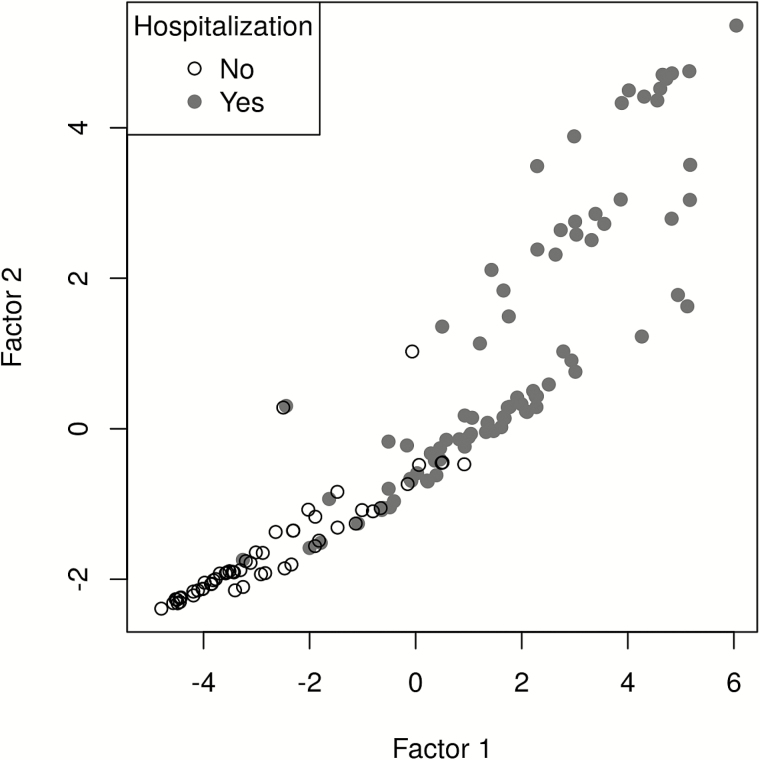
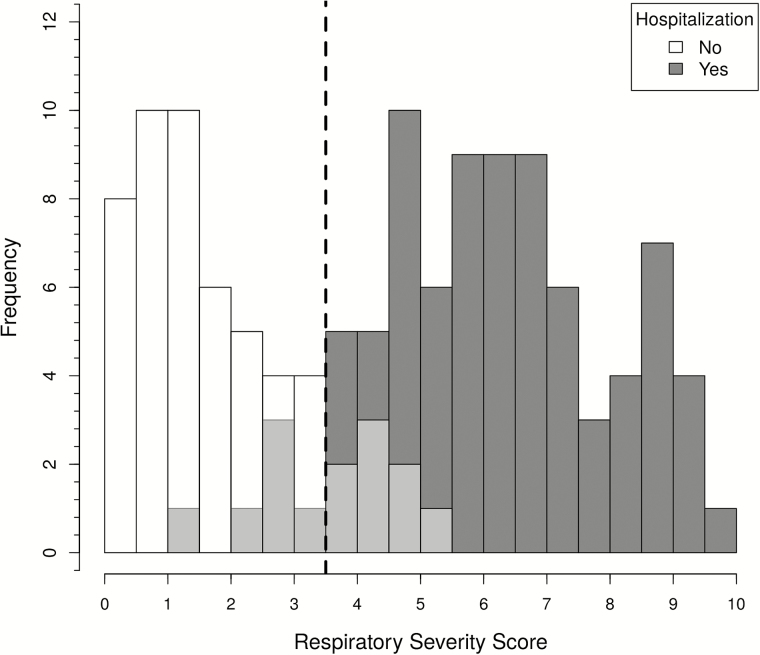
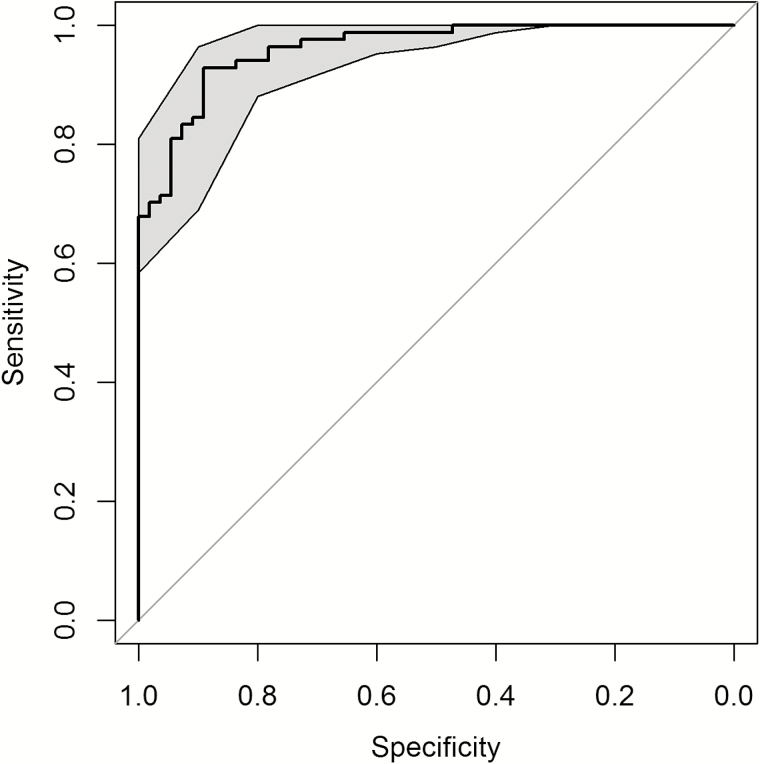
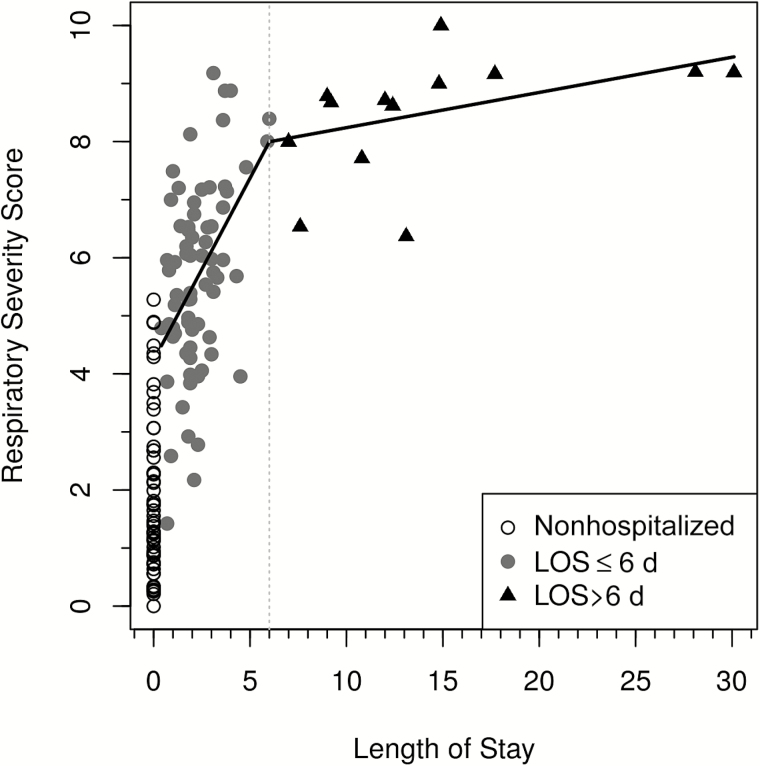
Results: A total of 139 infants (84 hospitalized and 55 nonhospitalized) were enrolled. Using hospitalization status as the output variable, 9 clinical variables were identified and weighted to produce a composite GRSS. The GRSS had an area under the receiver operator curve of 0.961. Construct validity was demonstrated via a significant correlation with length of stay (r = 0.586, P < .0001).
Conclusions: Using routine clinical variables, we developed a severity score for infants with RSV infection that should be useful as an end point for investigation of disease pathogenesis and as an outcome measure for therapeutic interventions.
Keywords: Lower respiratory tract infection; respiratory severity score; respiratory syncytial virus; upper respiratory tract infection.
© The Author 2016. Published by Oxford University Press for the Infectious Diseases Society of America. All rights reserved. For permissions, e-mail: journals.permissions@oup.com.
Figures
References
-
- Hall CB. The burgeoning burden of respiratory syncytial virus among children. Infect Disord Drug Targets 2012; 12:92–7. - PubMed
-
- Shay DK, Holman RC, Newman RD, Liu LL, Stout JW, Anderson LJ. Bronchiolitis-associated hospitalizations among US children, 1980–1996. JAMA 1999; 282:1440–6. - PubMed
-
- Stein RT, Martinez FD. Respiratory syncytial virus and asthma: still no final answer. Thorax 2010; 65:1033–4. - PubMed
-
- Stein RT, Sherrill D, Morgan WJ, et al. Respiratory syncytial virus in early life and risk of wheeze and allergy by age 13 years. Lancet 1999; 354:541–5. - PubMed
-
- Bekhof J, Reimink R, Brand PL. Systematic review: insufficient validation of clinical scores for the assessment of acute dyspnoea in wheezing children. Paediatr Respir Rev 2014; 15:98–112. - PubMed
MeSH terms
Grants and funding
LinkOut - more resources
Full Text Sources
Other Literature Sources
Medical
Molecular Biology Databases
