


Fluorescence Amplification Method for Forward Genetic Discovery of Factors in Human mRNA Degradation
- PMID: 28017590
- PMCID: PMC5301997
- DOI: 10.1016/j.molcel.2016.11.032
Fluorescence Amplification Method for Forward Genetic Discovery of Factors in Human mRNA Degradation
Abstract
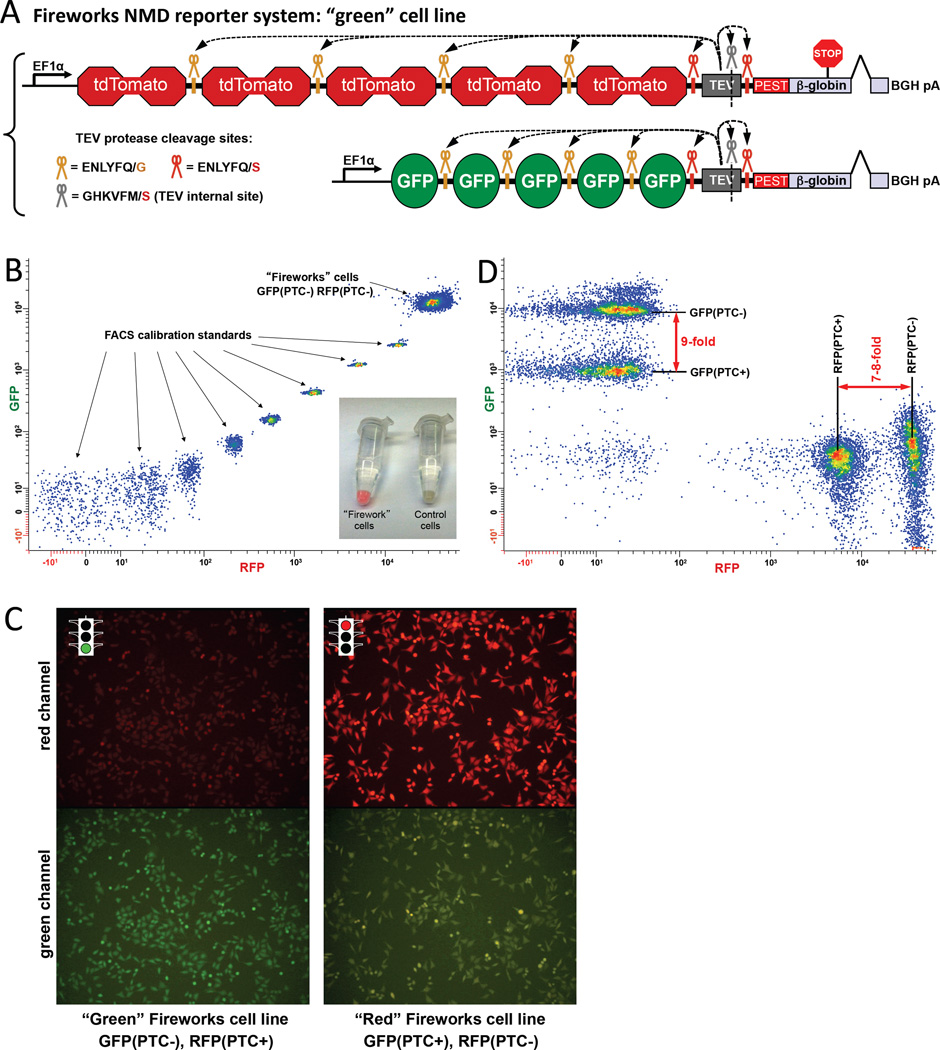
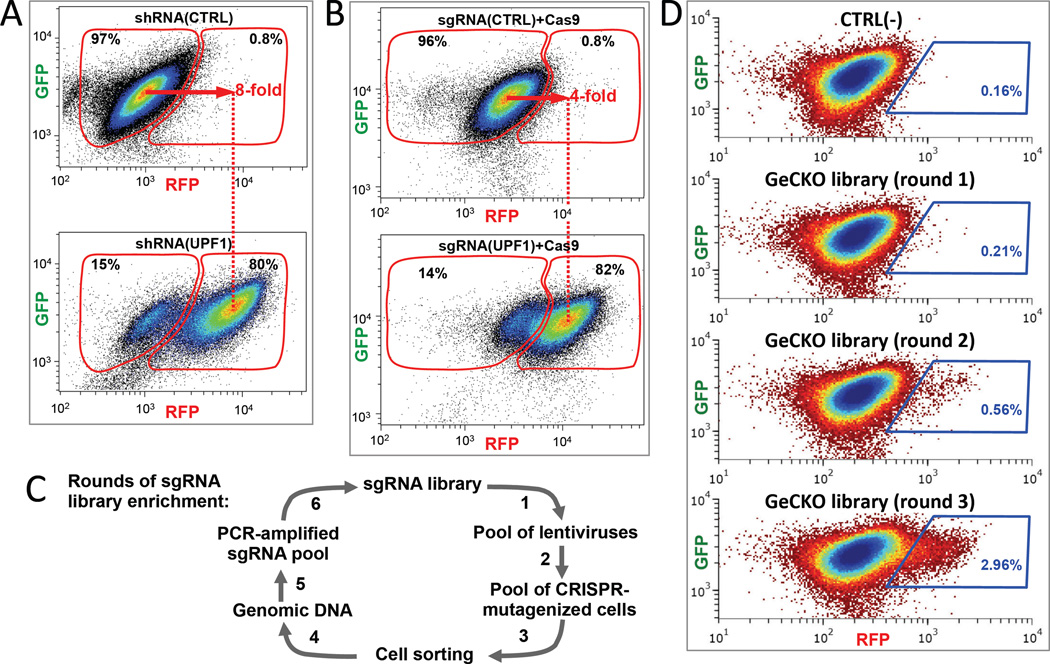
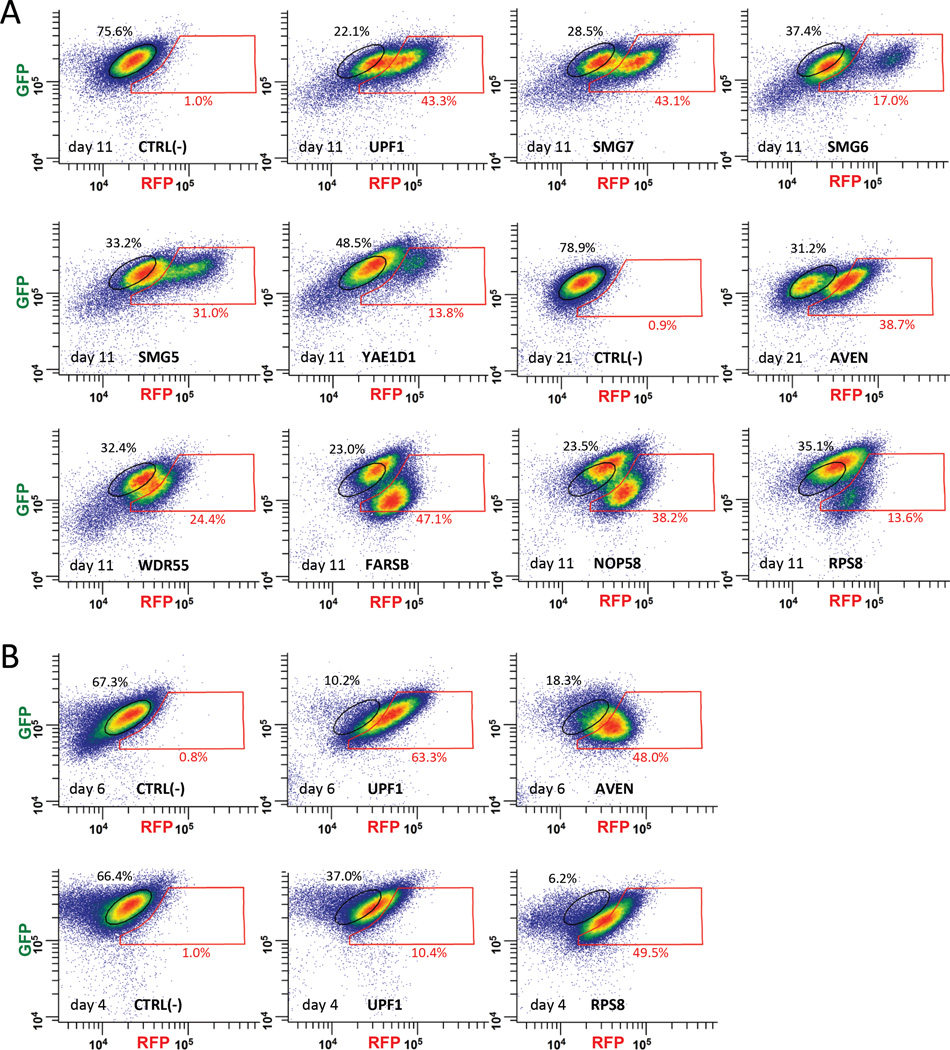
Nonsense-mediated decay (NMD) degrades mRNAs containing a premature termination codon (PTC). PTCs are a frequent cause of human genetic diseases, and the NMD pathway is known to modulate disease severity. Since partial NMD attenuation can potentially enhance nonsense suppression therapies, better definition of human-specific NMD is required. However, the majority of NMD factors were first discovered in model organisms and then subsequently identified by homology in human. Sensitivity and throughput limitations of existing approaches have hindered systematic forward genetic screening for NMD factors in human cells. We developed a method of in vivo amplification of NMD reporter fluorescence (Fireworks) that enables CRISPR-based forward genetic screening for NMD pathway defects in human cells. The Fireworks genetic screen identifies multiple known NMD factors and numerous human candidate genes, providing a platform for discovery of additional key factors in human mRNA degradation.
Copyright © 2017 Elsevier Inc. All rights reserved.
Figures
References
-
- Bachmair A, Finley D, Varshavsky A. In vivo half-life of a protein is a function of its amino-terminal residue. Science. 1986;234:179–186. - PubMed
-
- Barbosa I, Haque N, Fiorini F, Barrandon C, Tomasetto C, Blanchette M, Le Hir H. Human CWC22 escorts the helicase eIF4AIII to spliceosomes and promotes exon junction complex assembly. Nat Struct Mol Biol. 2012;19:983–990. - PubMed
MeSH terms
Substances
Grants and funding
LinkOut - more resources
Full Text Sources
Other Literature Sources
Research Materials
