


Well-Being in Residency: A Systematic Review
- PMID: 28018531
- PMCID: PMC5180521
- DOI: 10.4300/JGME-D-15-00764.1
Well-Being in Residency: A Systematic Review
Abstract
Background: Rates of physician burnout have increased in recent years, and high burnout levels are reported by physicians in training.
Objective: This review of the research on resident well-being seeks to identify factors associated with well-being, summarize well-being promotion interventions, and provide a framework for future research efforts.
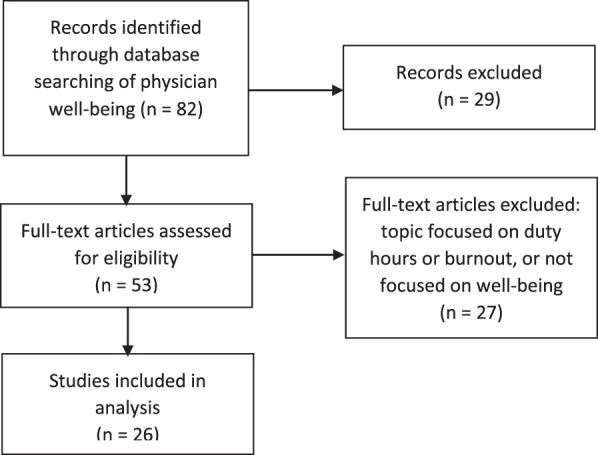
Methods: Keywords were used to search PubMed, PsycINFO, and MEDLINE. Studies included were conducted between 1989 and 2014. The search yielded 82 articles, 26 which met inclusion criteria, and were assessed using the Medical Education Research Study Quality Instrument.
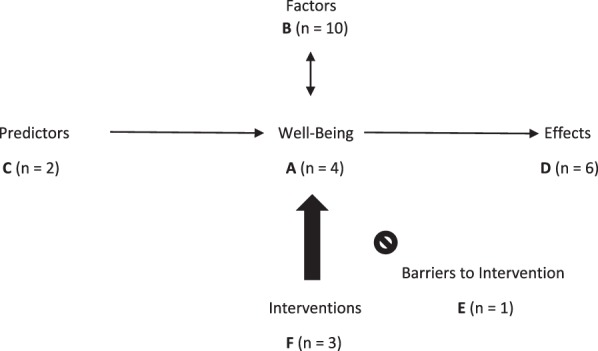
Results: Articles measured resident well-being and associated factors, predictors, effects, barriers, as well as interventions to improve well-being. Factors identified in psychological well-being research-autonomy, building of competence, and strong social relatedness-are associated with resident well-being. Sleep and time away from work are associated with greater resident well-being. Perseverance is predictive of well-being, and greater well-being is associated with increased empathy. Interventions focused on health and coping skills appear to improve well-being, although the 3 studies that examined interventions were limited by small samples and single site administration.
Conclusions: An important step in evolving research in this area entails the development of a clear definition of resident well-being and a scale for measuring the construct. The majority (n = 17, 65%) of existing studies are cross-sectional analyses of factors associated with well-being. The literature summarized in this review suggests future research should focus on factors identified in cross-sectional studies, including sleep, coping mechanisms, resident autonomy, building competence, and enhanced social relatedness.
Conflict of interest statement
The author declares she has no competing interests.
Figures
References
-
- Levinson DJ. A conception of adult development. Am Psychol. 1986; 41 1: 3– 13.
-
- Perry MY, Osborne WE. Health and wellness in residents who matriculate into physicians training programs. Am J Obstet Gynecol. 2003; 189 3: 679– 683. - PubMed
-
- Shanafelt TD, Hasan O, Dyrbye LN, et al. Changes in burnout and satisfaction with work-life balance in physicians and the general US working population between 2011 and 2014. Mayo Clin Proc. 2015; 90 12: 1600– 1613. - PubMed
-
- Shanafelt TD, Boone S, Tan L, et al. Burnout and satisfaction with work-life balance among US physicians relative to the general US population. Arch Intern Med. 2012; 172 18: 1377– 1385. - PubMed
-
- Asch DA, Parker RM. The Libby Zion case: one step forward or two steps backward? N Engl J Med. 1988; 318 12: 771– 775. - PubMed
Publication types
MeSH terms
LinkOut - more resources
Full Text Sources
Other Literature Sources
Medical
Miscellaneous
