


Human exposure to organic arsenic species from seafood
- PMID: 28024743
- PMCID: PMC5326596
- DOI: 10.1016/j.scitotenv.2016.12.113
Human exposure to organic arsenic species from seafood
Abstract
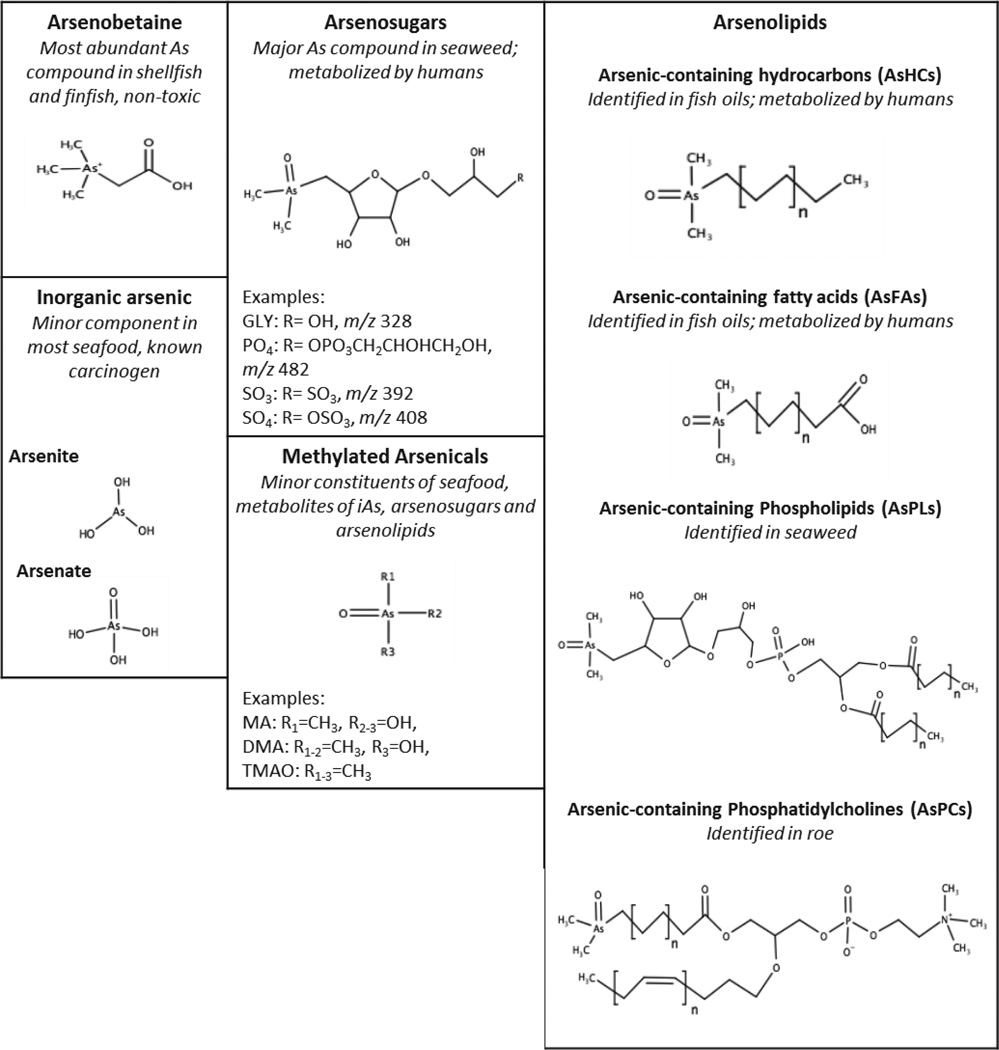
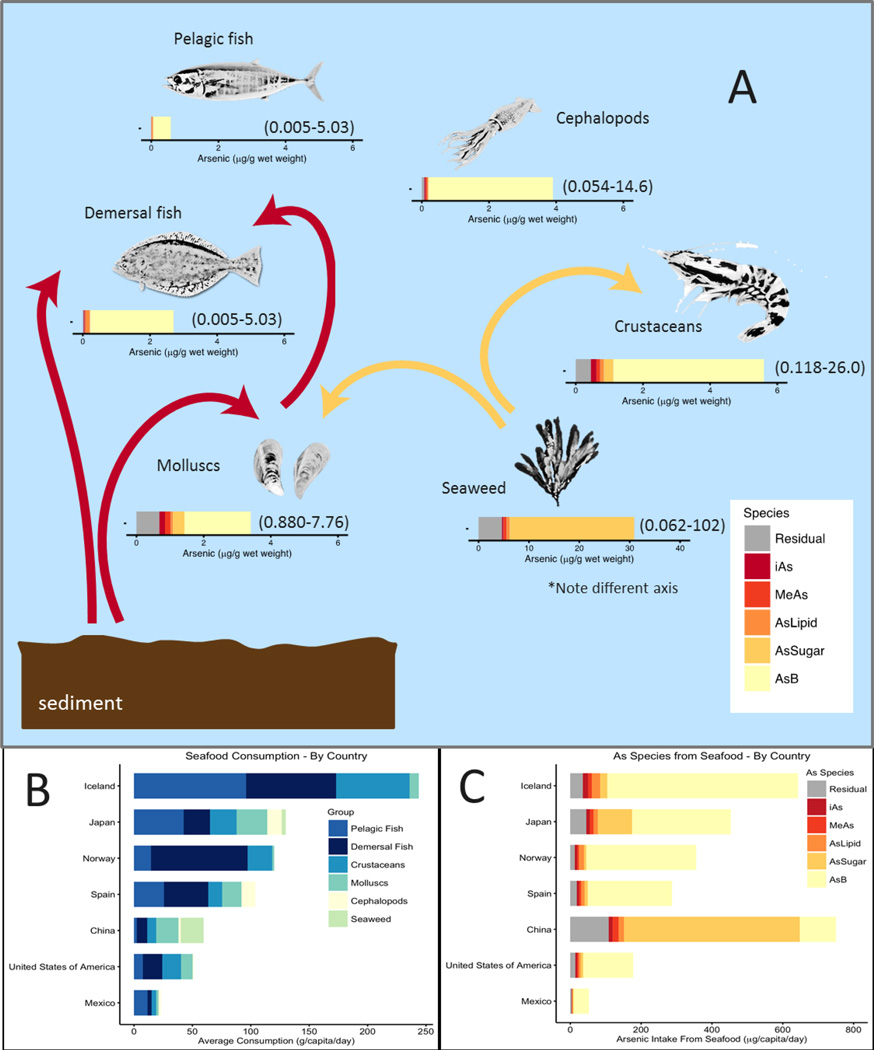
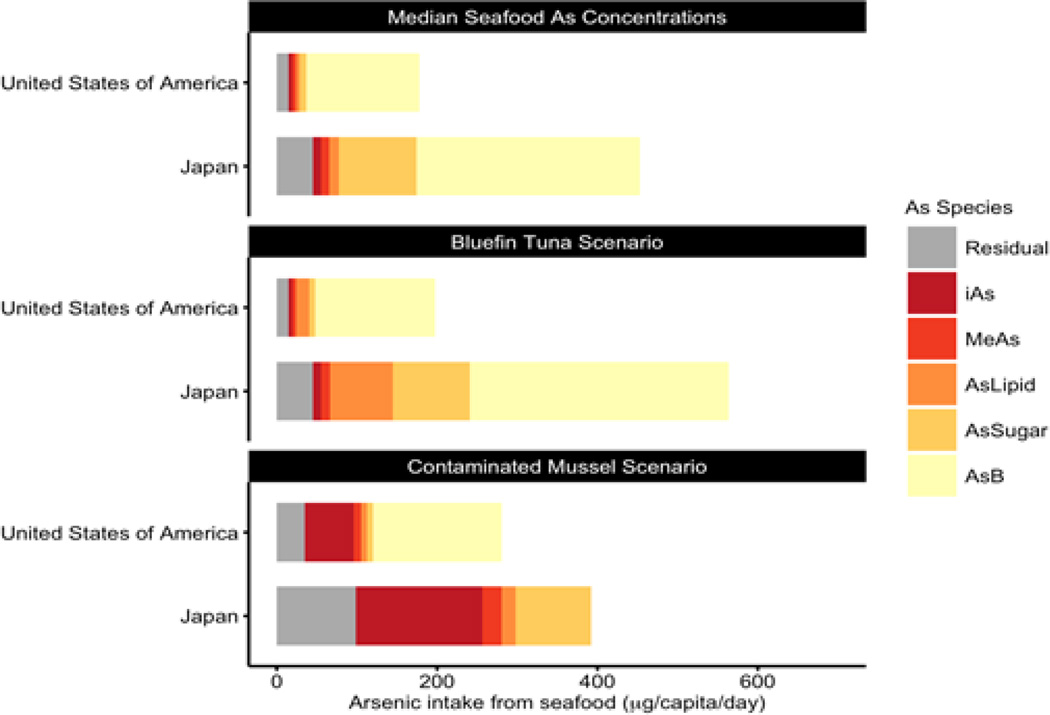
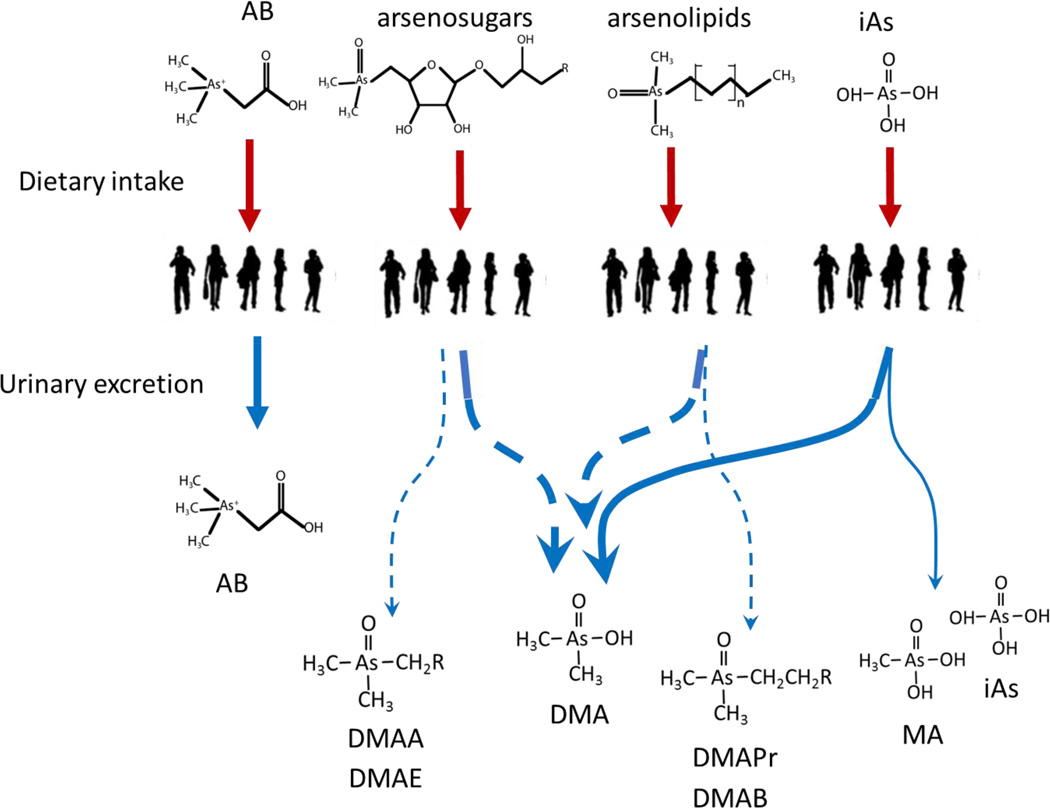
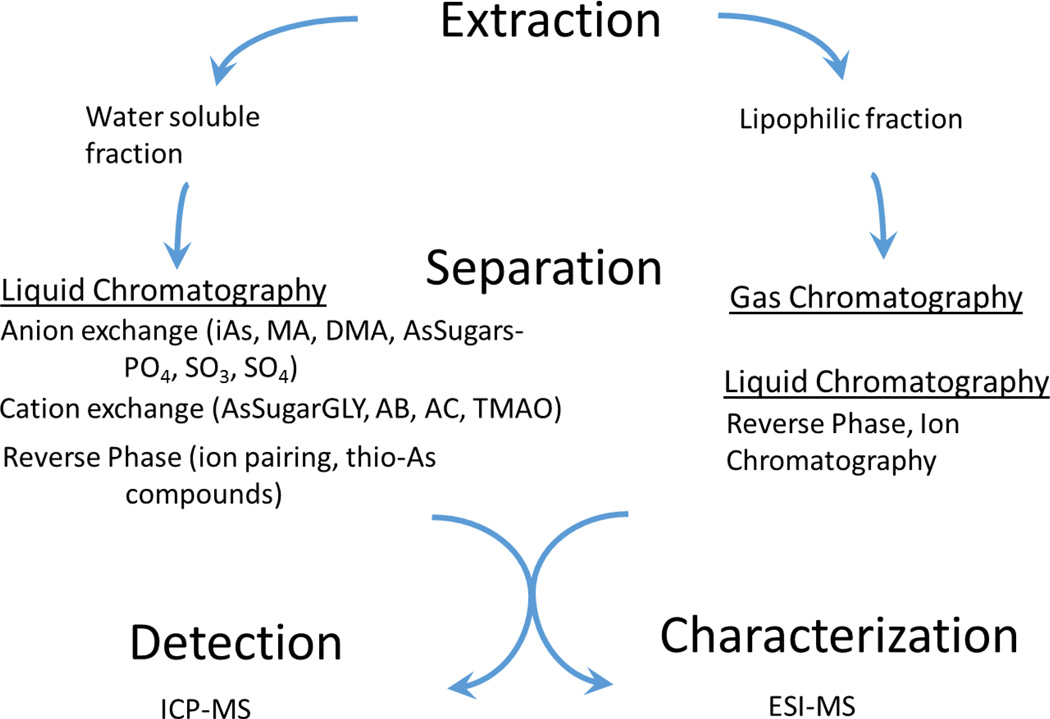
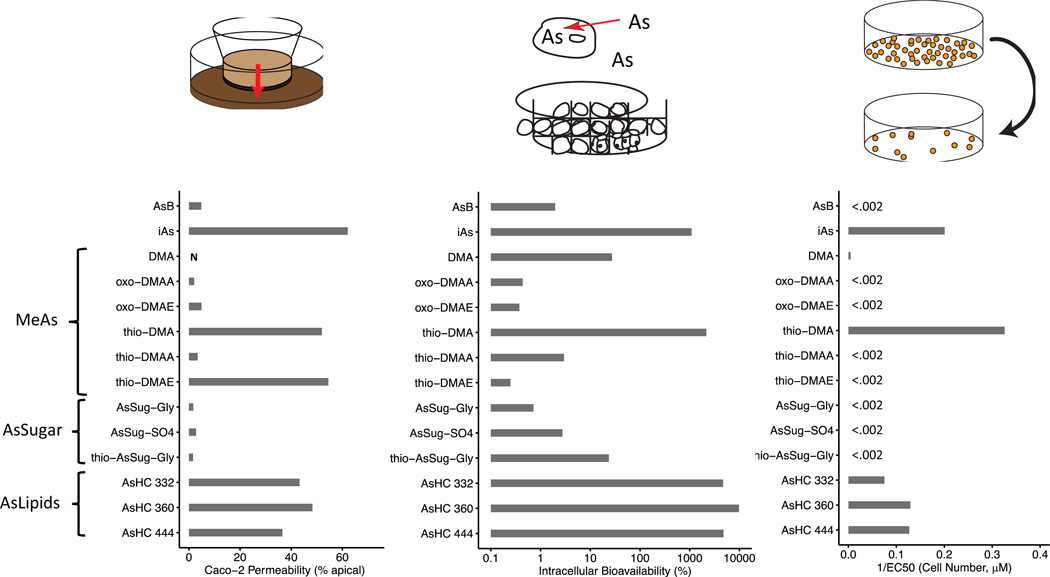
Seafood, including finfish, shellfish, and seaweed, is the largest contributor to arsenic (As) exposure in many human populations. In contrast to the predominance of inorganic As in water and many terrestrial foods, As in marine-derived foods is present primarily in the form of organic compounds. To date, human exposure and toxicological assessments have focused on inorganic As, while organic As has generally been considered to be non-toxic. However, the high concentrations of organic As in seafood, as well as the often complex As speciation, can lead to complications in assessing As exposure from diet. In this report, we evaluate the presence and distribution of organic As species in seafood, and combined with consumption data, address the current capabilities and needs for determining human exposure to these compounds. The analytical approaches and shortcomings for assessing these compounds are reviewed, with a focus on the best practices for characterization and quantitation. Metabolic pathways and toxicology of two important classes of organic arsenicals, arsenolipids and arsenosugars, are examined, as well as individual variability in absorption of these compounds. Although determining health outcomes or assessing a need for regulatory policies for organic As exposure is premature, the extensive consumption of seafood globally, along with the preliminary toxicological profiles of these compounds and their confounding effect on assessing exposure to inorganic As, suggests further investigations and process-level studies on organic As are needed to fill the current gaps in knowledge.
Keywords: Arsenolipid; Arsenosugar; Organic arsenic; Seafood.
Copyright © 2016 Elsevier B.V. All rights reserved.
Figures
References
-
- Adair BM, Moore T, Conklin SD, Creed JT, Wolf DC, Thomas DJ. Tissue distribution and urinary excretion of dimethylated arsenic and its metabolites in dimethylarsinic acid- or arsenate-treated rats. Toxicology and Applied Pharmacology. 2007;222(2):235–242. - PubMed
-
- Almela C, Clemente MJ, Velez D, Montoro R. Total arsenic, inorganic arsenic, lead and cadmium contents in edible seaweed sold in Spain. Food and Chemical Toxicology. 2006;44(11):1901–1908. - PubMed
-
- Almela C, Laparra JM, Velez D, Barbera R, Farre R, Montoro R. Arsenosugars in raw and cooked edible seaweed: Characterization and bioaccessibility. Journal of Agricultural and Food Chemistry. 2005;53(18):7344–7351. - PubMed
-
- Amayo KO, Petursdottir A, Newcombe C, Gunnlaugsdottir H, Raab A, Krupp EM, Feldmann J. Identification and Quantification of Arsenolipids Using Reversed-Phase HPLC Coupled Simultaneously to High-Resolution ICPMS and High-Resolution Electrospray MS without Species-Specific Standards. Analytical Chemistry. 2011;83(9):3589–3595. - PubMed
-
- Amayo KO, Raab A, Krupp EM, Gunnlaugsdottir H, Feldmann J. Novel identification of arsenolipids using chemical derivatizations in conjunction with RP-HPLC-ICPMS/ESMS. Anal. Chem. 2013;85(19):9321–9327. - PubMed
Publication types
MeSH terms
Substances
Grants and funding
LinkOut - more resources
Full Text Sources
Other Literature Sources
Medical
