


Nationwide reconnaissance of contaminants of emerging concern in source and treated drinking waters of the United States
- PMID: 28024752
- PMCID: PMC7017586
- DOI: 10.1016/j.scitotenv.2016.12.004
Nationwide reconnaissance of contaminants of emerging concern in source and treated drinking waters of the United States
Abstract
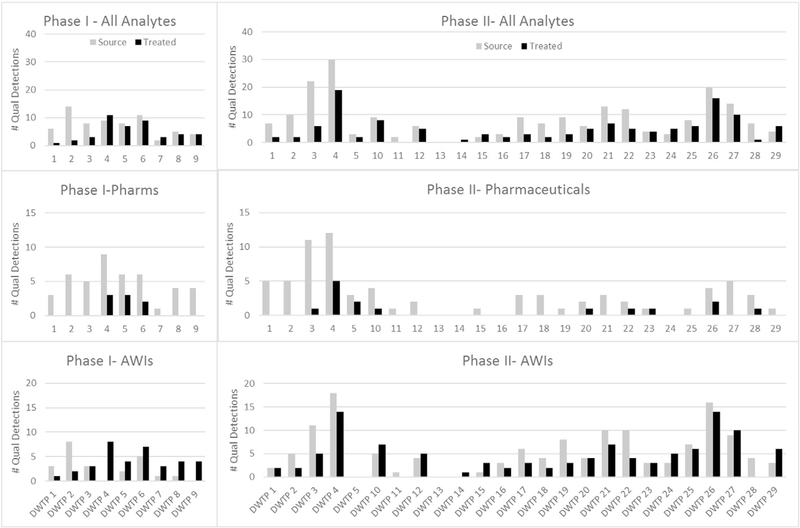
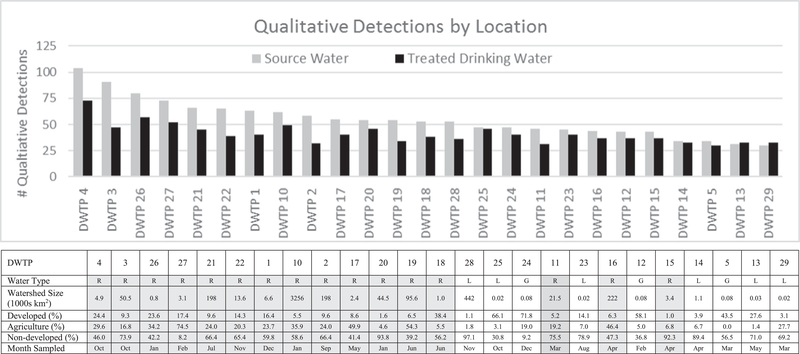
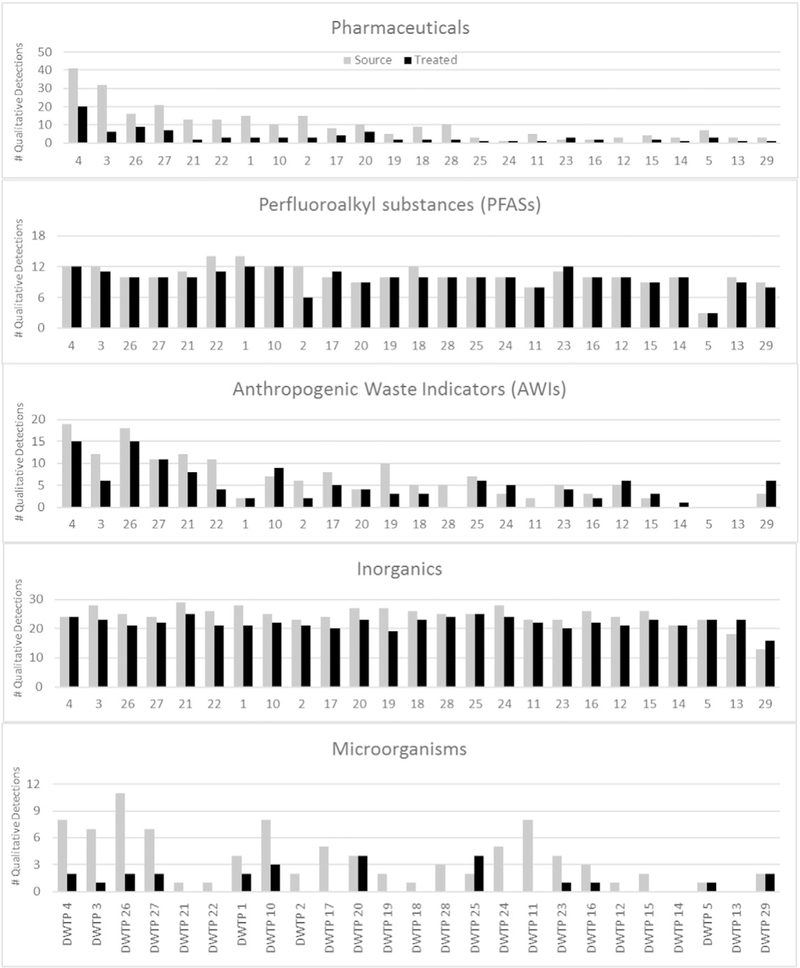
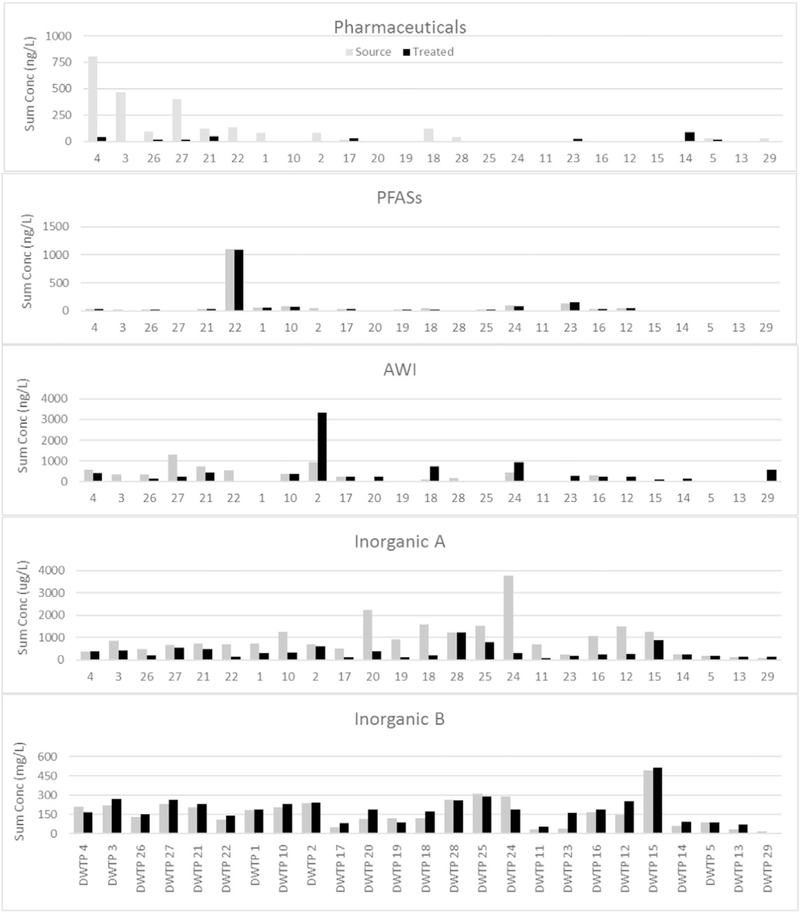
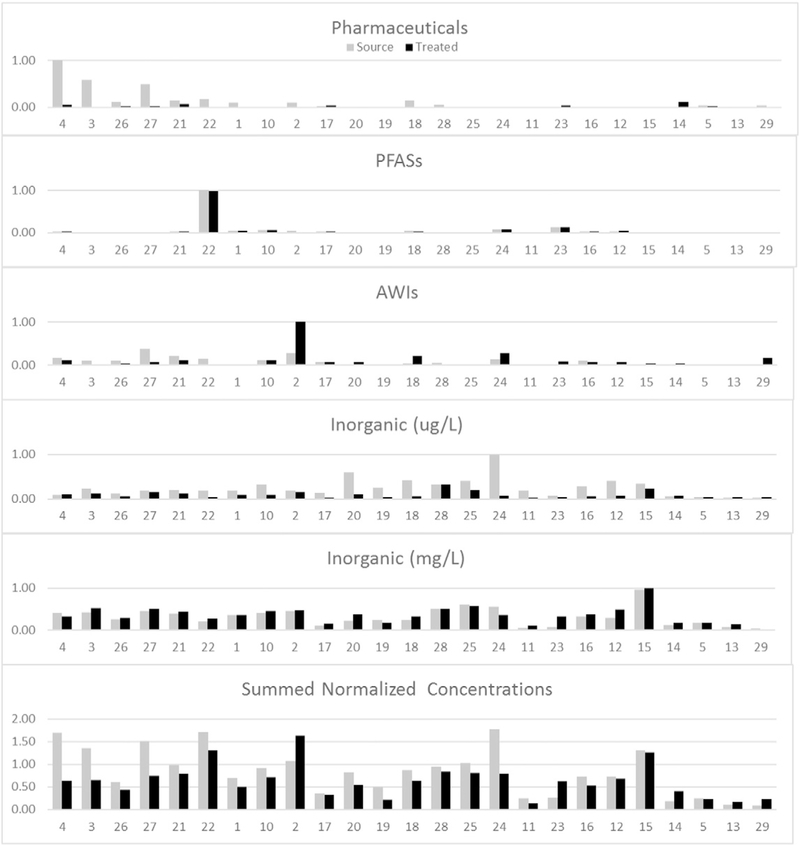
When chemical or microbial contaminants are assessed for potential effect or possible regulation in ambient and drinking waters, a critical first step is determining if the contaminants occur and if they are at concentrations that may cause human or ecological health concerns. To this end, source and treated drinking water samples from 29 drinking water treatment plants (DWTPs) were analyzed as part of a two-phase study to determine whether chemical and microbial constituents, many of which are considered contaminants of emerging concern, were detectable in the waters. Of the 84 chemicals monitored in the 9 Phase I DWTPs, 27 were detected at least once in the source water, and 21 were detected at least once in treated drinking water. In Phase II, which was a broader and more comprehensive assessment, 247 chemical and microbial analytes were measured in 25 DWTPs, with 148 detected at least once in the source water, and 121 detected at least once in the treated drinking water. The frequency of detection was often related to the analyte's contaminant class, as pharmaceuticals and anthropogenic waste indicators tended to be infrequently detected and more easily removed during treatment, while per and polyfluoroalkyl substances and inorganic constituents were both more frequently detected and, overall, more resistant to treatment. The data collected as part of this project will be used to help inform evaluation of unregulated contaminants in surface water, groundwater, and drinking water.
Keywords: Contaminants of emerging concern; Drinking water; Microorganisms; Pharmaceuticals; Source water.
Published by Elsevier B.V.
Figures
References
-
- Associated Press, 2008. An AP Investigation: Pharmaceuticals Found in Drinking Water. http://hosted.ap.org/specials/interactives/pharmawater_site/
-
- Batt AL, Kostich MS, Lazorchak JM, 2008. Analysis of ecologically relevant pharmaceuticals in wastewater and surface water using selective solid-phase extraction and UPLC-MS/MS. Anal. Chem. 80 (13), 5021–5030. - PubMed
-
- Benotti MJ, Trenholm RA, Vanderford BJ, Holady JC, Stanford BD, Snyder SA, 2009. Pharmaceuticals and endocrine disrupting compounds in US drinking water. Environ. Sci. Technol. 43 (3), 597–603. - PubMed
-
- Benson R, Conerly O, Sander W, Batt AL, Boone JS, Furlong ET, Glassmeyer ST, Kolpin DW, Mash HE, Schenck KM, Simmons JE, 2017. Human health screening and public health significance of contaminants of emerging concern detected in public water supplies. Sci. Total Environ. 579,1643–1648. - PMC - PubMed
MeSH terms
Substances
Grants and funding
LinkOut - more resources
Full Text Sources
Other Literature Sources
Medical
