


Large-scale inference of gene function through phylogenetic annotation of Gene Ontology terms: case study of the apoptosis and autophagy cellular processes
- PMID: 28025345
- PMCID: PMC5199145
- DOI: 10.1093/database/baw155
Large-scale inference of gene function through phylogenetic annotation of Gene Ontology terms: case study of the apoptosis and autophagy cellular processes
Abstract
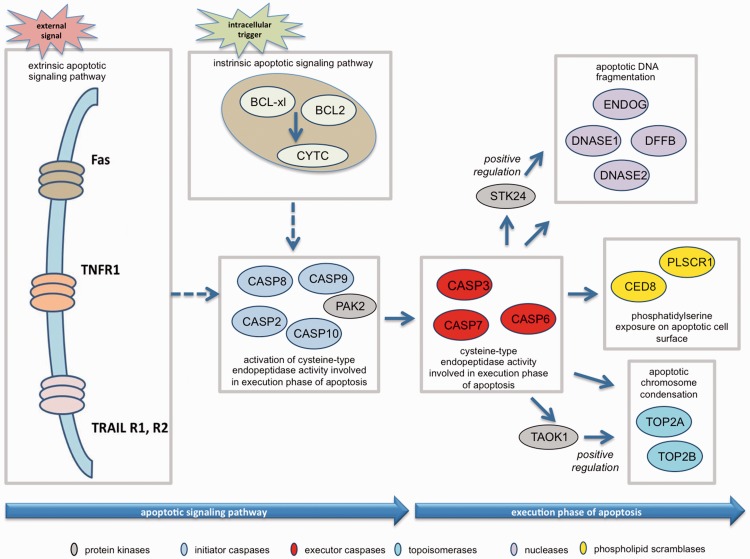
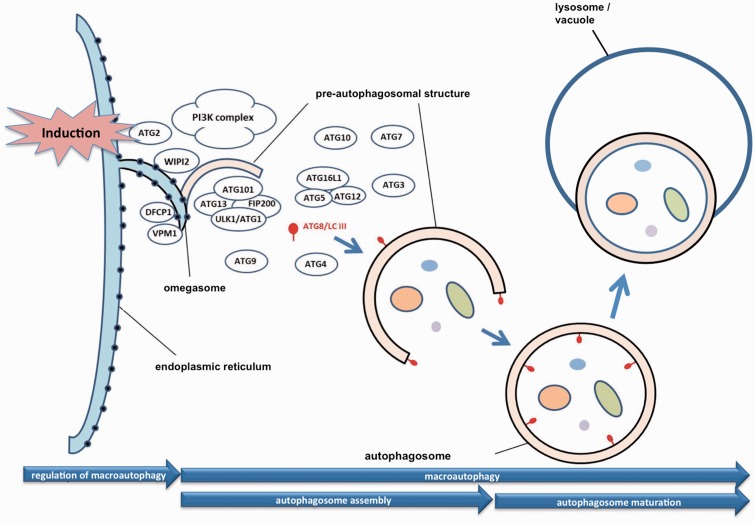
We previously reported a paradigm for large-scale phylogenomic analysis of gene families that takes advantage of the large corpus of experimentally supported Gene Ontology (GO) annotations. This 'GO Phylogenetic Annotation' approach integrates GO annotations from evolutionarily related genes across ∼100 different organisms in the context of a gene family tree, in which curators build an explicit model of the evolution of gene functions. GO Phylogenetic Annotation models the gain and loss of functions in a gene family tree, which is used to infer the functions of uncharacterized (or incompletely characterized) gene products, even for human proteins that are relatively well studied. Here, we report our results from applying this paradigm to two well-characterized cellular processes, apoptosis and autophagy. This revealed several important observations with respect to GO annotations and how they can be used for function inference. Notably, we applied only a small fraction of the experimentally supported GO annotations to infer function in other family members. The majority of other annotations describe indirect effects, phenotypes or results from high throughput experiments. In addition, we show here how feedback from phylogenetic annotation leads to significant improvements in the PANTHER trees, the GO annotations and GO itself. Thus GO phylogenetic annotation both increases the quantity and improves the accuracy of the GO annotations provided to the research community. We expect these phylogenetically based annotations to be of broad use in gene enrichment analysis as well as other applications of GO annotations.Database URL: http://amigo.geneontology.org/amigo.
© The Author(s) 2016. Published by Oxford University Press.
Figures
References
-
- Altschul S.F., Gish W., Miller W. et al. (1990) Basic local alignment search tool. J. f Mol. Biol., 215, 403–410. - PubMed
Publication types
MeSH terms
Grants and funding
LinkOut - more resources
Full Text Sources
Other Literature Sources
