


CD11c⁺ CD8⁺ T Cells Reduce Renal Fibrosis Following Ureteric Obstruction by Inducing Fibroblast Apoptosis
- PMID: 28025478
- PMCID: PMC5297636
- DOI: 10.3390/ijms18010001
CD11c⁺ CD8⁺ T Cells Reduce Renal Fibrosis Following Ureteric Obstruction by Inducing Fibroblast Apoptosis
Abstract
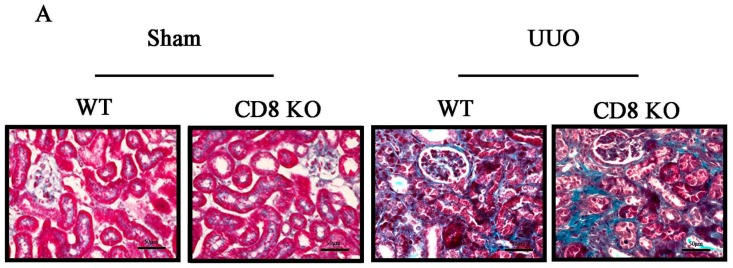
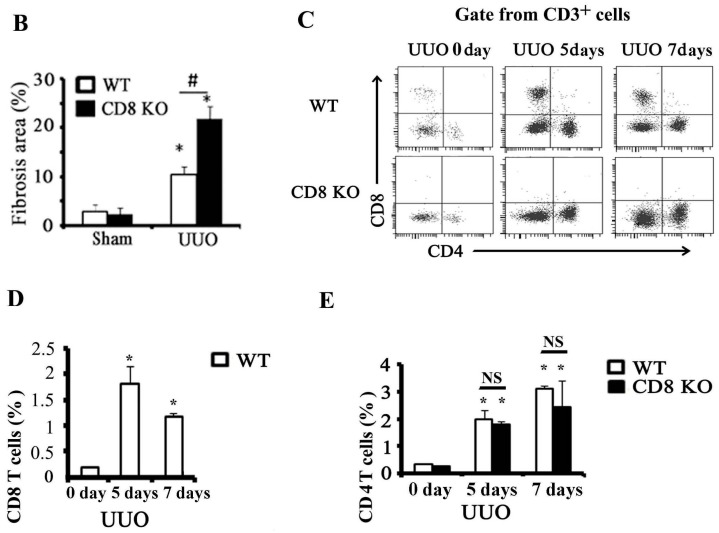
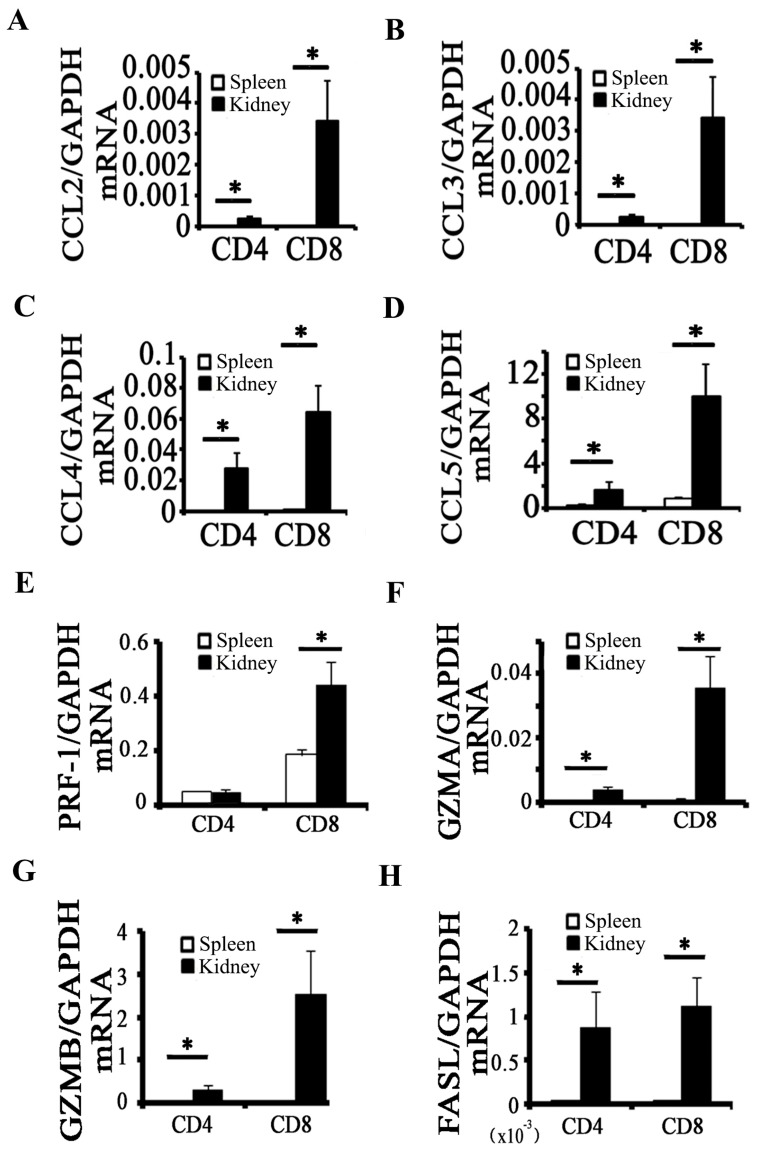
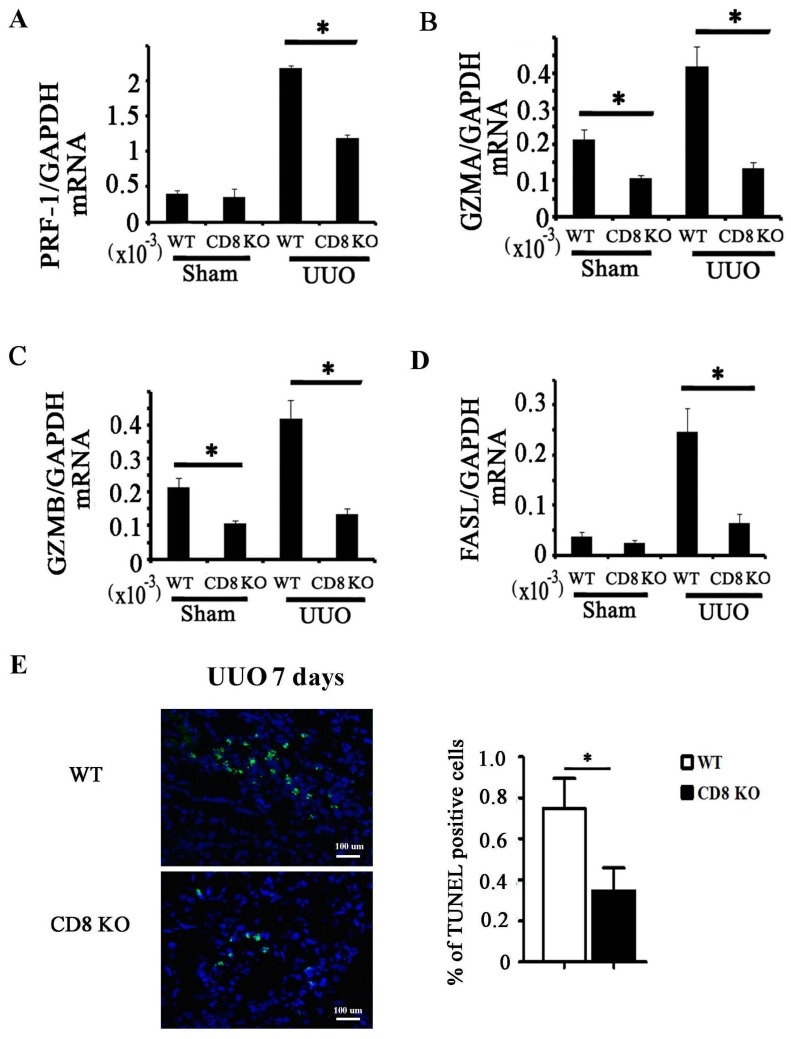
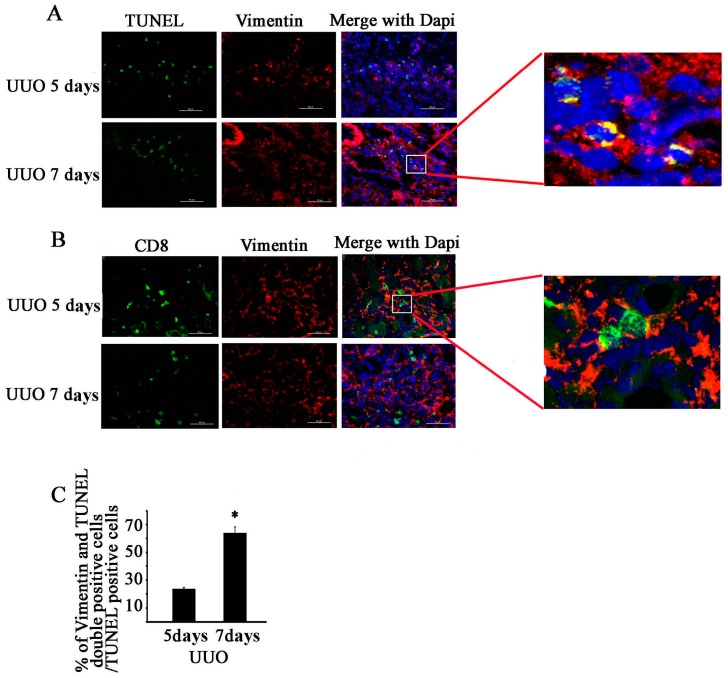
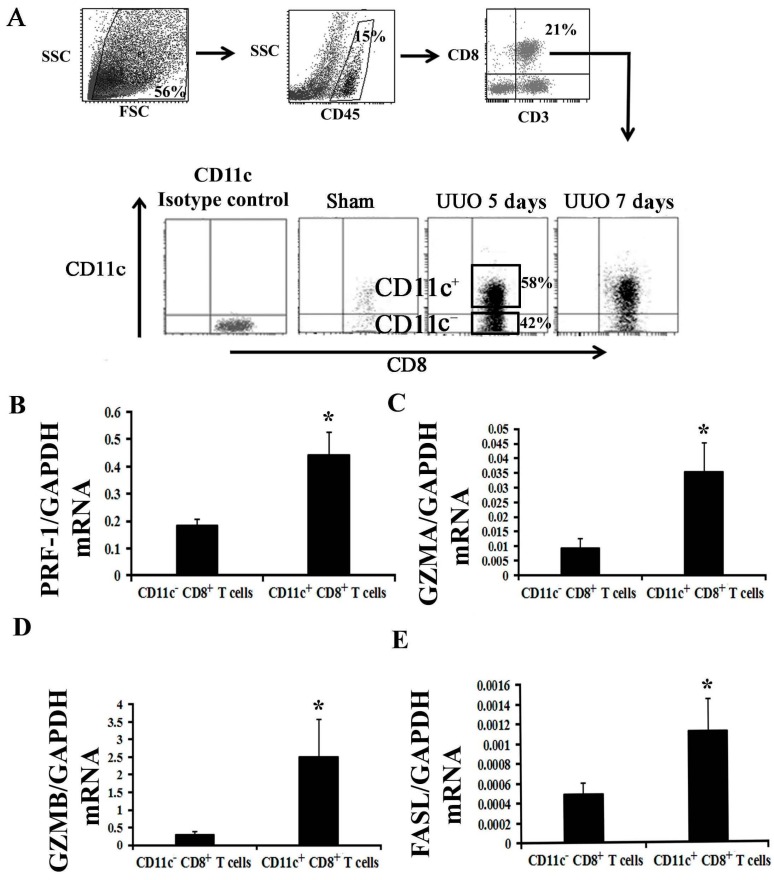
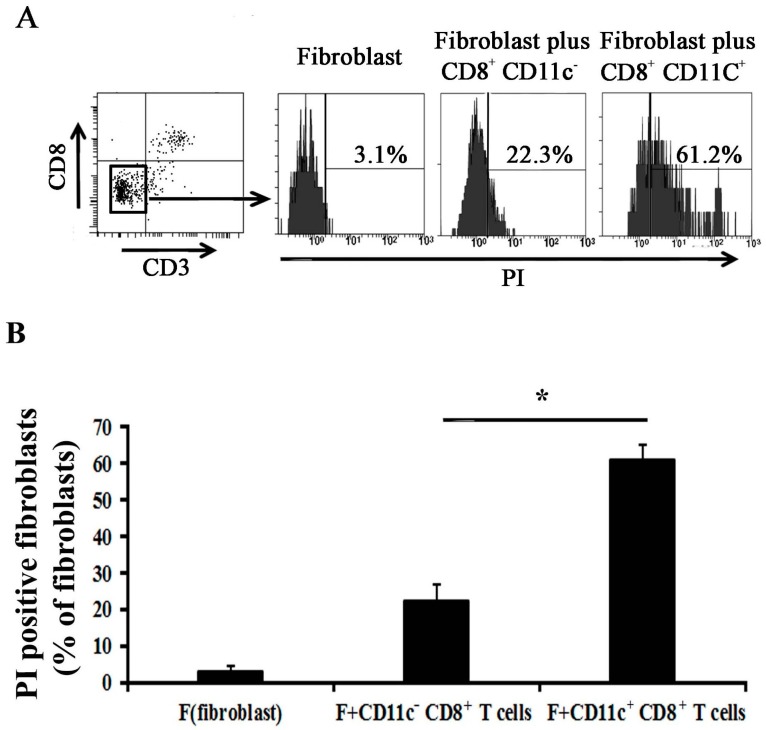
Tubulointerstitial fibrosis is a common consequence of various kidney diseases that lead to end-stage renal failure, and lymphocyte infiltration plays an important role in renal fibrosis. We previously found that depletion of cluster of differentiation 8⁺ (CD8⁺) T cells increases renal fibrosis following ureteric obstruction, and interferon-γ (IFN-γ)-expressing CD8⁺ T cells contribute to this process. CD8⁺ T cells are cytotoxic T cells; however, whether their cytotoxic effect reduces fibrosis remains unknown. This study showed that CD8⁺ T cells isolated from obstructed kidney showed mRNA expression of the cytotoxicity-related genes perforin 1, granzyme A, granzyme B, and FAS ligand; additionally, CD8 knockout significantly reduced the expression levels of these genes in obstructed kidney. Infiltrated CD8⁺ T cells were distributed around fibroblasts, and they are associated with fibroblast apoptosis in obstructed kidney. Moreover, CD11c⁺ CD8⁺ T cells expressed higher levels of the cytotoxicity-related genes than CD11c- CD8⁺ T cells, and infiltrated CD11c⁺ CD8⁺ T cells in obstructed kidney could induce fibroblast death in vitro. Results indicated that induction of fibroblast apoptosis partly contributed to the effect of CD8⁺ T cells on reduction of renal fibrosis. Given that inflammatory cells are involved in fibrosis, our results suggest that kidney fibrosis is a multifactorial process involving different arms of the immune system.
Keywords: T cells; fibroblasts; fibrosis; inflammation; kidney.
Conflict of interest statement
The authors declare no conflict of interest.
Figures
References
-
- Anders H.J., Vielhauer V., Frink M., Linde Y., Cohen C.D., Blattner S.M., Kretzler M., Strutz F., Mack M., Gröne H.J., et al. A chemokine receptor CCR-1 antagonist reduces renal fibrosis after unilateral ureter ligation. J. Clin. Investig. 2002;109:251–259. doi: 10.1172/JCI0214040. - DOI - PMC - PubMed
-
- Eis V., Luckow B., Vielhauer V., Siveke J.T., Linde Y., Segerer S., Lema G.P., Cohen C.D., Kretzler M., Mack M., et al. Chemokine receptor CCR1 but not CCR5 mediates leukocyte recruitment and subsequent renal fibrosis after unilateral ureteral obstruction. J. Am. Soc. Nephrol. 2004;15:337–347. doi: 10.1097/01.ASN.0000111246.87175.32. - DOI - PubMed
MeSH terms
Substances
LinkOut - more resources
Full Text Sources
Other Literature Sources
Research Materials
Miscellaneous
