


Theory-Based Interventions to Improve Medication Adherence in Older Adults Prescribed Polypharmacy: A Systematic Review
- PMID: 28025725
- PMCID: PMC5290062
- DOI: 10.1007/s40266-016-0426-6
Theory-Based Interventions to Improve Medication Adherence in Older Adults Prescribed Polypharmacy: A Systematic Review
Abstract
Background: Previous interventions have shown limited success in improving medication adherence in older adults, and this may be due to the lack of a theoretical underpinning.
Objective: This review sought to determine the effectiveness of theory-based interventions aimed at improving medication adherence in older adults prescribed polypharmacy and to explore the extent to which psychological theory informed their development.
Data sources: Eight electronic databases were searched from inception to March 2015, and extensive hand-searching was conducted.
Eligibility criteria: Interventions delivered to older adults (populations with a mean/median age of ≥65 years) prescribed polypharmacy (four or more regular oral/non-oral medicines) were eligible. Studies had to report an underpinning theory and measure at least one adherence and one clinical/humanistic outcome.
Review methods: Data were extracted independently by two reviewers and included details of intervention content, delivery, providers, participants, outcomes and theories used. The theory coding scheme (TCS) was used to assess the extent of theory use.
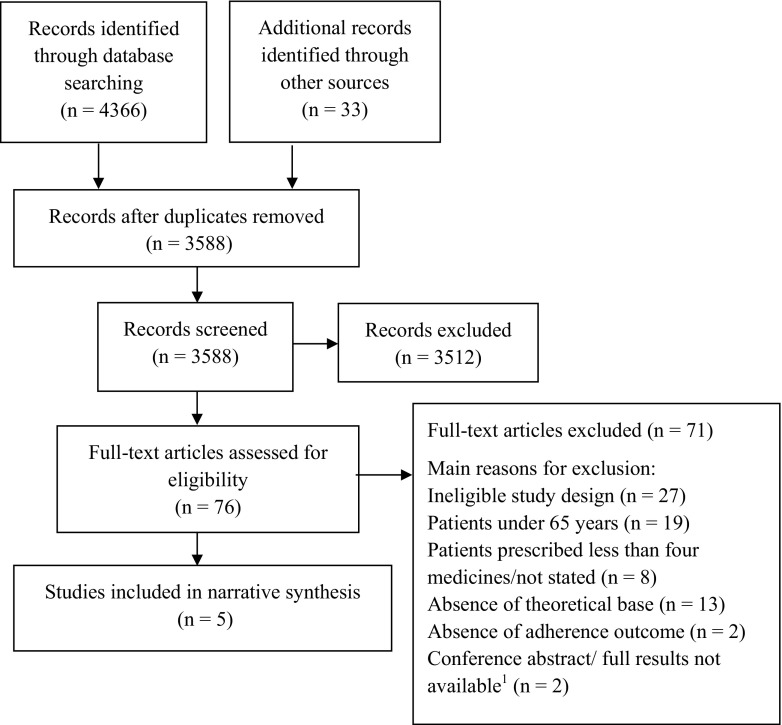
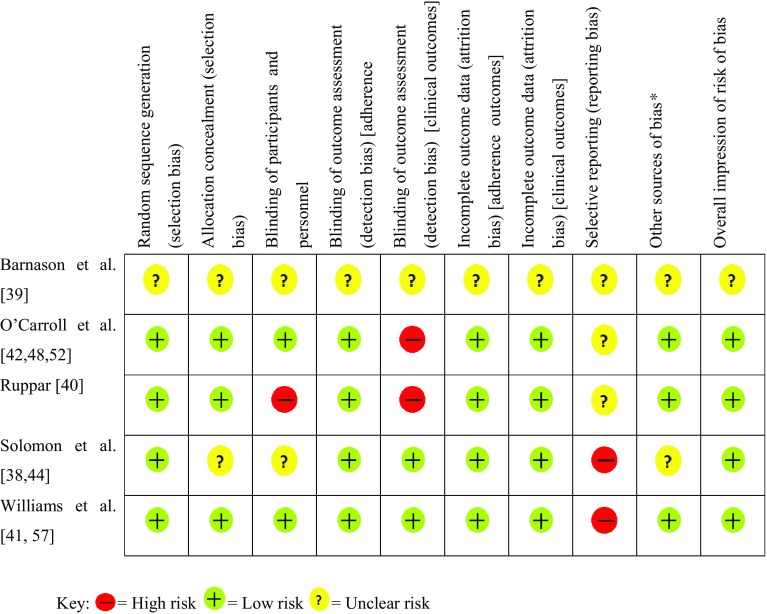
Results: Five studies cited theory as the basis for intervention development (social cognitive theory, health belief model, transtheoretical model, self-regulation model). The extent of theory use and intervention effectiveness in terms of adherence and clinical/humanistic outcomes varied across studies. No study made optimal use of theory as recommended in the TCS.
Conclusions: The heterogeneity observed and inclusion of pilot designs mean conclusions regarding effectiveness of theory-based interventions targeting older adults prescribed polypharmacy could not be drawn. Further primary research involving theory as a central component of intervention development is required. The review findings will help inform the design of future theory-based adherence interventions.
Conflict of interest statement
Compliance with Ethical StandardsFundingThis work was supported by The Dunhill Medical Trust (Grant Number: R298/0513). The funding body was not involved in the design of the review, data collection, analysis and interpretation of findings or in writing the manuscript.Conflict of interestDeborah Patton, Carmel Hughes, Cathal Cadogan and Cristín Ryan have no conflicts of interest relevant to the content of this review.
Figures
References
-
- Duerden M, Payne R. Polypharmacy and medicines optimisation: making it safe and sound. The Kings Fund. 2013. http://www.kingsfund.org.uk/publications. Accessed 20 Feb 2016.
Publication types
MeSH terms
Grants and funding
LinkOut - more resources
Full Text Sources
Other Literature Sources
