


Impact of genomic profiling on the treatment and outcomes of patients with advanced gastrointestinal malignancies
- PMID: 28028924
- PMCID: PMC5269696
- DOI: 10.1002/cam4.992
Impact of genomic profiling on the treatment and outcomes of patients with advanced gastrointestinal malignancies
Abstract
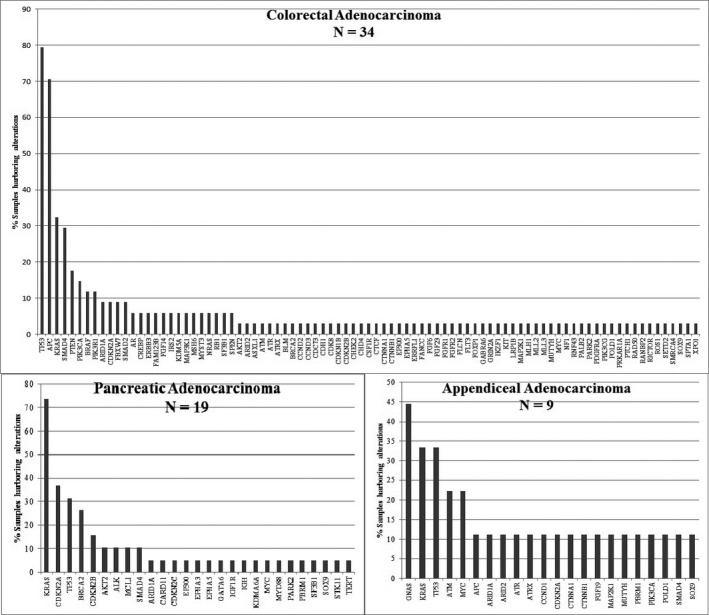
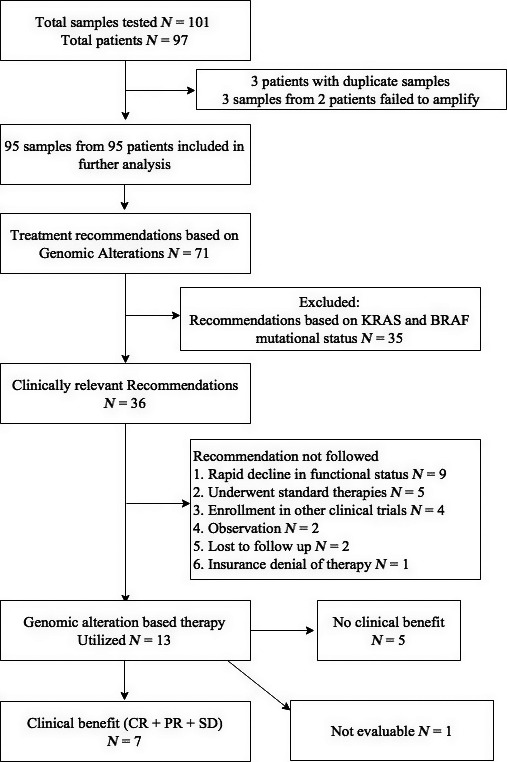
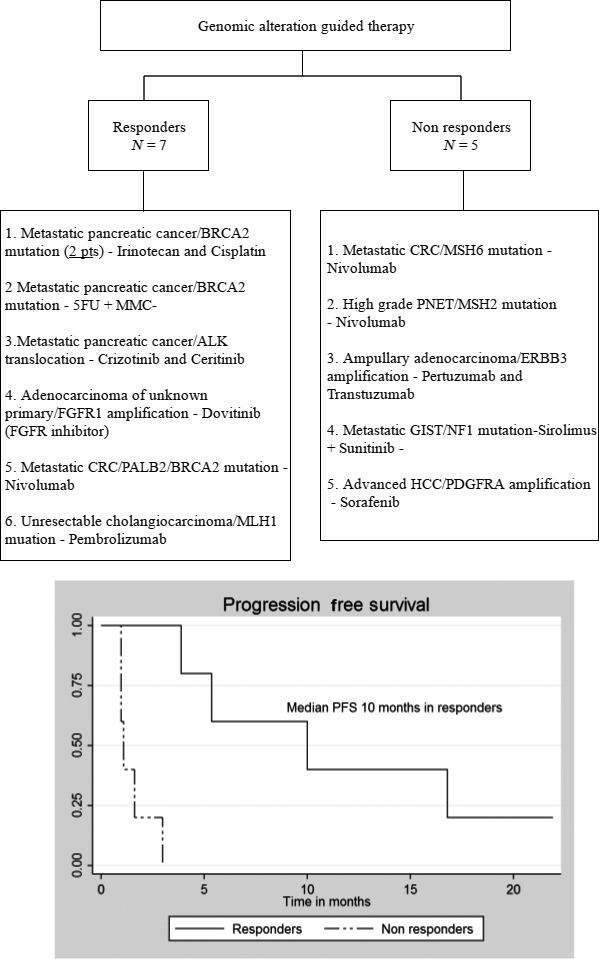
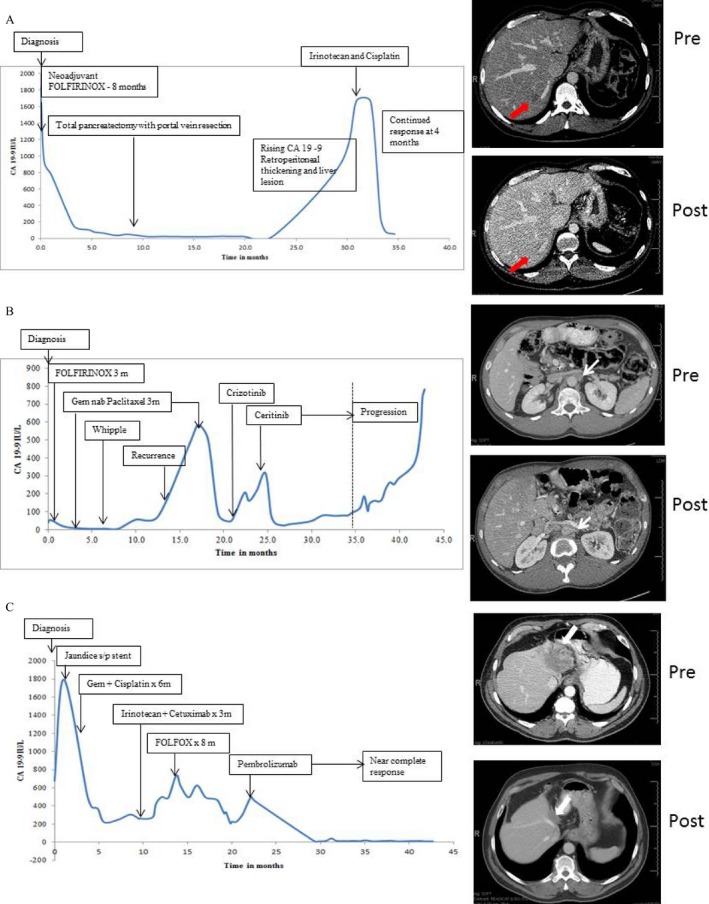
The impact of genomic profiling on the outcomes of patients with advanced gastrointestinal (GI) malignancies remains unknown. The primary objectives of the study were to investigate the clinical benefit of genomic-guided therapy, defined as complete response (CR), partial response (PR), or stable disease (SD) at 3 months, and its impact on progression-free survival (PFS) in patients with advanced GI malignancies. Clinical and genomic data of all consecutive GI tumor samples from April, 2013 to April, 2016 sequenced by FoundationOne were obtained and analyzed. A total of 101 samples from 97 patients were analyzed. Ninety-eight samples from 95 patients could be amplified making this approach feasible in 97% of the samples. After removing duplicates, 95 samples from 95 patients were included in the further analysis. Median time from specimen collection to reporting was 11 days. Genomic alteration-guided treatment recommendations were considered new and clinically relevant in 38% (36/95) of the patients. Rapid decline in functional status was noted in 25% (9/36) of these patients who could therefore not receive genomic-guided therapy. Genomic-guided therapy was utilized in 13 patients (13.7%) and 7 patients (7.4%) experienced clinical benefit (6 PR and 1 SD). Among these seven patients, median PFS was 10 months with some ongoing durable responses. Genomic profiling-guided therapy can lead to clinical benefit in a subset of patients with advanced GI malignancies. Attempting genomic profiling earlier in the course of treatment prior to functional decline may allow more patients to benefit from these therapies.
Keywords: Clinical benefit; gastrointestinal malignancies; genomic-guided therapy; genomics; precision medicine.
© 2016 The Authors. Cancer Medicine published by John Wiley & Sons Ltd.
Figures
References
-
- Garraway, L. A. , Verweij J., and Ballman K. V.. 2013. Precision oncology: an overview. J. Clin. Oncol. 31:1803–1805. - PubMed
-
- Schilsky, R. L. 2014. Implementing personalized cancer care. Nat. Rev. Clin. Oncol. 11:432–438. - PubMed
-
- Tsimberidou, A. M. , Eggermont A. M., and Schilsky R. L.. 2014. Precision cancer medicine: the future is now, only better. Am. Soc. Clin. Oncol. Educ. Book. 61–69. - PubMed
-
- Demeure, M. J. , Aziz M., Rosenberg R., Gurley S. D., Bussey K. J., and Carpten J. D.. 2014. Whole‐genome sequencing of an aggressive BRAF wild‐type papillary thyroid cancer identified EML4‐ALK translocation as a therapeutic target. World J. Surg. 38:1296–1305. - PubMed
-
- Chalmers, Z. R. , Ali S. M., Ohgami R. S., Campregher P. V., Frampton G. M., Yelensky R., et al. 2015. Comprehensive genomic profiling identifies a novel TNKS2‐PDGFRA fusion that defines a myeloid neoplasm with eosinophilia that responded dramatically to imatinib therapy. Blood Cancer J. 5:e278. - PMC - PubMed
MeSH terms
Substances
Supplementary concepts
LinkOut - more resources
Full Text Sources
Other Literature Sources
Research Materials
Miscellaneous
