


Safety and Activity of Mirvetuximab Soravtansine (IMGN853), a Folate Receptor Alpha-Targeting Antibody-Drug Conjugate, in Platinum-Resistant Ovarian, Fallopian Tube, or Primary Peritoneal Cancer: A Phase I Expansion Study
- PMID: 28029313
- PMCID: PMC5559878
- DOI: 10.1200/JCO.2016.69.9538
Safety and Activity of Mirvetuximab Soravtansine (IMGN853), a Folate Receptor Alpha-Targeting Antibody-Drug Conjugate, in Platinum-Resistant Ovarian, Fallopian Tube, or Primary Peritoneal Cancer: A Phase I Expansion Study
Abstract
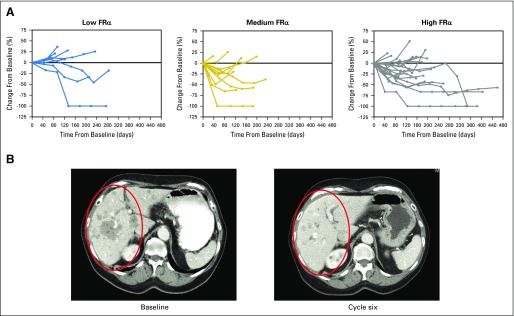
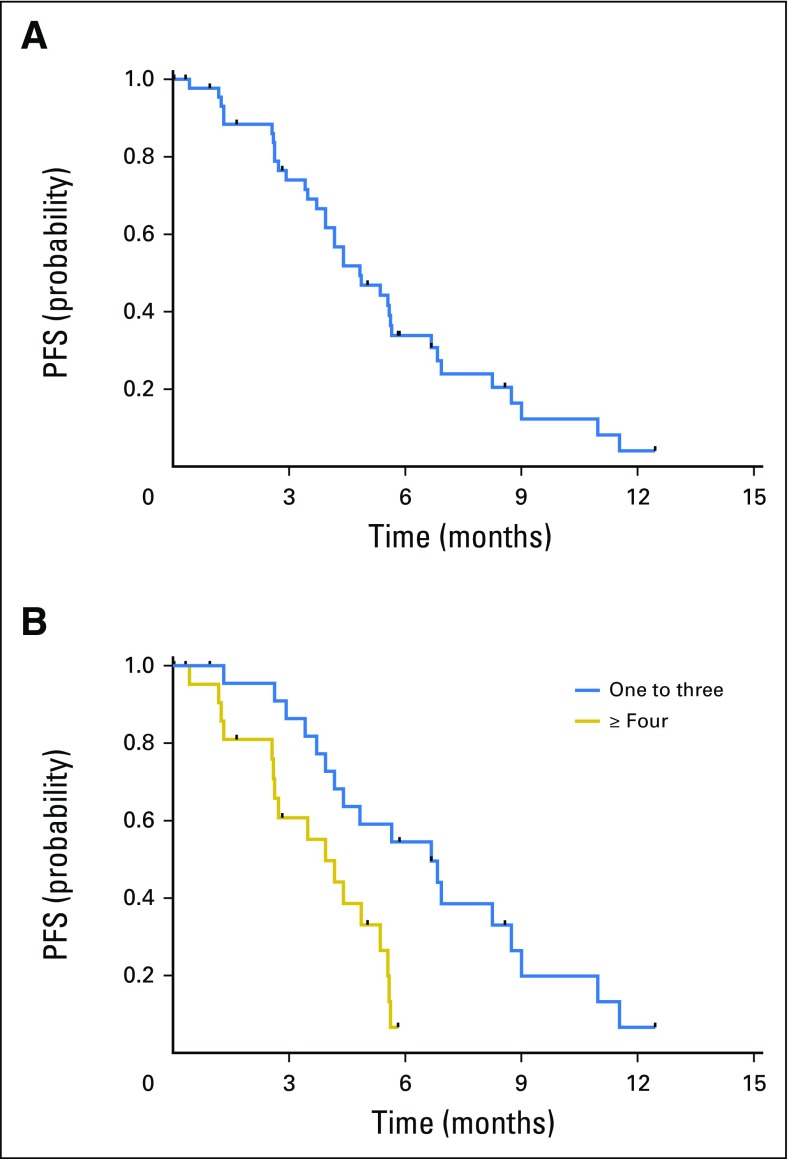
Purpose This phase I expansion cohort study evaluated the safety and clinical activity of mirvetuximab soravtansine (IMGN853), an antibody-drug conjugate consisting of a humanized anti-folate receptor alpha (FRα) monoclonal antibody linked to the tubulin-disrupting maytansinoid DM4, in a population of patients with FRα-positive and platinum-resistant ovarian cancer. Patients and Methods Patients with platinum-resistant epithelial ovarian, fallopian tube, or primary peritoneal cancer received IMGN853 at 6.0 mg/kg (adjusted ideal body weight) once every 3 weeks. Eligibility included a minimum requirement of FRα positivity by immunohistochemistry (≥ 25% of tumor cells with at least 2+ staining intensity). Adverse events, tumor response (via Response Evaluation Criteria in Solid Tumors [RECIST] version 1.1), and progression-free survival (PFS) were determined. Results Forty-six patients were enrolled. Adverse events were generally mild (≤ grade 2), with diarrhea (44%), blurred vision (41%), nausea (37%), and fatigue (30%) being the most commonly observed treatment-related toxicities. Grade 3 fatigue and hypotension were reported in two patients each (4%). For all evaluable patients, the confirmed objective response rate was 26%, including one complete and 11 partial responses, and the median PFS was 4.8 months. The median duration of response was 19.1 weeks. Notably, in the subset of patients who had received three or fewer prior lines of therapy (n = 23), an objective response rate of 39%, PFS of 6.7 months, and duration of response of 19.6 weeks were observed. Conclusion IMGN853 exhibited a manageable safety profile and was active in platinum-resistant ovarian cancer, with the strongest signals of efficacy observed in less heavily pretreated individuals. On the basis of these findings, the dose, schedule, and target population were identified for a phase III trial of IMGN853 monotherapy in patients with platinum-resistant disease.
Figures
References
-
- American Cancer Society Cancer Facts & Figures. 2016 http://www.cancer.org/research/cancerfactsstatistics/cancerfactsfigures2...
-
- Davis A, Tinker AV, Friedlander M. “Platinum resistant” ovarian cancer: What is it, who to treat and how to measure benefit? Gynecol Oncol. 2014;133:624–631. - PubMed
-
- Bookman MA. Extending the platinum-free interval in recurrent ovarian cancer: The role of topotecan in second-line chemotherapy. Oncologist. 1999;4:87–94. - PubMed
-
- Markman M, Rothman R, Hakes T, et al. Second-line platinum therapy in patients with ovarian cancer previously treated with cisplatin. J Clin Oncol. 1991;9:389–393. - PubMed
-
- Gore ME, Fryatt I, Wiltshaw E, et al. Treatment of relapsed carcinoma of the ovary with cisplatin or carboplatin following initial treatment with these compounds. Gynecol Oncol. 1990;36:207–211. - PubMed
Publication types
MeSH terms
Substances
Grants and funding
LinkOut - more resources
Full Text Sources
Other Literature Sources
Medical
