


Pulse Width Affects Scalp Sensation of Transcranial Magnetic Stimulation
- PMID: 28029593
- PMCID: PMC5241181
- DOI: 10.1016/j.brs.2016.09.007
Pulse Width Affects Scalp Sensation of Transcranial Magnetic Stimulation
Abstract
Background: Scalp sensation and pain comprise the most common side effect of transcranial magnetic stimulation (TMS), which can reduce tolerability and complicate experimental blinding.
Objective: We explored whether changing the width of single TMS pulses affects the quality and tolerability of the resultant somatic sensation.
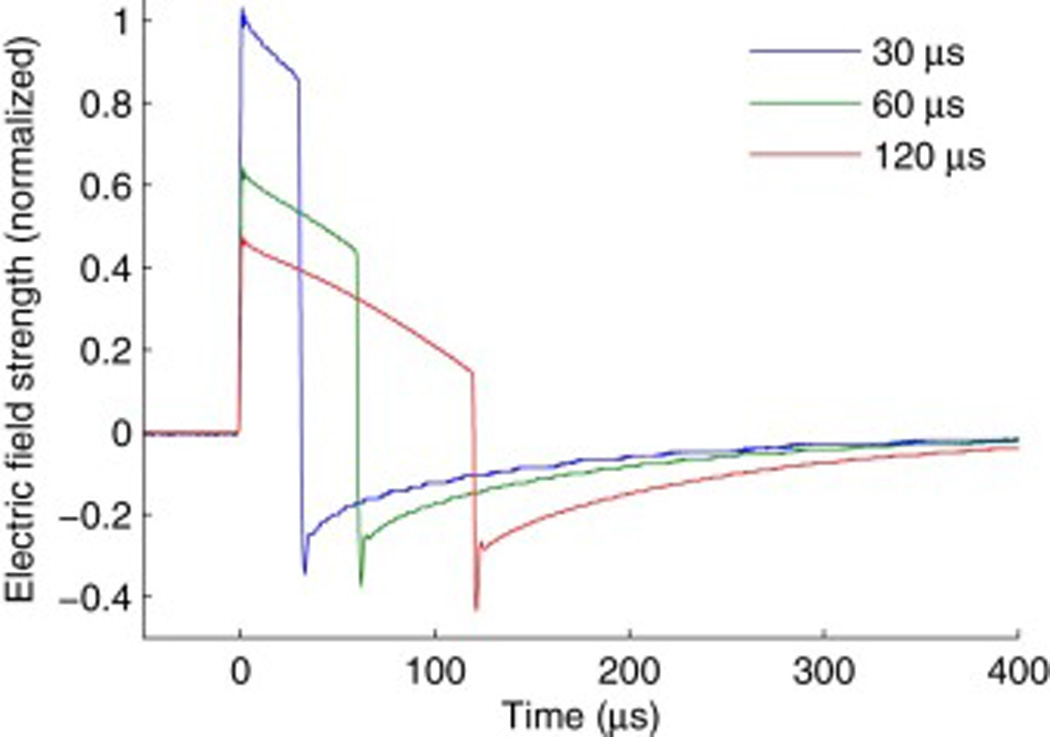
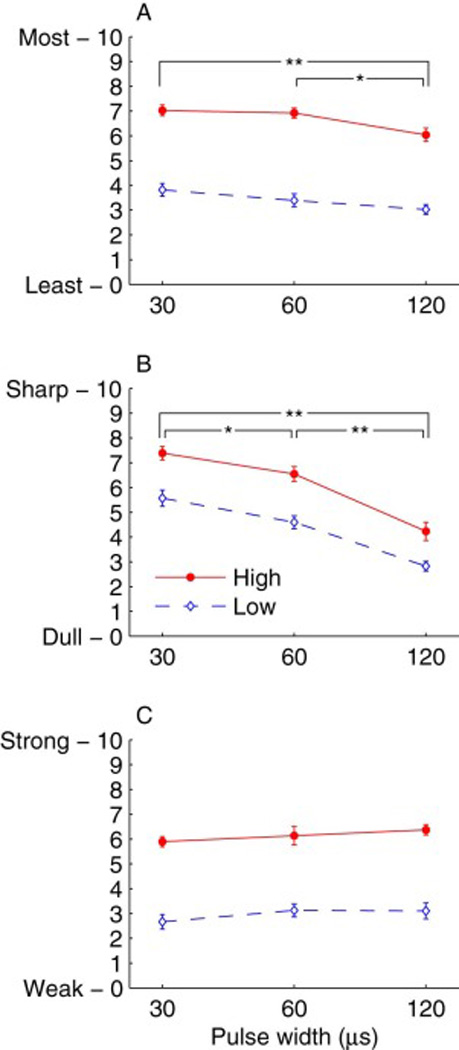
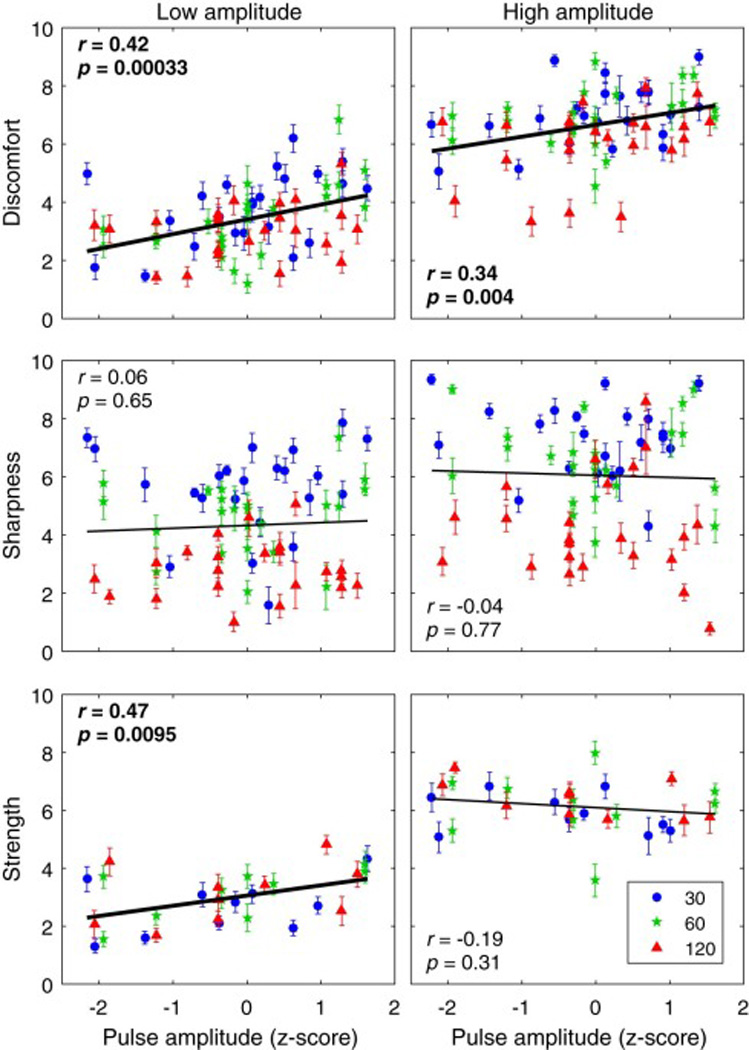
Methods: Using a controllable pulse parameter TMS device with a figure-8 coil, single monophasic magnetic pulses inducing electric field with initial phase width of 30, 60, and 120 µs were delivered in 23 healthy volunteers. Resting motor threshold of the right first dorsal interosseus was determined for each pulse width, as reported previously. Subsequently, pulses were delivered over the left dorsolateral prefrontal cortex at each of the three pulse widths at two amplitudes (100% and 120% of the pulse-width-specific motor threshold), with 20 repetitions per condition delivered in random order. After each pulse, subjects rated 0-to-10 visual analog scales for Discomfort, Sharpness, and Strength of the sensation.
Results: Briefer TMS pulses with amplitude normalized to the motor threshold were perceived as slightly more uncomfortable than longer pulses (with an average 0.89 point increase on the Discomfort scale for pulse width of 30 µs compared to 120 µs). The sensation of the briefer pulses was felt to be substantially sharper (2.95 points increase for 30 µs compared to 120 µs pulse width), but not stronger than longer pulses. As expected, higher amplitude pulses increased the perceived discomfort and strength, and, to a lesser degree the perceived sharpness.
Conclusions: Our findings contradict a previously published hypothesis that briefer TMS pulses are more tolerable. We discovered that the opposite is true, which merits further study as a means of enhancing tolerability in the context of repetitive TMS.
Keywords: Pulse width; Scalp; Sensation; Tolerability; Transcranial magnetic stimulation; cTMS.
Copyright © 2016 Elsevier Inc. All rights reserved.
Figures
References
-
- Borckardt JJ, Smith AR, Hutcheson K, Johnson K, Nahas Z, Anderson B, et al. Reducing pain and unpleasantness during repetitive transcranial magnetic stimulation. J ECT. 2006;22:259–264. - PubMed
-
- Trevino K, McClintock SM, Husain MM. The use of topical lidocaine to reduce pain during repetitive transcranial magnetic stimulation for the treatment of depression. J ECT. 2011;27:44–47. - PubMed
-
- Deng ZD, Peterchev AV. Transcranial magnetic stimulation coil with electronically switchable active and sham modes. Conf Proc IEEE Eng Med Biol Soc. 2011;2011:1993–1996. - PubMed
MeSH terms
Grants and funding
LinkOut - more resources
Full Text Sources
Other Literature Sources
Research Materials
