


What is the effectiveness of obesity related interventions at retail grocery stores and supermarkets? -a systematic review
- PMID: 28031046
- PMCID: PMC5192566
- DOI: 10.1186/s12889-016-3985-x
What is the effectiveness of obesity related interventions at retail grocery stores and supermarkets? -a systematic review
Abstract
Background: The Prevalence of obesity and overweight has been increasing in many countries. Many factors have been identified as contributing to obesity including the food environment, especially the access, availability and affordability of healthy foods in grocery stores and supermarkets. Several interventions have been carried out in retail grocery/supermarket settings as part of an effort to understand and influence consumption of healthful foods. The review's key outcome variable is sale/purchase of healthy foods as a result of the interventions. This systematic review sheds light on the effectiveness of food store interventions intended to promote the consumption of healthy foods and the methodological quality of studies reporting them.
Methods: Systematic literature search spanning from 2003 to 2015 (inclusive both years), and confined to papers in the English language was conducted. Studies fulfilling search criteria were identified and critically appraised. Studies included in this review report health interventions at physical food stores including supermarkets and corner stores, and with outcome variable of adopting healthier food purchasing/consumption behavior. The methodological quality of all included articles has been determined using a validated 16-item quality assessment tool (QATSDD).
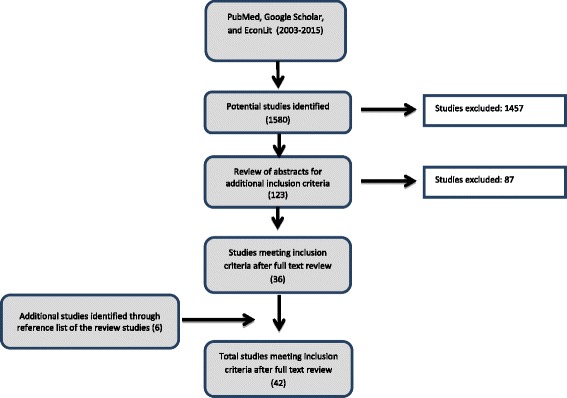
Results: The literature search identified 1580 publications, of which 42 met the inclusion criteria. Most interventions used a combination of information (e.g. awareness raising through food labeling, promotions, campaigns, etc.) and increasing availability of healthy foods such as fruits and vegetables. Few used price interventions. The average quality score for all papers is 65.0%, or an overall medium methodological quality. Apart from few studies, most studies reported that store interventions were effective in promoting purchase of healthy foods.
Conclusion: Given the diverse study settings and despite the challenges of methodological quality for some papers, we find efficacy of in-store healthy food interventions in terms of increased purchase of healthy foods. Researchers need to take risk of bias and methodological quality into account when designing future studies that should guide policy makers. Interventions which combine price, information and easy access to and availability of healthy foods with interactive and engaging nutrition information, if carefully designed can help customers of food stores to buy and consume more healthy foods.
Keywords: Food store; Healthy foods; Obesity intervention; Review; Supermarket.
References
Publication types
MeSH terms
LinkOut - more resources
Full Text Sources
Other Literature Sources
Medical
Miscellaneous
