


Pharmacokinetics/Pharmacodynamics of Pulmonary Delivery of Colistin against Pseudomonas aeruginosa in a Mouse Lung Infection Model
- PMID: 28031207
- PMCID: PMC5328518
- DOI: 10.1128/AAC.02025-16
Pharmacokinetics/Pharmacodynamics of Pulmonary Delivery of Colistin against Pseudomonas aeruginosa in a Mouse Lung Infection Model
Abstract
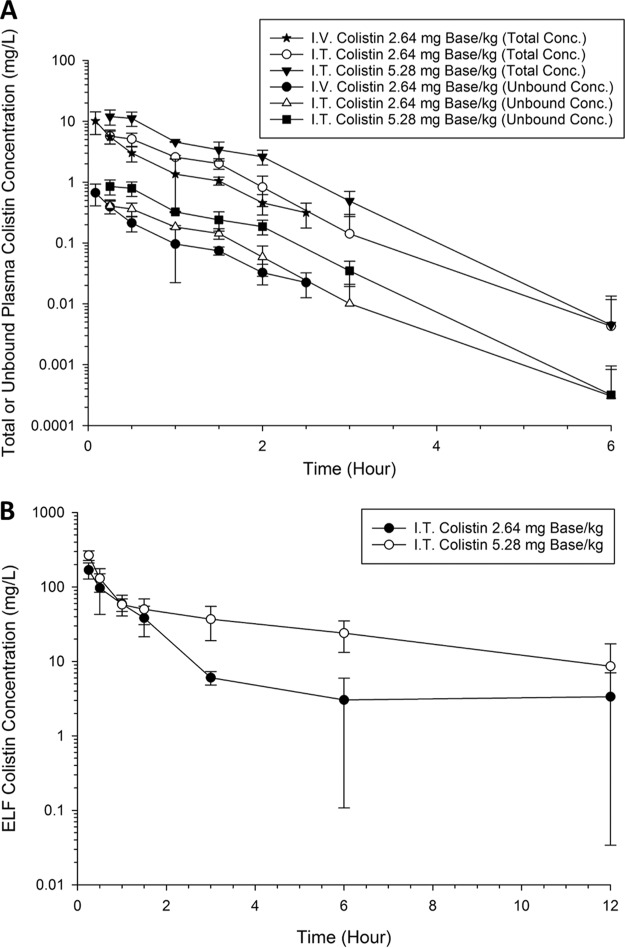
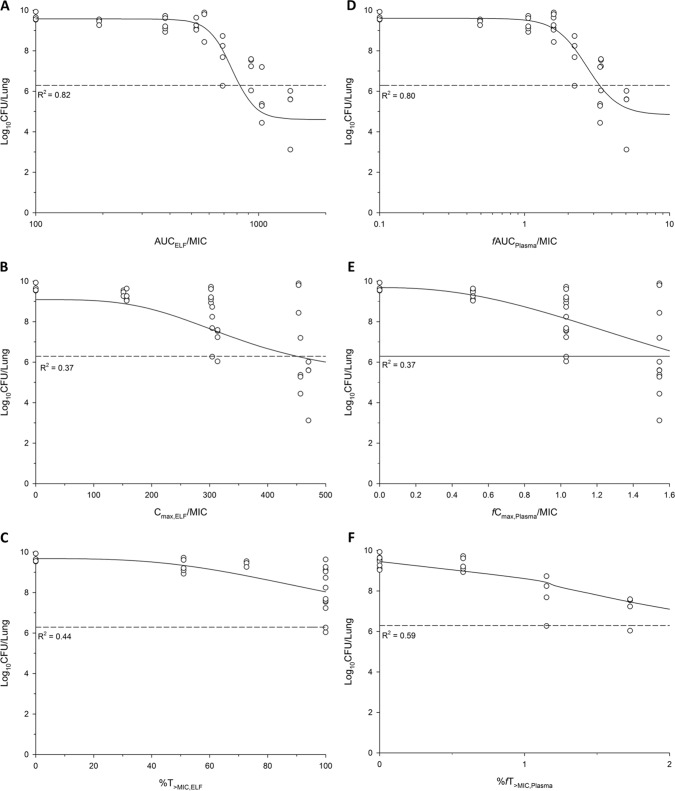
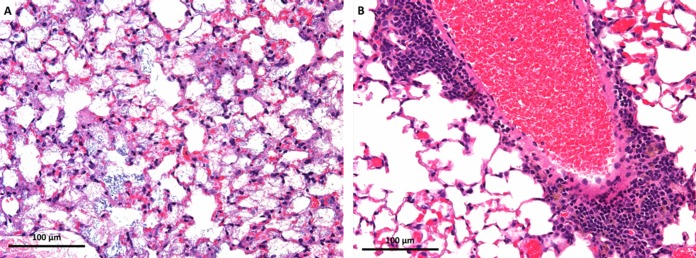
Colistin is often administered by inhalation and/or the parenteral route for the treatment of respiratory infections caused by multidrug-resistant (MDR) Pseudomonas aeruginosa However, limited pharmacokinetic (PK) and pharmacodynamic (PD) data are available to guide the optimization of dosage regimens of inhaled colistin. In the present study, PK of colistin in epithelial lining fluid (ELF) and plasma was determined following intratracheal delivery of a single dose of colistin solution in neutropenic lung-infected mice. The antimicrobial efficacy of intratracheal delivery of colistin against three P. aeruginosa strains (ATCC 27853, PAO1, and FADDI-PA022; MIC of 1 mg/liter for all strains) was examined in a neutropenic mouse lung infection model. Dose fractionation studies were conducted over 2.64 to 23.8 mg/kg of body weight/day. The inhibitory sigmoid model was employed to determine the PK/PD index that best described the antimicrobial efficacy of pulmonary delivery of colistin. In both ELF and plasma, the ratio of the area under the unbound concentration-time profile to MIC (fAUC/MIC) was the PK/PD index that best described the antimicrobial effect in mouse lung infection (R2 = 0.60 to 0.84 for ELF and 0.64 to 0.83 for plasma). The fAUC/MIC targets required to achieve stasis against the three strains were 684 to 1,050 in ELF and 2.15 to 3.29 in plasma. The histopathological data showed that pulmonary delivery of colistin reduced infection-caused pulmonary inflammation and preserved the integrity of the lung epithelium, although colistin introduced mild pulmonary inflammation in healthy mice. This study showed pulmonary delivery of colistin provides antimicrobial effects against MDR P. aeruginosa lung infections superior to those of parenteral administrations. For the first time, our results provide important preclinical PK/PD information for optimization of inhaled colistin therapy.
Keywords: Pseudomonas aeruginosa; colistin; intratracheal administration; mouse lung infection model; multidrug-resistant bacteria; pharmacodynamics; pharmacokinetics; respiratory tract infection.
Copyright © 2017 American Society for Microbiology.
Figures
References
-
- Mohamed AF, Cars O, Friberg LE. 2014. A pharmacokinetic/pharmacodynamic model developed for the effect of colistin on Pseudomonas aeruginosa in vitro with evaluation of population pharmacokinetic variability on simulated bacterial killing. J Antimicrob Chemother 69:1350–1361. doi:10.1093/jac/dkt520. - DOI - PubMed
-
- Cheah S-E, Wang J, Turnidge JD, Li J, Nation RL. 2015. New pharmacokinetic/pharmacodynamic studies of systemically administered colistin against Pseudomonas aeruginosa and Acinetobacter baumannii in mouse thigh and lung infection models: smaller response in lung infection. J Antimicrob Chemother 70:3291–3297. - PubMed
MeSH terms
Substances
Grants and funding
LinkOut - more resources
Full Text Sources
Other Literature Sources
Medical
Molecular Biology Databases
