


Impact of Autocidal Gravid Ovitraps on Chikungunya Virus Incidence in Aedes aegypti (Diptera: Culicidae) in Areas With and Without Traps
- PMID: 28031347
- PMCID: PMC6505457
- DOI: 10.1093/jme/tjw187
Impact of Autocidal Gravid Ovitraps on Chikungunya Virus Incidence in Aedes aegypti (Diptera: Culicidae) in Areas With and Without Traps
Erratum in
-
Corrigendum.J Med Entomol. 2017 Jul 1;54(4):1098. doi: 10.1093/jme/tjx034. J Med Entomol. 2017. PMID: 28431125 No abstract available.
Abstract
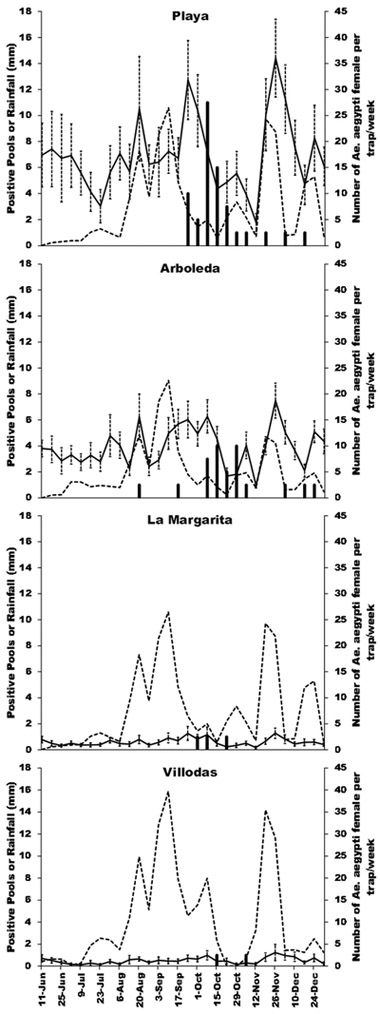
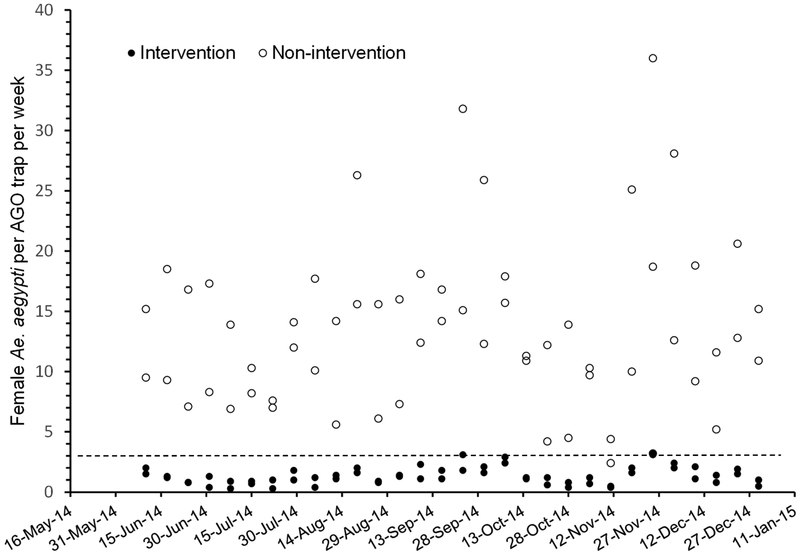
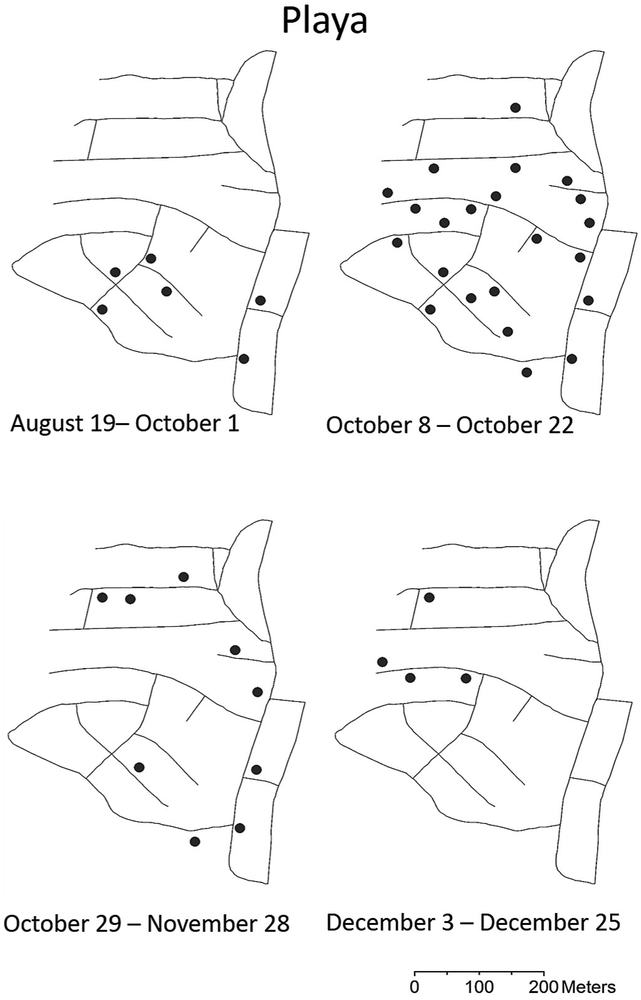
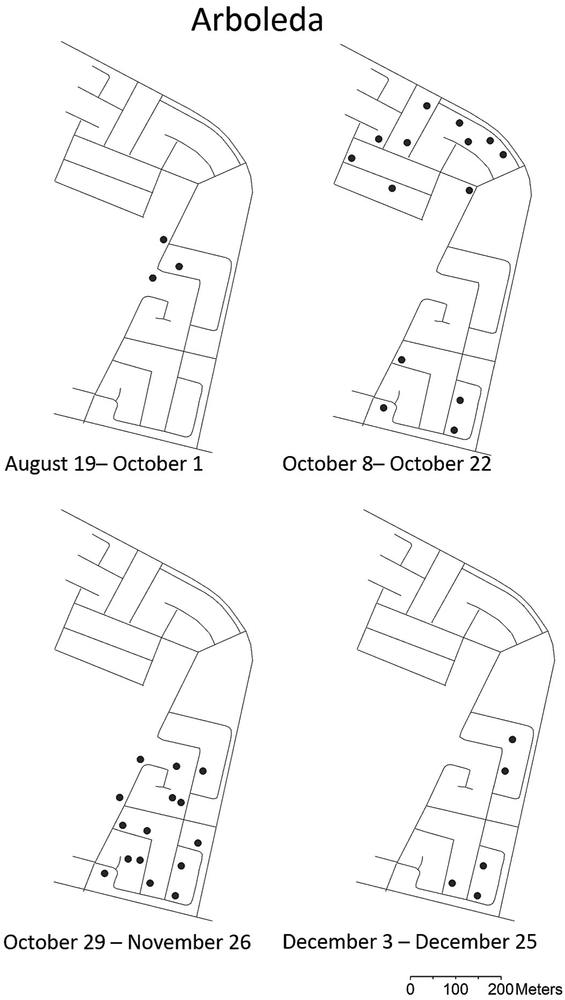
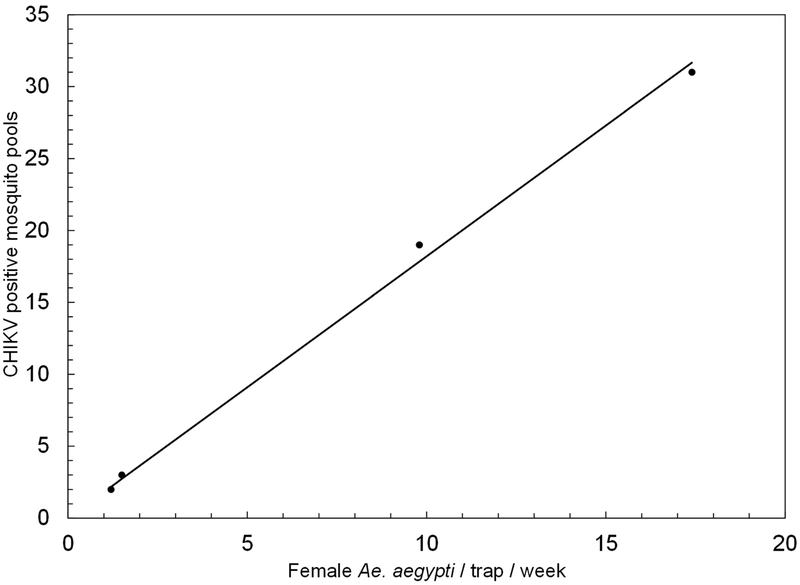
Puerto Rico detected the first confirmed case of chikungunya virus (CHIKV) in May 2014 and the virus rapidly spread throughout the island. The invasion of CHIKV allowed us to observe Aedes aegypti (L.) densities, infection rates, and impact of vector control in urban areas using CDC autocidal gravid ovitraps (AGO traps) for mosquito control over several years. Because local mosquitoes can only get the virus from infectious residents, detecting the presence of virus in mosquitoes functions as a proxy for the presence of virus in people. We monitored the incidence of CHIKV in gravid females of Ae. aegypti in four neighborhoods-two with three AGO traps per home in most homes and two nearby neighborhoods without AGO mosquito control traps. Monitoring of mosquito density took place weekly using sentinel AGO traps from June to December 2014. In all, 1,334 pools of female Ae. aegypti (23,329 individuals) were processed by real-time reverse transcription PCR to identify CHIKV and DENV RNA. Density of Ae. aegypti females was 10.5 times lower (91%) in the two areas with AGO control traps during the study. Ten times (90.9%) more CHIKV-positive pools were identified in the nonintervention areas (50/55 pools) than in intervention areas (5/55). We found a significant linear relationship between the number of positive pools and both density of Ae. aegypti and vector index (average number of expected infected mosquitoes per trap per week). Temporal and spatial patterns of positive CHIKV pools suggested limited virus circulation in areas with AGO traps.
Keywords: Aedes aegypti; arboviral transmission; invasive species; mosquito control; vector-borne pathogen.
Published by Oxford University Press on behalf of Entomological Society of America 2016 This work is written by US Government employees and is in the public domain in the US.
Figures
References
-
- Barrera R 2010. Dinamica del dengue y Aedes aegypti en Puerto Rico. Biomedica 21: 179–195.
-
- Barrera R 2015. Considerations for disrupting dengue virus transmission: Ecology of Aedes aegypti and current (non genetic) methods of control, pp. 103–124. In Adelman ZN (ed.), Genetic control of malaria and dengue. Academic Press, Oxford.
MeSH terms
Grants and funding
LinkOut - more resources
Full Text Sources
Other Literature Sources
Medical
