Serious Illness Conversations in ESRD
- PMID: 28031417
- PMCID: PMC5477207
- DOI: 10.2215/CJN.05760516
Serious Illness Conversations in ESRD
Abstract
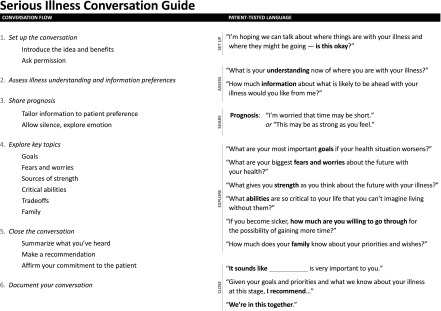
Dialysis-dependent ESRD is a serious illness with high disease burden, morbidity, and mortality. Mortality in the first year on dialysis for individuals over age 75 years old approaches 40%, and even those with better prognoses face multiple hospitalizations and declining functional status. In the last month of life, patients on dialysis over age 65 years old experience higher rates of hospitalization, intensive care unit admission, procedures, and death in hospital than patients with cancer or heart failure, while using hospice services less. This high intensity of care is often inconsistent with the wishes of patients on dialysis but persists due to failure to explore or discuss patient goals, values, and preferences in the context of their serious illness. Fewer than 10% of patients on dialysis report having had a conversation about goals, values, and preferences with their nephrologist, although nearly 90% report wanting this conversation. Many nephrologists shy away from these conversations, because they do not wish to upset their patients, feel that there is too much uncertainty in their ability to predict prognosis, are insecure in their skills at broaching the topic, or have difficulty incorporating the conversations into their clinical workflow. In multiple studies, timely discussions about serious illness care goals, however, have been associated with enhanced goal-consistent care, improved quality of life, and positive family outcomes without an increase in patient distress or anxiety. In this special feature article, we will (1) identify the barriers to serious illness conversations in the dialysis population, (2) review best practices in and specific approaches to conducting serious illness conversations, and (3) offer solutions to overcome barriers as well as practical advice, including specific language and tools, to implement serious illness conversations in the dialysis population.
Keywords: Anxiety; Communication; Goals; Hospices; Humans; Intensive Care Units; Kidney Failure, Chronic; Language; Neoplasms; Patient Care Planning; Prognosis; Uncertainty; Workflow; communication; dialysis; end stage kidney disease; geriatric nephrology; heart failure; hospitalization; quality of life; renal dialysis.
Copyright © 2017 by the American Society of Nephrology.
Figures
References
-
- USRDS : 2014 Annual Data Report: Epidemiology of Kidney Disease in the United States, Bethesda, MD, National Institutes of Health, National Institute of Diabetes and Digestive and Kidney Diseases, 2014
-
- USRDS : 2015 USRDS Annual Data Report: Epidemiology of Kidney Disease in the United States, Bethesda, MD, National Institutes of Health, National Institute of Diabetes and Digestive and Kidney Diseases, 2015
-
- Williams ME, Sandeep J, Catic A: Aging and ESRD demographics: Consequences for the practice of dialysis. Semin Dial 25: 617–622, 2012 - PubMed
Publication types
MeSH terms
LinkOut - more resources
Full Text Sources
Other Literature Sources
Medical