


Use of Medications for Treating Anxiety and Depression in Cancer Survivors in the United States
- PMID: 28034075
- PMCID: PMC5455687
- DOI: 10.1200/JCO.2016.67.7690
Use of Medications for Treating Anxiety and Depression in Cancer Survivors in the United States
Abstract
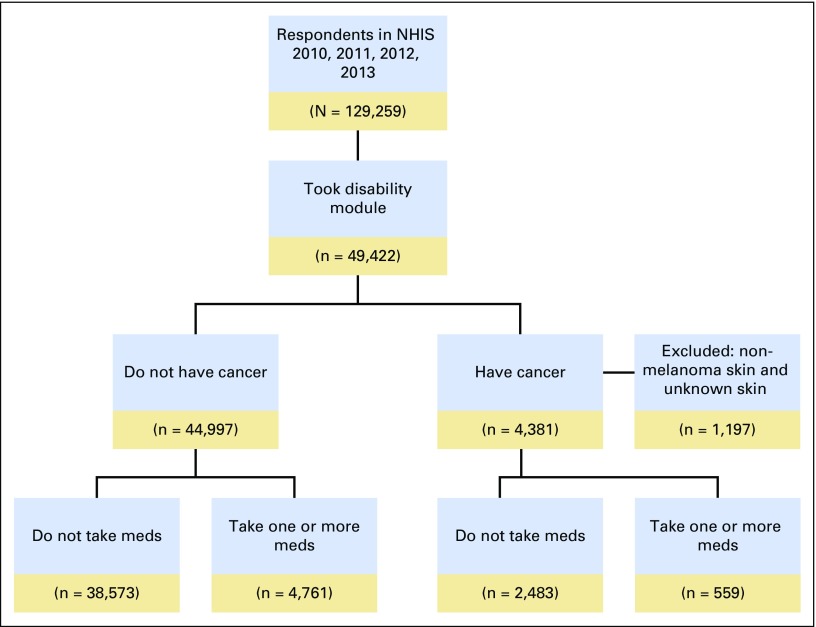
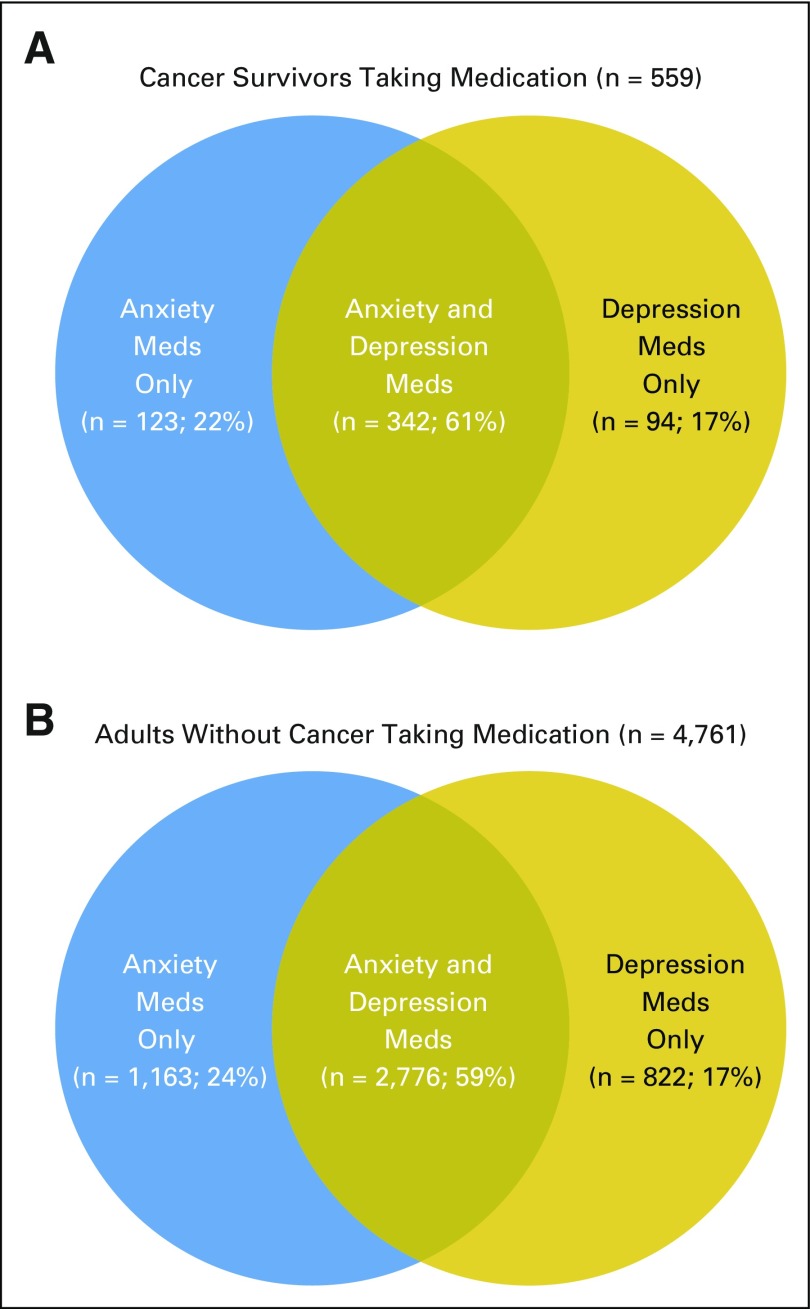
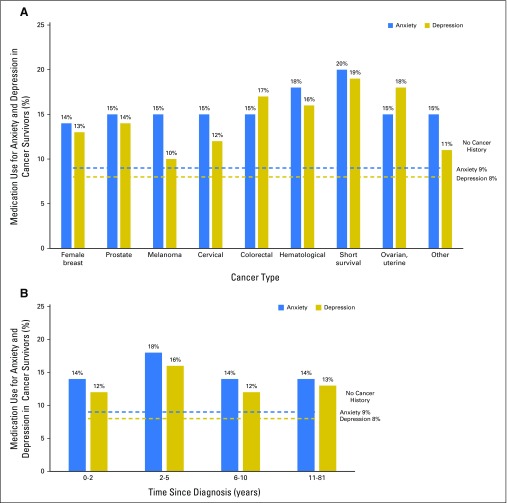
Purpose This study used population-based data to estimate the percentage of cancer survivors in the United States reporting current medication use for anxiety and depression and to characterize the survivors taking this type of medication. Rates of medication use in cancer survivors were compared with rates in the general population. Methods We analyzed data from the National Health Interview Survey, years 2010 to 2013, identifying cancer survivors (n = 3,184) and adults with no history of cancer (n = 44,997) who completed both the Sample Adult Core Questionnaire and the Adult Functioning and Disability Supplement. Results Compared with adults with no history of cancer, cancer survivors were significantly more likely to report taking medication for anxiety (16.8% v 8.6%, P < .001), depression (14.1% v 7.8%, P < .001), and one or both of these conditions combined (19.1% v 10.4%, P < .001), indicating that an estimated 2.5 million cancer survivors were taking medication for anxiety or depression in the United States at that time. Survivor characteristics associated with higher rates of medication use for anxiety included being younger than 65 years old, female, and non-Hispanic white, and having public insurance, a usual source of medical care, and multiple chronic health conditions. Survivor characteristics associated with medication use for depression were largely consistent with those for anxiety, with the exceptions that insurance status was not significant, whereas being widowed/divorced/separated was associated with more use. Conclusion Cancer survivors in the United States reported medication use for anxiety and depression at rates nearly two times those reported by the general public, likely a reflection of greater emotional and physical burdens from cancer or its treatment.
Figures
References
-
- Hoffman KE, McCarthy EP, Recklitis CJ, et al. Psychological distress in long-term survivors of adult-onset cancer: Results from a national survey. Arch Intern Med. 2009;169:1274–1281. - PubMed
-
- Massie MJ. Prevalence of depression in patients with cancer. J Natl Cancer Inst Monogr. 2004:57–71. - PubMed
-
- Lu D, Andersson TM, Fall K, et al. Clinical diagnosis of mental disorders immediately before and after cancer diagnosis: A nationwide matched cohort study in Sweden. JAMA Oncol. 2:1188–1196. Epub ahead of print, 2016. - PubMed
-
- Fann JR, Thomas-Rich AM, Katon WJ, et al. Major depression after breast cancer: A review of epidemiology and treatment. Gen Hosp Psychiatry. 2008;30:112–126. - PubMed
MeSH terms
Substances
LinkOut - more resources
Full Text Sources
Other Literature Sources
Medical
