


Formation and Physiochemical Properties of Silver Nanoparticles with Various Exopolysaccharides of a Medicinal Fungus in Aqueous Solution
- PMID: 28036086
- PMCID: PMC6155925
- DOI: 10.3390/molecules22010050
Formation and Physiochemical Properties of Silver Nanoparticles with Various Exopolysaccharides of a Medicinal Fungus in Aqueous Solution
Abstract
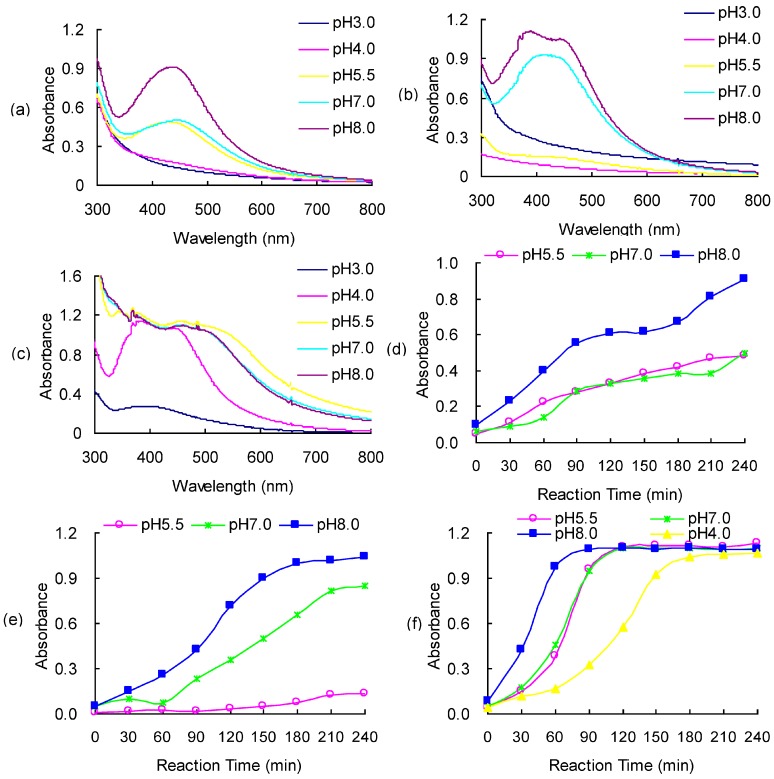
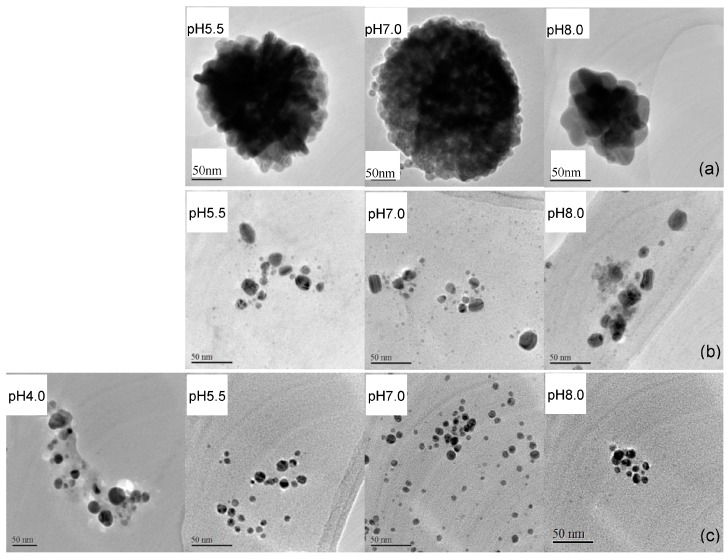
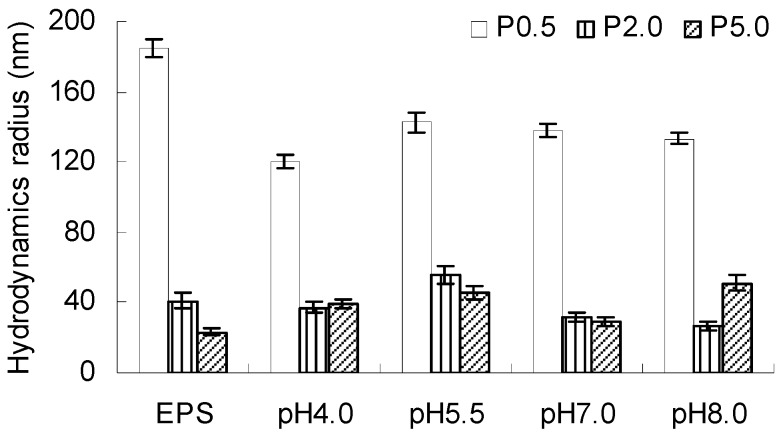
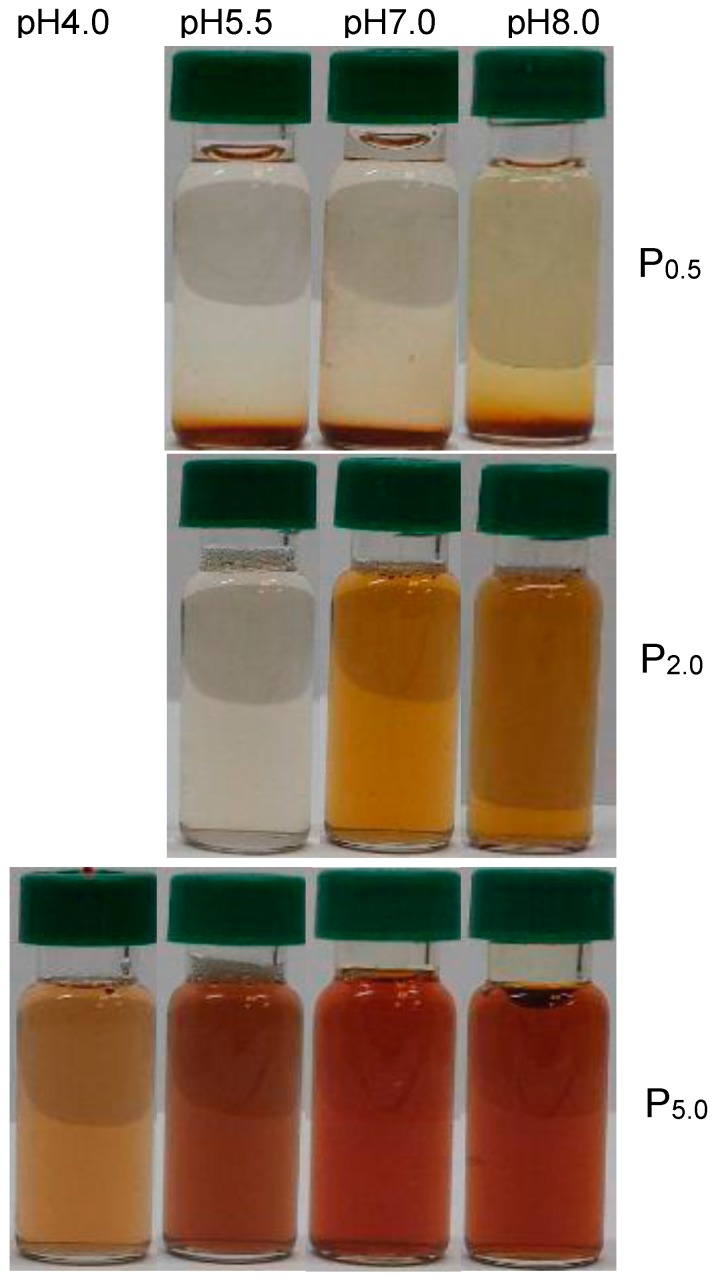
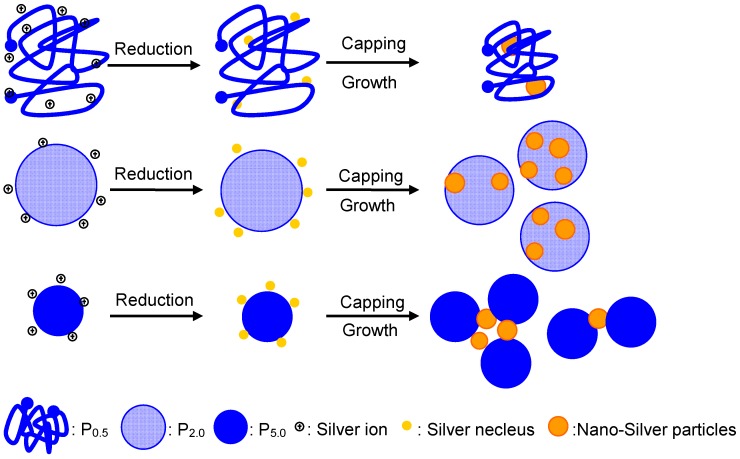
Natural polysaccharides are the most widely used biopolymers for green synthesis of eco-friendly silver nanoparticles (AgNPs). In a previous study, a high molecular weight (MW) fraction of exopolysaccharides (EPS) produced by a medicinal fungus Cs-HK1 has been shown useful for green and facile synthesis of AgNPs in water. This study was to further evaluate the effects of molecular properties of EPS on the formation, stability and properties of AgNPs with different EPS fractions at various pH conditions. Three EPS fractions (P0.5, P2.0 and P5.0: MW high to low and protein content low to high) were reacted with silver nitrate at various pH 3.0-8.0 in water. The most favorable pH range was 5.5-8.0 for the formation and stable dispersion of AgNPs. At a given pH, the maximum amount of AgNPs was produced with P5.0, and the minimum with P0.5. The shape, size and physiochemical properties of AgNPs were strongly affected by the molecular characteristics of EPS (MW and conformation). The results may be helpful for understanding the factors and mechanisms for formation of stable AgNPs with natural polysaccharides and the interactions between AgNPs and the polysaccharide hydrocolloids in water.
Keywords: dispersion stability; fungal exopolysaccharide; molecular characteristics; molecular interactions; pH; silver nanoparticle.
Conflict of interest statement
The authors declare no conflicts of interest.
Figures
References
-
- Pandiselvi K., Tharnbidurai S. Synthesis, characterization, and antimicrobial activity of chitosan-zinc oxide/polyaniline composites. Mater. Sci. Semicond. Process. 2015;31:573–581. doi: 10.1016/j.mssp.2014.12.044. - DOI
-
- Glisic S., Cakic M., Nikolic G., Danilovic B. Synthesis, characterization and antimicrobial activity of carboxymethyl dextrane stabilized silver nanoparticles. J. Mol. Struct. 2015;1084:345–351. doi: 10.1016/j.molstruc.2014.12.048. - DOI
MeSH terms
Substances
LinkOut - more resources
Full Text Sources
Other Literature Sources
Medical
Miscellaneous
