


Parents' experience of unintended childbearing: A qualitative study of factors that mitigate or exacerbate effects
- PMID: 28038432
- PMCID: PMC5258712
- DOI: 10.1016/j.socscimed.2016.12.024
Parents' experience of unintended childbearing: A qualitative study of factors that mitigate or exacerbate effects
Abstract
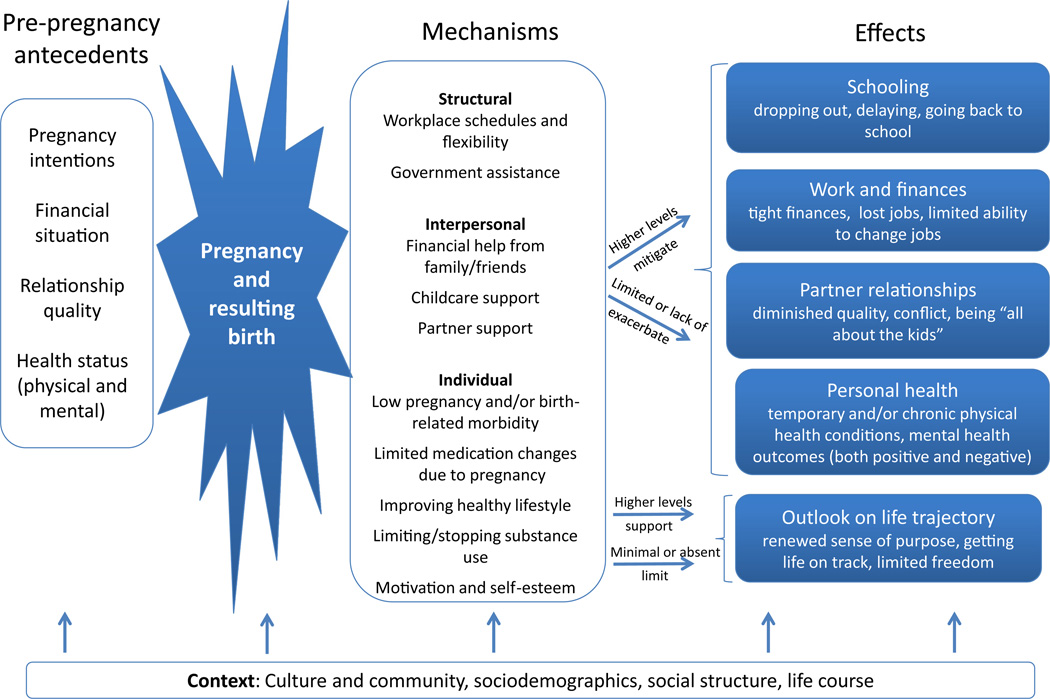
Births resulting from an unintended pregnancy affect individuals differentially, and some may experience more negative consequences than others. In this study, we sought to describe the mechanisms through which the severity of effects may be mitigated or exacerbated. We conducted in-depth interviews with 35 women and 30 men, all with a youngest child born resulting from an unintended pregnancy, in two urban sites in the United States. Respondents described both negative and positive effects of the child's birth in the areas of school; work and finances; partner relationships; personal health and outlook on life trajectories. Mechanisms through which unintended pregnancies mitigated or exacerbated certain effects fell at the individual (e.g. lifestyle modification), interpersonal (e.g. partner support) and structural (e.g. workplace flexibility) levels. These qualitative findings deepen understanding of the impact of unintended childbearing on the lives of women, men and families.
Keywords: Childbearing; Parenting; Pregnancy intentions; Qualitative research; Unintended pregnancy; United States.
Copyright © 2016 Elsevier Ltd. All rights reserved.
Figures
References
-
- Bronte-Tinkew J, Ryan S, Carrano J, Moore KA. Resident fathers' pregnancy intentions, prenatal behaviors, and links to involvement with infants. J. Marriage Fam. 2007;69(4):977–990.
-
- Bronte-Tinkew J, Scott ME, Horowitz A. Male pregnancy intendedness and children's mental proficiency and attachment security during toddlerhood. J. Marriage Fam. 2009;71(4):1001–1025.
-
- Diaz CJ, Fiel JE. The Effect (s) of teen pregnancy: reconciling theory, methods, and findings. Demography. 2016;53(1):85–116. - PubMed
-
- Edin K, Kefalas M. Promises I Can Keep: Why Poor Women Put Motherhood before Marriage. Berkeley, CA: University of California Press; 2005.
MeSH terms
Grants and funding
LinkOut - more resources
Full Text Sources
Other Literature Sources
