Review
. 2017 Mar 1;312(3):G194-G200.
doi: 10.1152/ajpgi.00216.2016. Epub 2016 Dec 30.

Extracellular vesicles in liver diseases

Affiliations
Review

Extracellular vesicles in liver diseases

Sayantan Maji et al. Am J Physiol Gastrointest Liver Physiol. .

Abstract

Extracellular vesicles (EVs) are membrane-bound vesicles that are released by cells into their extracellular environment, have selective enrichment of specific proteins and RNA, and can mediate intercellular communication. In this review we highlight recent observations of the role of EVs in liver injury, viral hepatitis, alcoholic or nonalcoholic liver disease, biliary tract disease, and liver cancers. Potential applications as markers of diseases or for therapeutic applications are outlined to emphasize the new opportunities that are arising from the study of EVs.

Keywords: cancer; extracellular vesicles; liver diseases; microRNA.


Figures

Fig. 1.
Fig. 1.
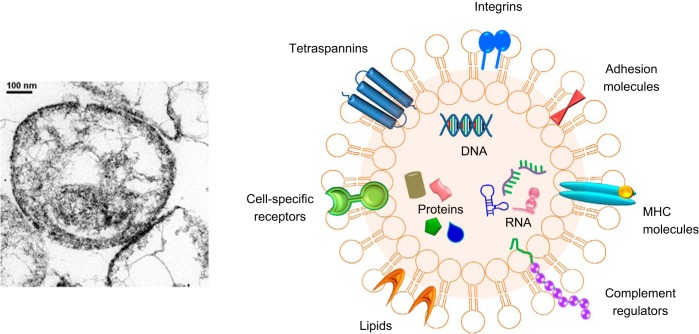
Extracellular vesicles. Transmission electron micrograph of extracellular vesicles isolated from liver cancer cells in culture (left) and schematic to illustrate typical contents (right). EVs contain several types of molecules, proteins, DNA, mRNA, lncRNA, and miRNA, some of which are selectively enriched and specific to cell of origin. MHC, major histocompatibility complex.
Fig. 2.
Fig. 2.
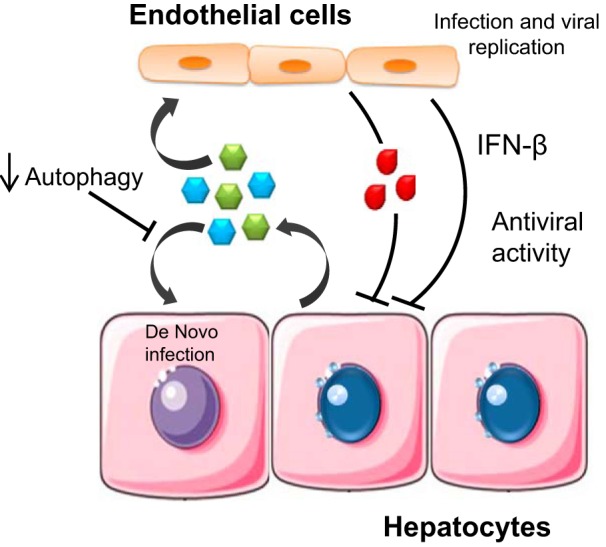
Examples of diverse roles of EVs in viral hepatitis. EVs from infected hepatocytes can transfer virions and viral RNA to adjacent cells promoting de novo infection. In contrast, EVs from hepatic endothelial cells that have been exposed to viral particles can promote antiviral activity.
Fig. 3.
Fig. 3.
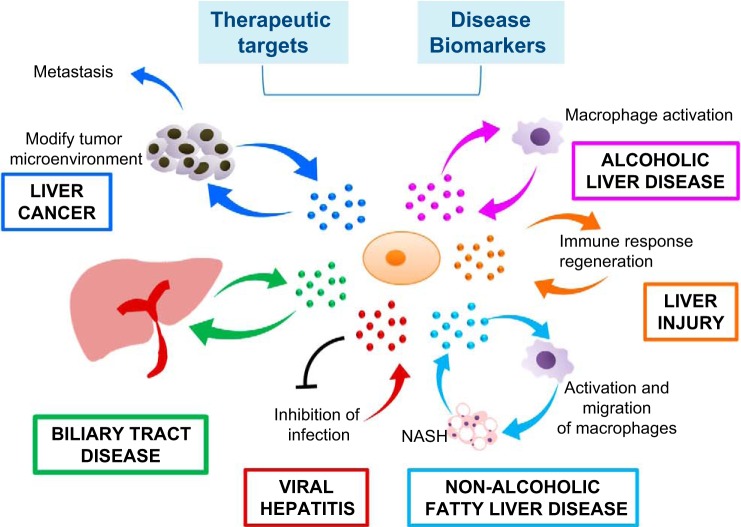
EVs in liver diseases. EVs from hepatocytes can mediate early immune responses in drug-induced liver injury, promote viral hepatitis, promote liver regeneration in ischemia-reperfusion injury and hepatectomy, and promote alcoholic and nonalcoholic steatohepatitis through activation of macrophages. EVs from hepatic endothelial cells can inhibit viral progression, whereas EVs from stem cells can reduce liver injury. Liver cancer cell EVs can create a premetastatic niche, educate the tumor stroma, and promote metastasis. EVs can be exploited for therapeutic intervention. Selective EV contents that are specific to cell of origin such as miRNA are potential biomarkers for disease.

References

    1. Alenquer M, Amorim MJ. Exosome biogenesis, regulation, and function in viral infection. Viruses 7: 5066–5083, 2015. doi:10.3390/v7092862. - DOI - PMC - PubMed
    1. Al-Nedawi K, Meehan B, Micallef J, Lhotak V, May L, Guha A, Rak J. Intercellular transfer of the oncogenic receptor EGFRvIII by microvesicles derived from tumour cells. Nat Cell Biol 10: 619–624, 2008. doi:10.1038/ncb1725. - DOI - PubMed
    1. Anderson HC. Vesicles associated with calcification in the matrix of epiphyseal cartilage. J Cell Biol 41: 59–72, 1969. doi:10.1083/jcb.41.1.59. - DOI - PMC - PubMed
    1. Basu S, Bhattacharyya SN. Insulin-like growth factor-1 prevents miR-122 production in neighbouring cells to curtail its intercellular transfer to ensure proliferation of human hepatoma cells. Nucleic Acids Res 42: 7170–7185, 2014. doi:10.1093/nar/gku346. - DOI - PMC - PubMed
    1. Bovy N, Blomme B, Frères P, Dederen S, Nivelles O, Lion M, Carnet O, Martial JA, Noël A, Thiry M, Jérusalem G, Josse C, Bours V, Tabruyn SP, Struman I. Endothelial exosomes contribute to the antitumor response during breast cancer neoadjuvant chemotherapy via microRNA transfer. Oncotarget 6: 10253–10266, 2015. doi:10.18632/oncotarget.3520. - DOI - PMC - PubMed

LinkOut - more resources