


The importance of quality control in validating concentrations of contaminants of emerging concern in source and treated drinking water samples
- PMID: 28040193
- PMCID: PMC6145083
- DOI: 10.1016/j.scitotenv.2016.02.127
The importance of quality control in validating concentrations of contaminants of emerging concern in source and treated drinking water samples
Abstract
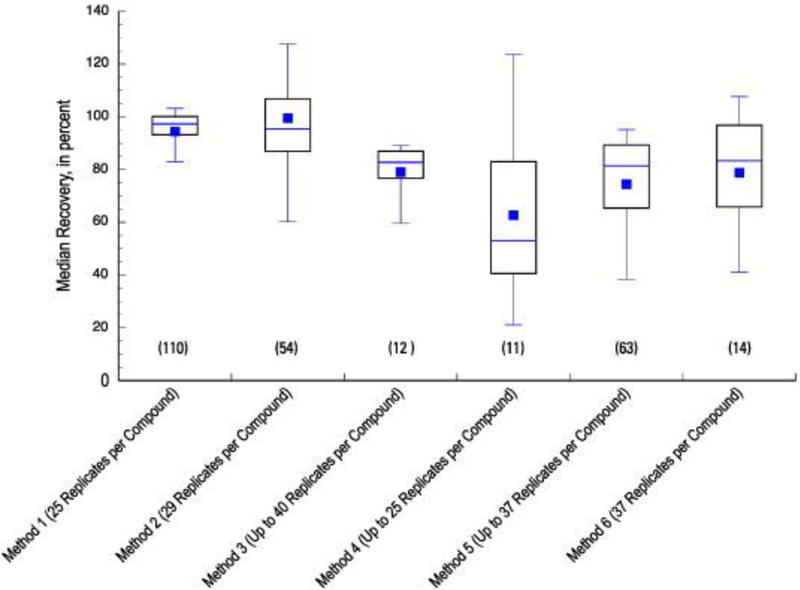
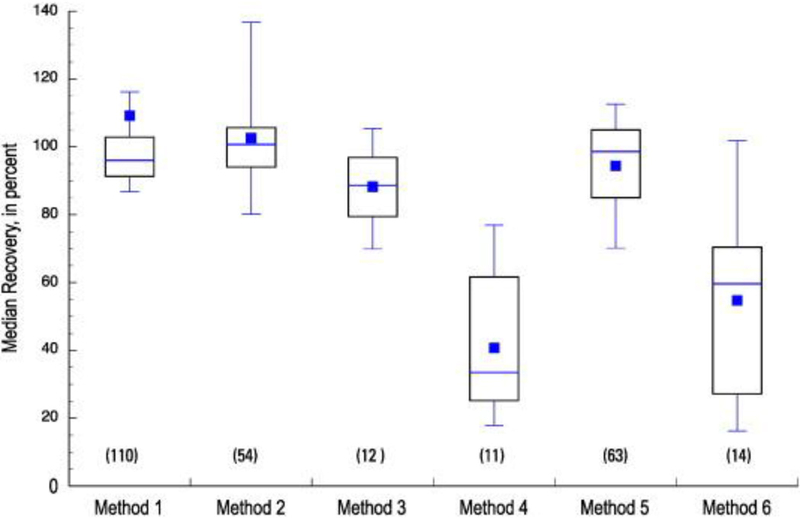
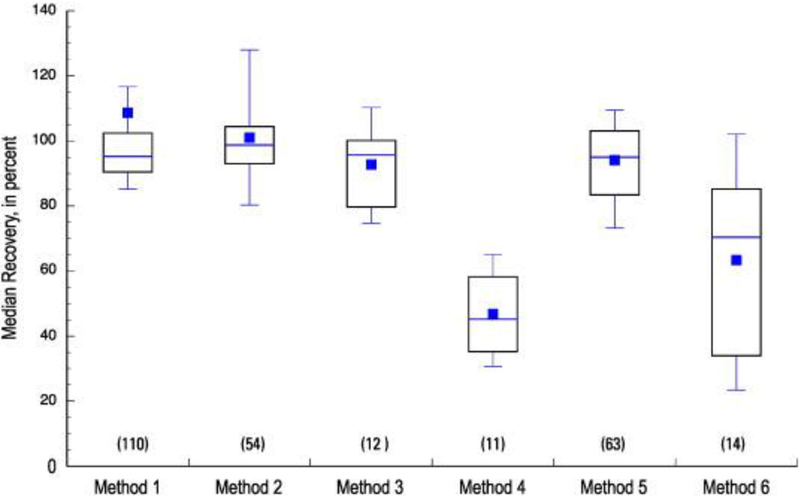
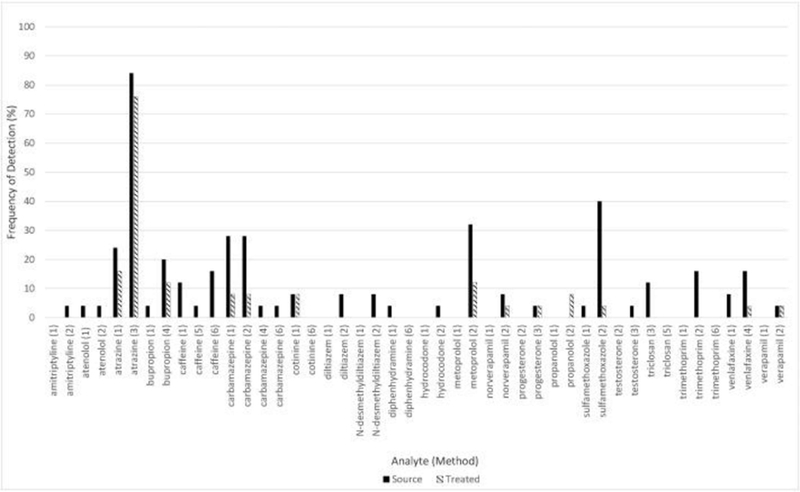
A national-scale survey of 247 contaminants of emerging concern (CECs), including organic and inorganic chemical compounds, and microbial contaminants, was conducted in source and treated drinking water samples from 25 treatment plants across the United States. Multiple methods were used to determine these CECs, including six analytical methods to measure 174 pharmaceuticals, personal care products, and pesticides. A three-component quality assurance/quality control (QA/QC) program was designed for the subset of 174 CECs which allowed us to assess and compare performances of the methods used. The three components included: 1) a common field QA/QC protocol and sample design, 2) individual investigator-developed method-specific QA/QC protocols, and 3) a suite of 46 method comparison analytes that were determined in two or more analytical methods. Overall method performance for the 174 organic chemical CECs was assessed by comparing spiked recoveries in reagent, source, and treated water over a two-year period. In addition to the 247 CECs reported in the larger drinking water study, another 48 pharmaceutical compounds measured did not consistently meet predetermined quality standards. Methodologies that did not seem suitable for these analytes are overviewed. The need to exclude analytes based on method performance demonstrates the importance of additional QA/QC protocols.
Keywords: Contaminants of emerging concern; Drinking water; Mass spectrometry; Pharmaceuticals; Source water.
Published by Elsevier B.V.
Figures
References
-
- Vasquez MI; Lambrianides A; Schneider M; Kümmerer K; Fatta-Kassinos D, Environmental side effects of pharmaceutical cocktails: What we know and what we should know. Journal of Hazardous Materials 2014, 279, 169–189. - PubMed
-
- Wennmalm Å, Pharmaceuticals: Environmental Effects. In Encyclopedia of Environmental Health, Nriagu JO, Ed. Elsevier: Burlington, 2011; pp 462–471.
-
- Zenker A; Cicero MR; Prestinaci F; Bottoni P; Carere M, Bioaccumulation and biomagnification potential of pharmaceuticals with a focus to the aquatic environment. Journal of Environmental Management 2014, 133, 378–387. - PubMed
-
- Fent K; Weston AA; Caminada D, Ecotoxicology of human pharmaceuticals. Aquatic Toxicology 2006, 76, (2), 122–159. - PubMed
MeSH terms
Substances
Grants and funding
LinkOut - more resources
Full Text Sources
Other Literature Sources
Medical
