


A Novel Deletion Mutation of Exon 2 of the C19orf12 Gene in an Omani Family with Mitochondrial Membrane Protein-Associated Neurodegeneration (MPAN)
- PMID: 28042406
- PMCID: PMC5187394
- DOI: 10.5001/omj.2017.12
A Novel Deletion Mutation of Exon 2 of the C19orf12 Gene in an Omani Family with Mitochondrial Membrane Protein-Associated Neurodegeneration (MPAN)
Abstract
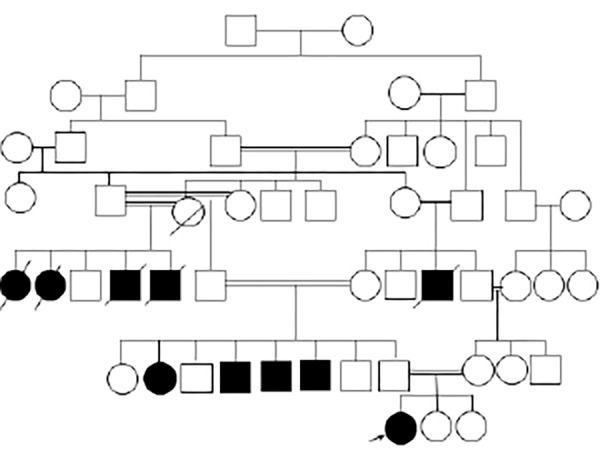
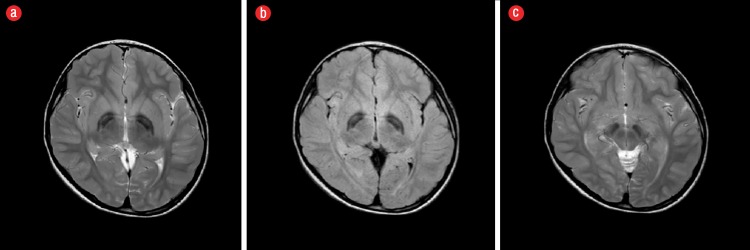
Mutations in the C19orf12 gene are known to cause mitochondrial membrane protein-associated neurodegeneration (MPAN), which is a neurodegeneration with brain iron accumulation (NBIA) type 4 disorder. To the best of our knowledge, this is the first report of a genetically confirmed case of MPAN from Oman. A novel homozygous deletion of exon 2 of the C19orf12 gene was confirmed on the proband, a seven-year-old girl, who presented with gait instability. Brain magnetic resonance imaging showed iron deposition on the basal ganglia. This report highlights the importance of genetic testing of such a clinically and genetically heterogeneous condition among a population with a high consanguinity rate. To overcome the diagnostic difficulty, implementation of a cost-effective approach to perform cascade screening of carriers at risk is needed as well as programs to address risky consanguineous marriages.
Keywords: C19orf12 protein, human; Genetics; Neurodegeneration with brain iron accumulation (NBIA).
Figures
References
-
- Fermin-Delgado R, Roa-Sanchez P, Speckter H, Perez-Then E, Rivera-Mejia D, Foerster B, et al. Involvement of globus pallidus and midbrain nuclei in pantothenate kinase-associated neurodegeneration: measurement of T2 and T2* time. Clin Neuroradiol 2013. Mar;23(1):11-15. 10.1007/s00062-011-0127-9 - DOI - PubMed
Publication types
LinkOut - more resources
Full Text Sources
Other Literature Sources