


Dietary modifications in atopic dermatitis: patient-reported outcomes
- PMID: 28043181
- PMCID: PMC5736303
- DOI: 10.1080/09546634.2016.1278071
Dietary modifications in atopic dermatitis: patient-reported outcomes
Abstract
Background: Patients with atopic dermatitis (AD) commonly turn to dietary modifications to manage their skin condition.
Objectives: To investigate patient-reported outcomes and perceptions regarding the role of diet in AD.
Methods: One hundred and sixty nine AD patients were surveyed in this cross-sectional study. The 61-question survey asked about dietary modifications, perceptions and outcomes.
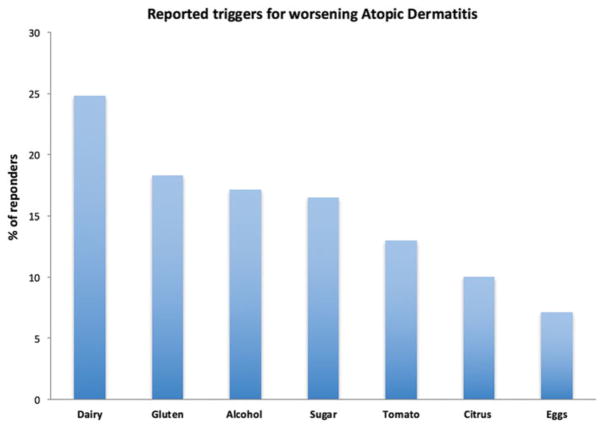
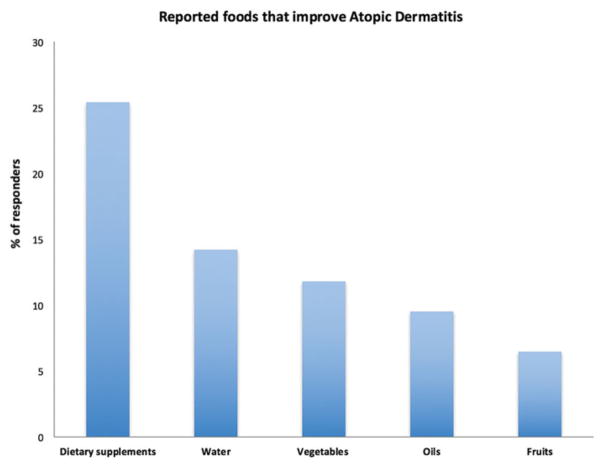
Results: Eighty seven percent of participants reported a trial of dietary exclusion. The most common were junk foods (68%), dairy (49.7%) and gluten (49%). The best improvement in skin was reported when removing white flour products (37 of 69, 53.6%), gluten (37 of 72, 51.4%) and nightshades (18 of 35, 51.4%). 79.9% of participants reported adding items to their diet. The most common were vegetables (62.2%), fish oil (59.3%) and fruits (57.8%). The best improvement in skin was noted when adding vegetables (40 of 84, 47.6%), organic foods (17 of 43, 39.5%) and fish oil (28 of 80, 35%). Although 93.5% of patients believed it was important that physicians discuss with them the role of diet in managing skin disease, only 32.5% had consulted their dermatologist.
Conclusions: Since dietary modifications are extremely common, the role of diet in AD and potential nutritional benefits and risks need to be properly discussed with patients.
Keywords: Atopic dermatitis; diet; patient-reported outcomes.
Conflict of interest statement
The authors report no conflict of interest. There have been no prior presentations of this material.
Figures
References
-
- Park S, Choi HS, Bae JH. Instant noodles, processed food intake, and dietary pattern are associated with atopic dermatitis in an adult population (KNHANES 2009–2011) Asia Pac J Clin Nutr. 2016;25:602–13. - PubMed
MeSH terms
Grants and funding
LinkOut - more resources
Full Text Sources
Other Literature Sources
