


Meta-Analytic Bayesian Model For Differentiating Intestinal Tuberculosis from Crohn's Disease
- PMID: 28045023
- PMCID: PMC5551982
- DOI: 10.1038/ajg.2016.529
Meta-Analytic Bayesian Model For Differentiating Intestinal Tuberculosis from Crohn's Disease
Abstract
Objectives: Distinguishing intestinal tuberculosis (ITB) from Crohn's disease (CD) is difficult, although studies have reported clinical, endoscopic, imaging, and laboratory findings that help to differentiate these two diseases. We aimed to produce estimates of the predictive power of these findings and construct a comprehensive model to predict the probability of ITB vs. CD.
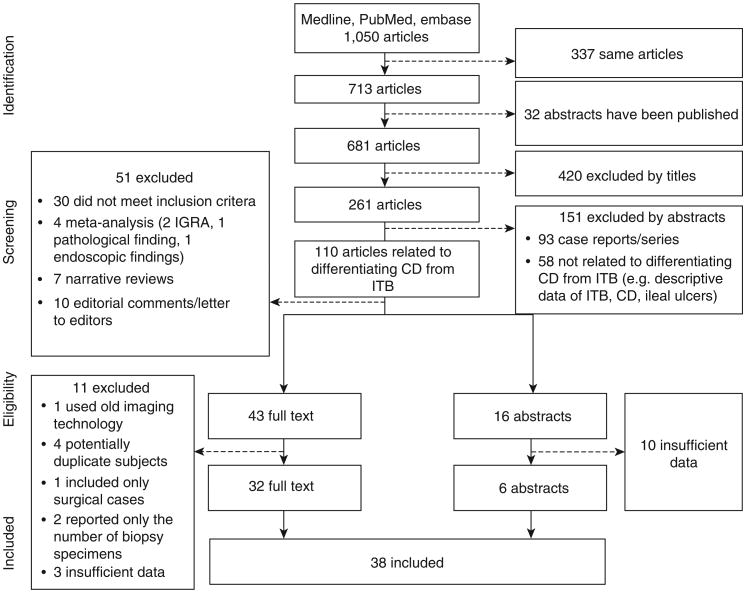
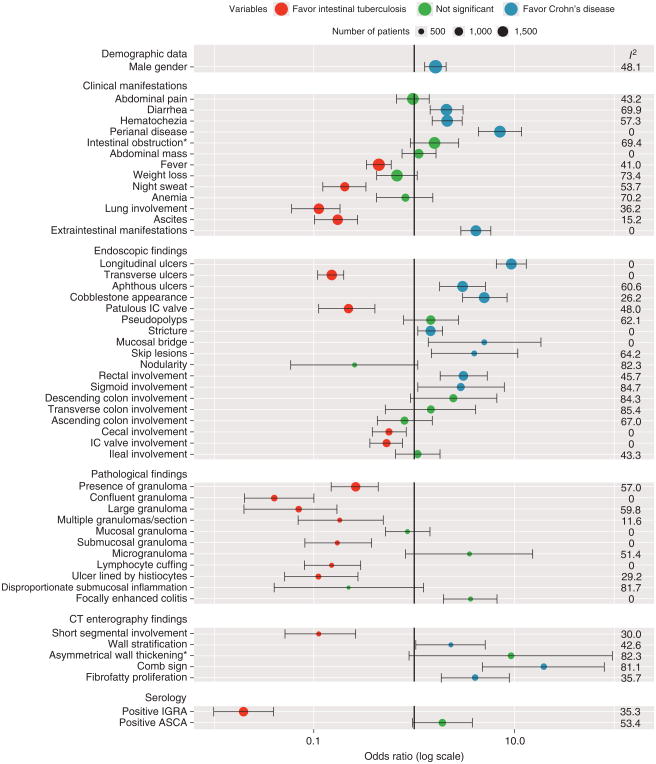
Methods: A systematic literature search for studies differentiating ITB from CD was conducted in MEDLINE, PUBMED, and EMBASE from inception until September 2015. Fifty-five distinct meta-analyses were performed to estimate the odds ratio of each predictive finding. Estimates with a significant difference between CD and ITB and low to moderate heterogeneity (I2<50%) were incorporated into a Bayesian prediction model incorporating the local pretest probability.
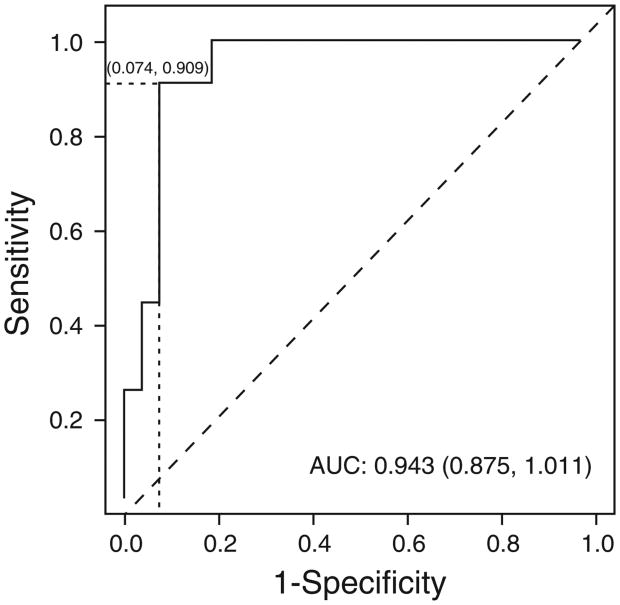
Results: Thirty-eight studies comprising 2,117 CD and 1,589 ITB patients were included in the analyses. Findings in the model that significantly favored CD included male gender, hematochezia, perianal disease, intestinal obstruction, and extraintestinal manifestations; endoscopic findings of longitudinal ulcers, cobblestone appearance, luminal stricture, mucosal bridge, and rectal involvement; pathological findings of focally enhanced colitis; and computed tomographic enterography (CTE) findings of asymmetrical wall thickening, intestinal wall stratification, comb sign, and fibrofatty proliferation. Findings that significantly favored ITB included fever, night sweats, lung involvement, and ascites; endoscopic findings of transverse ulcers, patulous ileocecal valve, and cecal involvement; pathological findings of confluent or submucosal granulomas, lymphocyte cuffing, and ulcers lined by histiocytes; a CTE finding of short segmental involvement; and a positive interferon-γ release assay. The model was validated by gender, clinical manifestations, endoscopic, and pathological findings in 49 patients (27 CD, 22 ITB). The sensitivity, specificity, and accuracy for diagnosis of ITB were 90.9%, 92.6%, and 91.8%, respectively.
Conclusions: A Bayesian model based on the meta-analytic results is presented to estimate the probability of ITB and CD calibrated to local prevalence. This model can be applied to patients using a publicly available web application.
Conflict of interest statement
Figures
References
-
- Dutta AK, Sahu MK, Gangadharan SK, et al. Distinguishing Crohn's disease from intestinal tuberculosis—a prospective study. Trop Gastroenterol. 2011;32:204–9. - PubMed
-
- Li Y, Zhang LF, Liu XQ, et al. The role of in vitro interferongamma-release assay in differentiating intestinal tuberculosis from Crohn's disease in China. J Crohns Colitis. 2012;6:317–23. - PubMed
-
- Lei Y, Yi FM, Zhao J, et al. Utility of in vitro interferon-gamma release assay in differential diagnosis between intestinal tuberculosis and Crohn's disease. J Dig Dis. 2013;14:68–75. - PubMed
-
- Ramadass B, Chittaranjan S, Subramanian V, et al. Fecal polymerase chain reaction for Mycobacterium tuberculosis IS6110 to distinguish Crohn's disease from intestinal tuberculosis. Indian J Gastroenterol. 2010;29:152–6. - PubMed
Publication types
MeSH terms
Grants and funding
LinkOut - more resources
Full Text Sources
Other Literature Sources
Medical
