


Biological Activities of Essential Oils: From Plant Chemoecology to Traditional Healing Systems
- PMID: 28045446
- PMCID: PMC6155610
- DOI: 10.3390/molecules22010070
Biological Activities of Essential Oils: From Plant Chemoecology to Traditional Healing Systems
Abstract
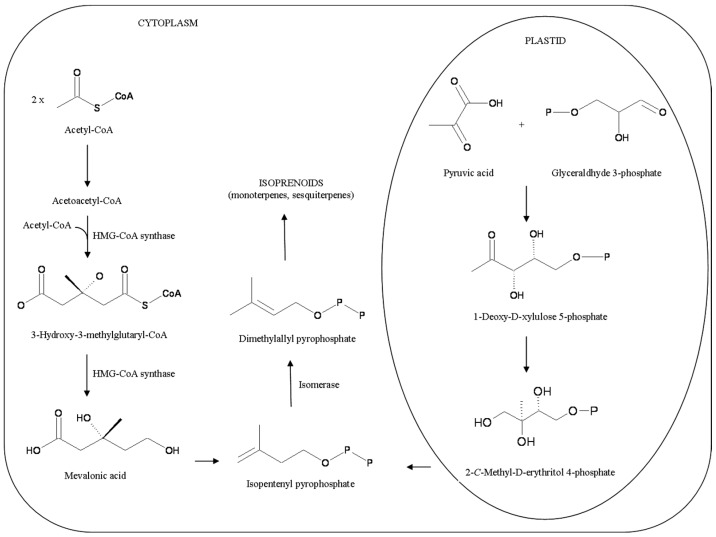
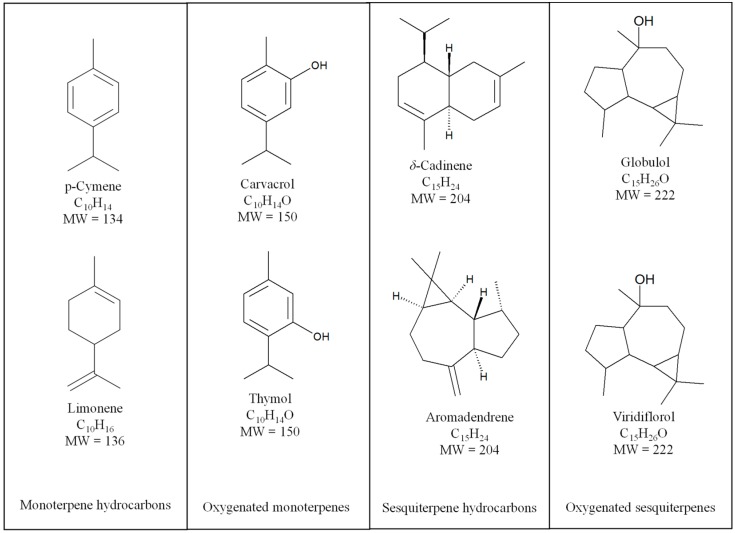
Essential oils are complex mixtures of hydrocarbons and their oxygenated derivatives arising from two different isoprenoid pathways. Essential oils are produced by glandular trichomes and other secretory structures, specialized secretory tissues mainly diffused onto the surface of plant organs, particularly flowers and leaves, thus exerting a pivotal ecological role in plant. In addition, essential oils have been used, since ancient times, in many different traditional healing systems all over the world, because of their biological activities. Many preclinical studies have documented antimicrobial, antioxidant, anti-inflammatory and anticancer activities of essential oils in a number of cell and animal models, also elucidating their mechanism of action and pharmacological targets, though the paucity of in human studies limits the potential of essential oils as effective and safe phytotherapeutic agents. More well-designed clinical trials are needed in order to ascertain the real efficacy and safety of these plant products.
Keywords: antimicrobial activity; ethnobotany; isoprenoids; monoterpenes; oral healthcare; traditional healing systems.
Conflict of interest statement
The authors declare no conflict of interest.
Figures
References
-
- Iriti M., Colnaghi G., Chemat F., Smadja J., Faoro F., Visinoni F.A. Histo-cytochemistry and scanning electron microscopy of Lavender glandular trichomes following conventional and microwave-assisted hydrodistillation of essential oils: A comparative study. Flavour Fragr. J. 2006;21:704–712. doi: 10.1002/ffj.1692. - DOI
-
- Ehrlich P.R., Raven P.H. Butterflies and plants: A study in coevolution. Evol. Psychol. 1964:586–608. doi: 10.2307/2406212. - DOI
Publication types
MeSH terms
Substances
LinkOut - more resources
Full Text Sources
Other Literature Sources
Medical
