


Titin Truncating Variants in Dilated Cardiomyopathy - Prevalence and Genotype-Phenotype Correlations
- PMID: 28045975
- PMCID: PMC5207678
- DOI: 10.1371/journal.pone.0169007
Titin Truncating Variants in Dilated Cardiomyopathy - Prevalence and Genotype-Phenotype Correlations
Abstract
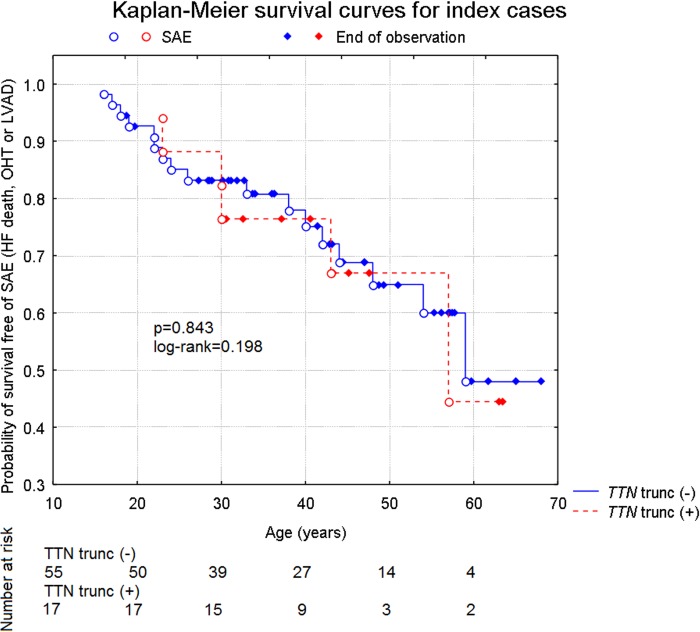
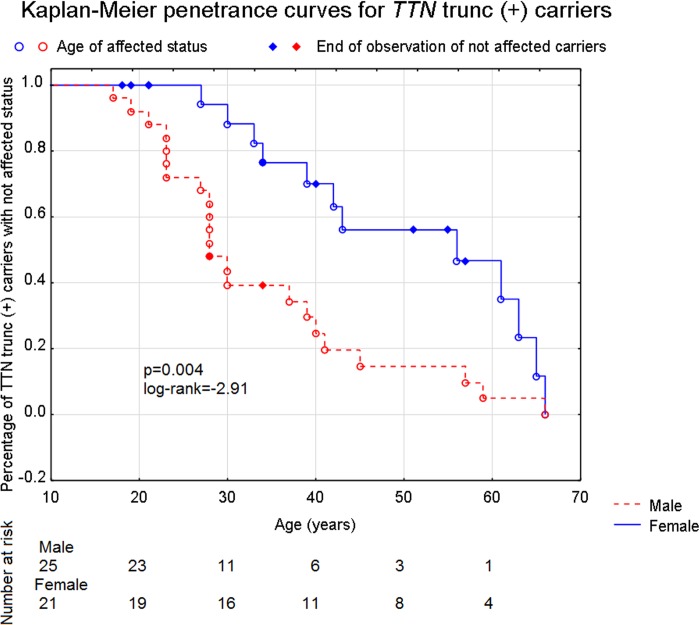
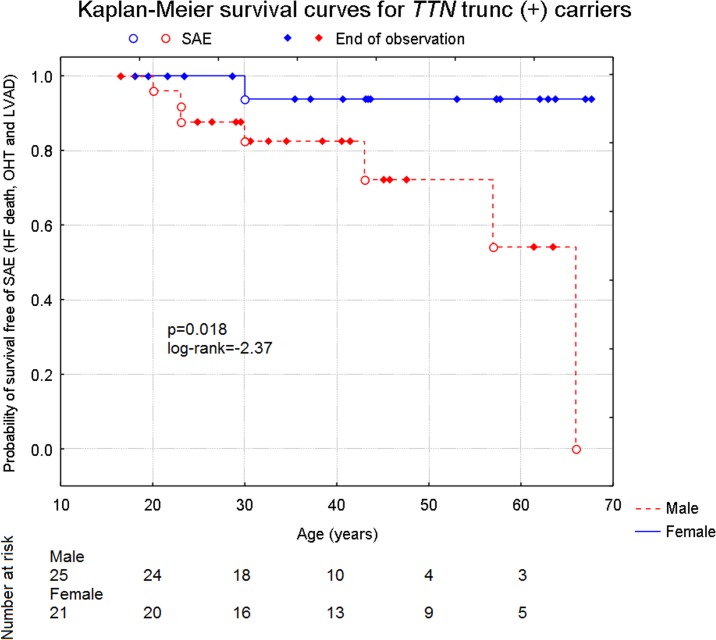
TTN gene truncating variants are common in dilated cardiomyopathy (DCM), although data on their clinical significance is still limited. We sought to examine the frequency of truncating variants in TTN in patients with DCM, including familial DCM (FDCM), and to look for genotype-phenotype correlations. Clinical cardiovascular data, family histories and blood samples were collected from 72 DCM probands, mean age of 34 years, 45.8% FDCM. DNA samples were examined by next generation sequencing (NGS) with a focus on the TTN gene. Truncating mutations were followed up by segregation study among family members. We identified 16 TTN truncating variants (TTN trunc) in 17 probands (23.6% of all cases, 30.3% of FDCM, 17.9% of sporadic DCM). During mean 63 months from diagnosis, there was no difference in adverse cardiac events between probands with and without TTN truncating mutations. Among relatives 29 mutation carriers were identified, nine were definitely affected (31%), eight probably affected (27.6%) one possibly affected (3.4%) and eleven were not affected (37.9%). When relatives with all affected statuses were combined, disease penetrance was still incomplete (62.1%) even after exclusion of unaffected relatives under 40 (82%) and was higher in males versus females. In all mutation carriers, during follow-up, 17.4% had major adverse cardiac events, and prognosis was significantly worse in men than in women. In conclusion, TTN truncating variants were observed in nearly one fourth of young DCM patient population, in vast majority without conduction system disease. Incomplete penetrance suggests possible influence of other genetic and/or environmental factors on the course of cardiotitinopathy. Counseling should take into account sex and incomplete penetrance.
Conflict of interest statement
The authors have declared that no competing interests exist.
Figures

References
-
- Akinrinade O, Ollila L, Vattulainen S, Tallila J, Gentile M, Salmenpera P, et al. Genetics and genotype-phenotype correlations in Finnish patients with dilated cardiomyopathy. European heart journal. 2015;36(34):2327–37. PubMed Central PMCID: PMC4561350. 10.1093/eurheartj/ehv253 - DOI - PMC - PubMed
MeSH terms
Substances
Supplementary concepts
LinkOut - more resources
Full Text Sources
Other Literature Sources
