. 2017 Jan 3;12(1):e0168879.
doi: 10.1371/journal.pone.0168879. eCollection 2017.

Microbial Diversity and Cyanobacterial Production in Dziani Dzaha Crater Lake, a Unique Tropical Thalassohaline Environment

Affiliations

Microbial Diversity and Cyanobacterial Production in Dziani Dzaha Crater Lake, a Unique Tropical Thalassohaline Environment

Christophe Leboulanger et al. PLoS One. .

Abstract

This study describes, for the first time, the water chemistry and microbial diversity in Dziani Dzaha, a tropical crater lake located on Mayotte Island (Comoros archipelago, Western Indian Ocean). The lake water had a high level of dissolved matter and high alkalinity (10.6-14.5 g L-1 eq. CO32-, i.e. 160-220 mM compare to around 2-2.5 in seawater), with salinity up to 52 psu, 1.5 higher than seawater. Hierarchical clustering discriminated Dziani Dzaha water from other alkaline, saline lakes, highlighting its thalassohaline nature. The phytoplankton biomass was very high, with a total chlorophyll a concentration of 524 to 875 μg chl a L-1 depending on the survey, homogeneously distributed from surface to bottom (4 m). Throughout the whole water column the photosynthetic biomass was dominated (>97% of total biovolume) by the filamentous cyanobacteria Arthrospira sp. with a straight morphotype. In situ daily photosynthetic oxygen production ranged from 17.3 to 22.2 g O2 m-2 d-1, consistent with experimental production / irradiance measurements and modeling. Heterotrophic bacterioplankton was extremely abundant, with cell densities up to 1.5 108 cells mL-1 in the whole water column. Isolation and culture of 59 Eubacteria strains revealed the prevalence of alkaliphilic and halophilic organisms together with taxa unknown to date, based on 16S rRNA gene analysis. A single cloning-sequencing approach using archaeal 16S rDNA gene primers unveiled the presence of diverse extremophilic Euryarchaeota. The water chemistry of Dziani Dzaha Lake supports the hypothesis that it was derived from seawater and strongly modified by geological conditions and microbial activities that increased the alkalinity. Dziani Dzaha has a unique consortium of cyanobacteria, phytoplankton, heterotrophic Eubacteria and Archaea, with very few unicellular protozoa, that will deserve further deep analysis to unravel its uncommon diversity. A single taxon, belonging to the genus Arthrospira, was found responsible for almost all photosynthetic primary production.


Conflict of interest statement

The authors have declared that no competing interests exist.

Figures
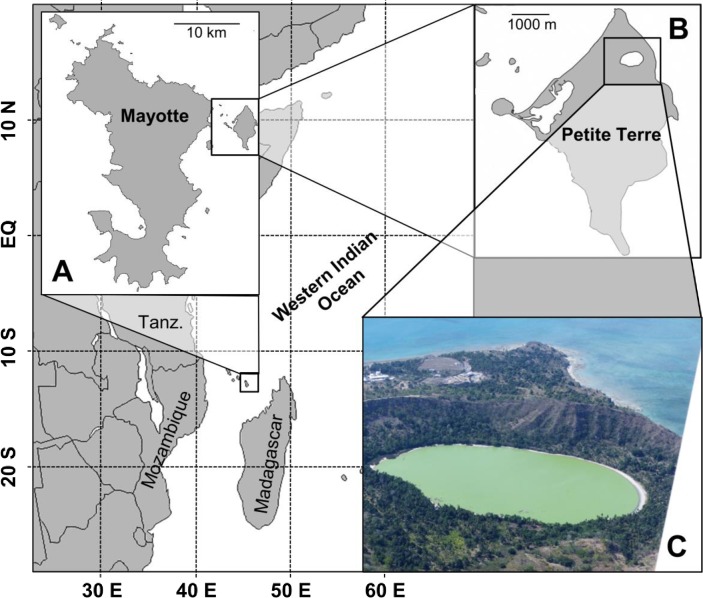
Fig 1
Fig 1. Situation map of study site.
(A) Mayotte Archipelago in the Western Indian Ocean, and (B) location of Dziani Dzaha in Petite Terre. (C) An aerial view from an ultra light plane is given, facing North. Picture took in October, 2014, in dry season at low water level. West to East distance between shorelines is 650 m.
Fig 2
Fig 2. Typical records of vertical profiles.
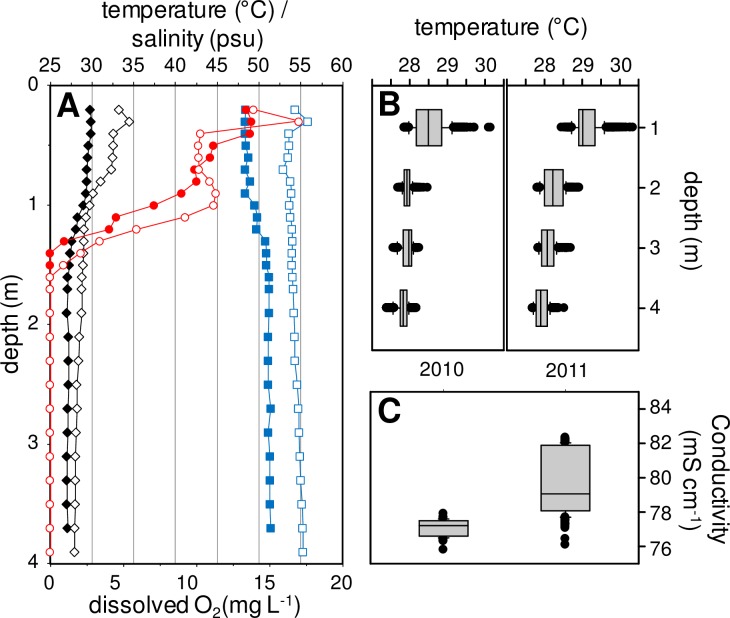
(A) Temperature (°C, black diamonds), salinity (psu, blue squares) and dissolved oxygen concentration (mg L-1, red circles) are given for CLB station of Dziani Dzaha Lake in 2010 (closed symbols) and 2011 (open symbols). (B) Box-plot of temperature record at four selected depths during the two surveys (n = 2400). (C) Box-plot of all conductivity records during the two surveys (n = 370 for 2010; n = 252 for 2011).
Fig 3
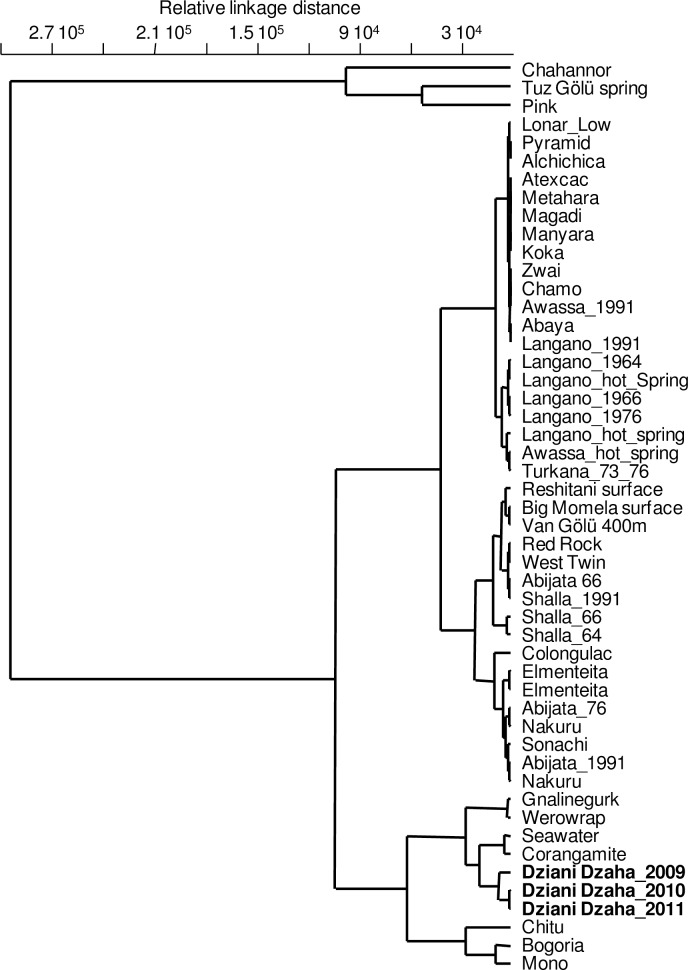
Fig 3. Hierarchical clustering of 50 saline lake waters.
Ward’s method clustering based on the records of the six major dissolved elements (Na+, K+, Mg2+, Ca2+, SO42-, Cl-) expressed as mg L-1, and total alkalinity expressed as mg L-1 eq.CO32-.
Fig 4
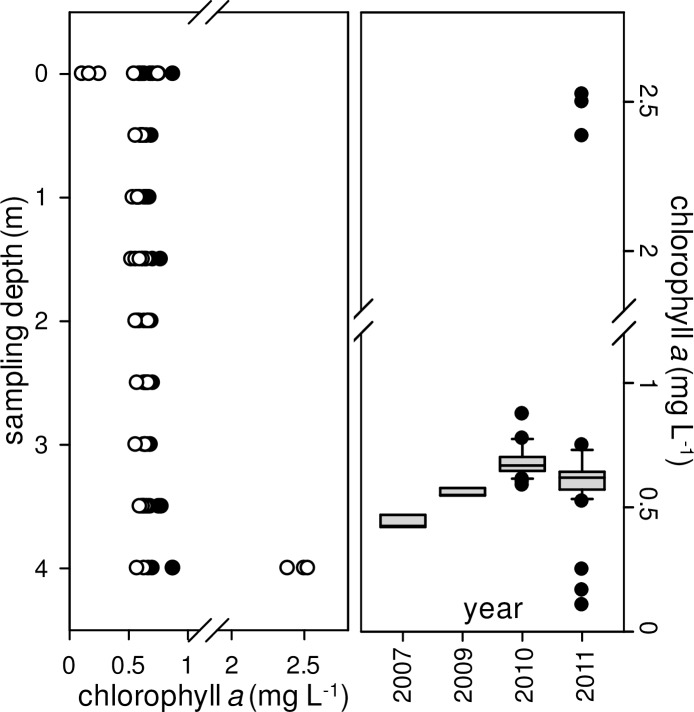
Fig 4. Chlorophyll a dynamics in the Dziani Dzaha during 2010 and 2011 surveys.
(A) Sum of all chl a measures depending on sampling depth for 2010 (closed circles, n = 27) and 2011 (open circles, n = 37) surveys. (B) Box-plot indicating median, 10th and 90th percentiles (whiskers) and outliers (closed circles) for chl a concentrations including single samples collected in 2007 (n = 3) and 2009 (n = 3), and 2010 (n = 33) and 2011 (n = 47) surveys.
Fig 5
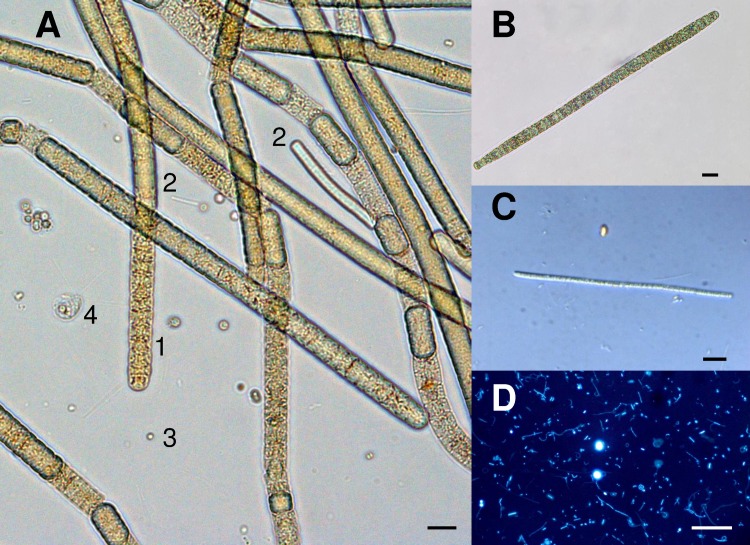
Fig 5. Microscopical photographies of plankton samples of Dziani Dzaha (surface sample, 2011 survey).
(A) Total phytoplankton community after Lugol staining with large Arthrospira sp. trichomes (1), thin filaments belonging to the Leptolyngbyaceae family (2), unidentified coccoidal cells (3), and large eukaryotic colored flagellate (4). (B) General view of Arthrospira sp. (C) General view of thin filaments of cyanobacteria belonging to the Leptolyngbyaceae family. (D) Epifluorescence microscopy picture after SybrGold staining of nucleic acids, highlighting bacterioplankton morphological diversity. Scale bar: 10 μm.
Fig 6
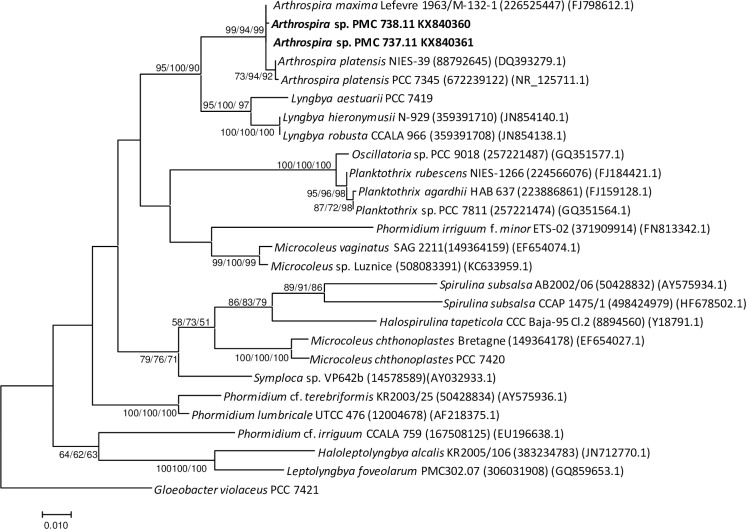
Fig 6. Consensus phylogenetic tree (maximum likelihood) constructed using 16S rRNA gene sequences (1310 bp).
Clustering of Dziani Dzaha Arthrospira sp. (in bold) with related Oscillatoriales species is provided with accession number and collection codes. Gloeobacter violaceus PCC7421 was used as outgroup. Number near nodes indicates bootstrap values >50% for neighbor joining, maximum parsimony and maximum likelihood analyses.
Fig 7
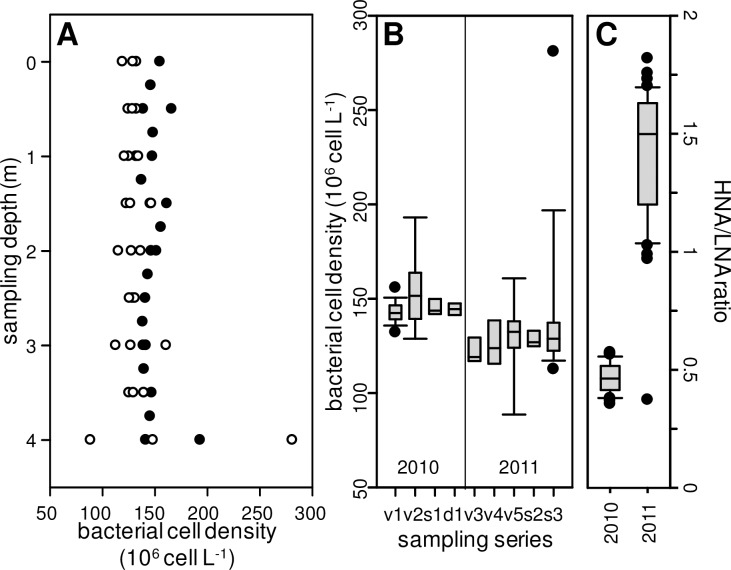
Fig 7. Bacterioplankton cell densities in the Dziani Dzaha.
(A) Vertical profiles from discrete samples collected during 2010 (closed symbols) and 2011 (open symbols) surveys. (B) Box-plot indicating median, 10th and 90th percentiles (whiskers) and outliers (closed circles) for bacterioplankton cell densities depending on sampling series: v = vertical profiles; s = surface spatial sampling; d = deep spatial sampling. (C) Box-plot (same attributes) of high- to low-DNA content bacteria ratio for 2010 and 2011 surveys.
Fig 8
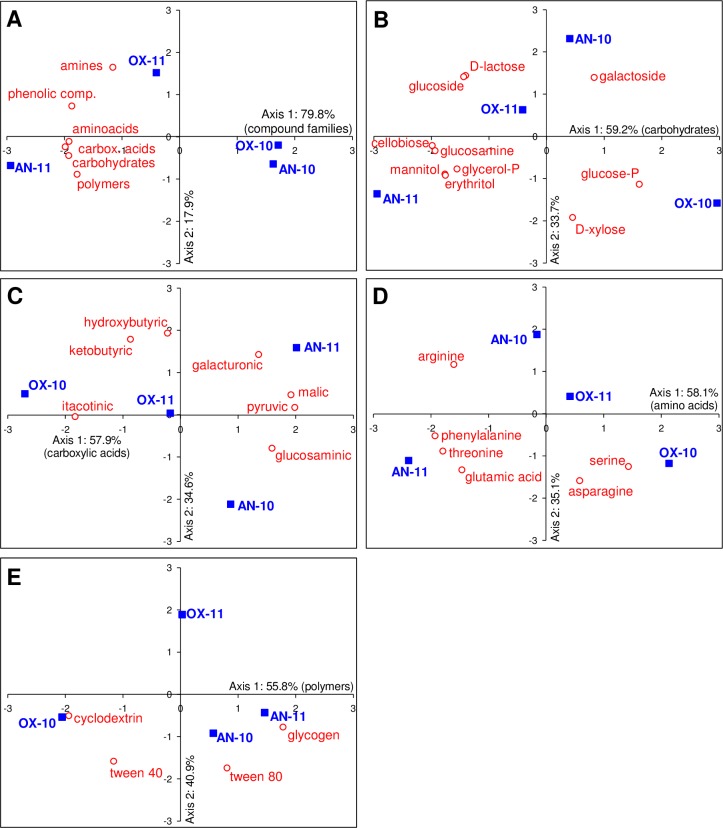
Fig 8. Principal component analysis (PCA) of Biolog ECO plates community metabolic potential.
AWCD after 96 h incubation was used as input data. Samples are represented by blue squares, with OX and AN for oxic and anoxic conditions respectively, with sampling year provided. PCA were performed for compound merged (A) in families, or molecules within a chemical group: (B) carbohydrates, (C) carboxylic acids, (D) amino acids, and (E) polymers.

References

    1. Lanzén A, Simachew A, Gessesse A, Chmolowska D, Jonassen I, Øvreås L. Surprising prokaryotic and eukaryotic diversity, community structure and biogeography of Ethiopian soda lakes. PLOS One. 2013; 8: e72577 10.1371/journal.pone.0072577 - DOI - PMC - PubMed
    1. Montoya L, Vizioli C, Rodríguez N, Rastoll MJ, Amils R, Marin I. Microbial community composition of Tirez lagoon (Spain), a highly sulfated athalassohaline environment. Aquatic Biosystems. 2013; 9: 19 10.1186/2046-9063-9-19 - DOI - PMC - PubMed
    1. Demergasso C, Casamayor EO, Chong G, Galleguillos P, Escudero L, Pedrós-Alió C. Distribution of prokaryotic genetic diversity in athalassohaline lakes of the Atacama Desert, Northern Chile. FEMS Microbiol Ecol. 2004; 48: 57–69. 10.1016/j.femsec.2003.12.013 - DOI - PubMed
    1. Grant WD. Alkaline environments and biodiversity In: Gerday C, Glansdorff N. editors. Extremophiles. Encyclopedia of Life Support Systems, Unesco-EOLSS publishers, Oxford, UK; 2006.
    1. Sorokin DY, Berben T, Melton ED, Overmars L, Vavourakis CD, Muyzer G. Microbial diversity and biogeochemical cycling in soda lakes. Extremophiles. 2014; 18: 791–809. 10.1007/s00792-014-0670-9 - DOI - PMC - PubMed

MeSH terms

LinkOut - more resources