


Competition for Materno-Fetal Resource Partitioning in a Rabbit Model of Undernourished Pregnancy
- PMID: 28046002
- PMCID: PMC5207739
- DOI: 10.1371/journal.pone.0169194
Competition for Materno-Fetal Resource Partitioning in a Rabbit Model of Undernourished Pregnancy
Abstract
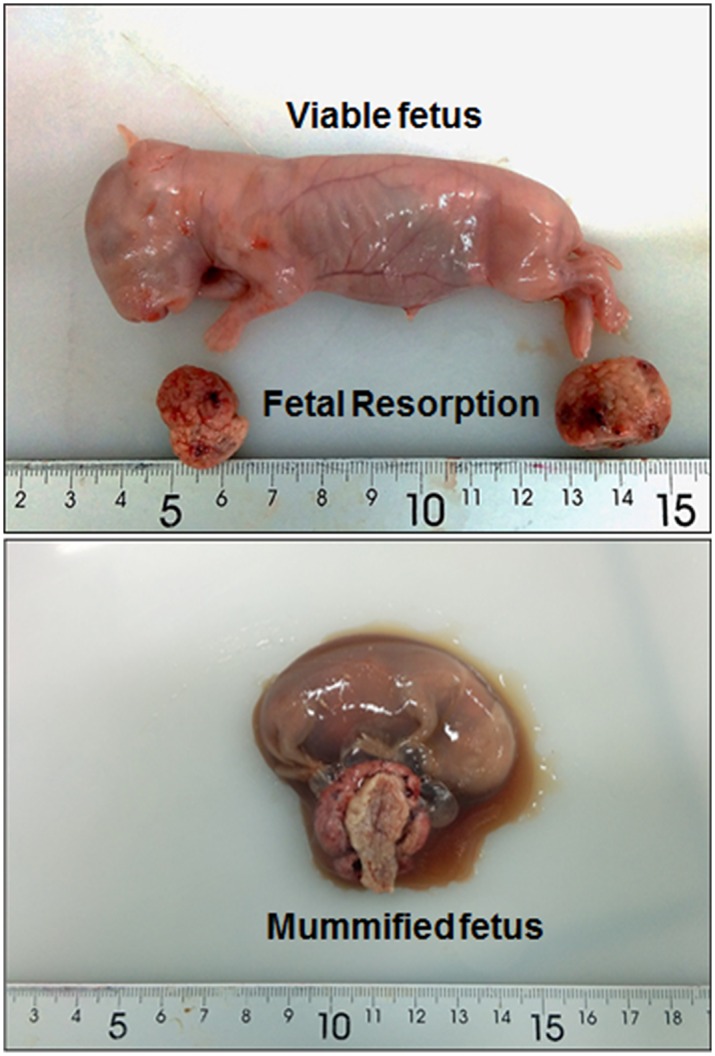
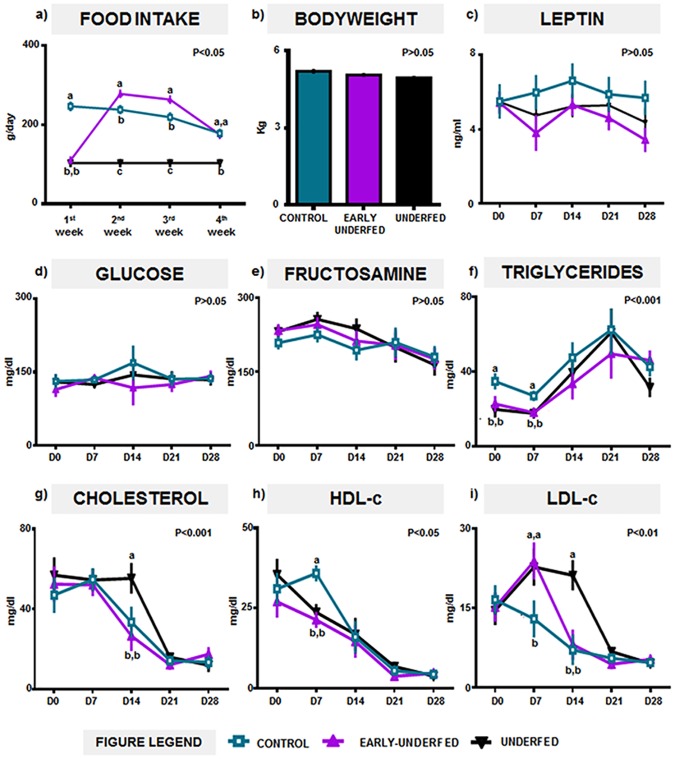
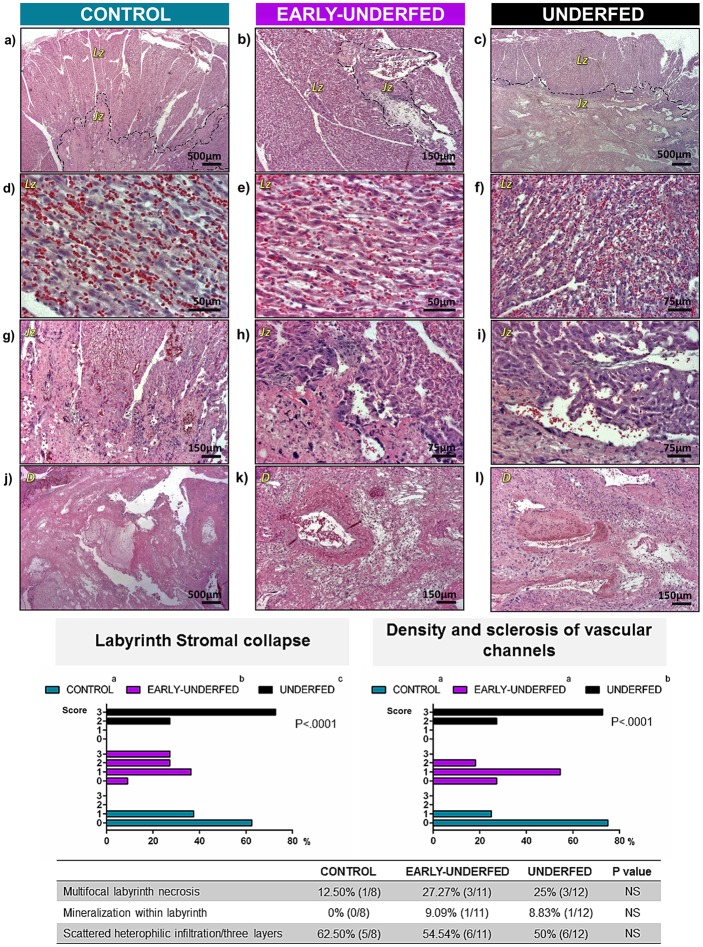
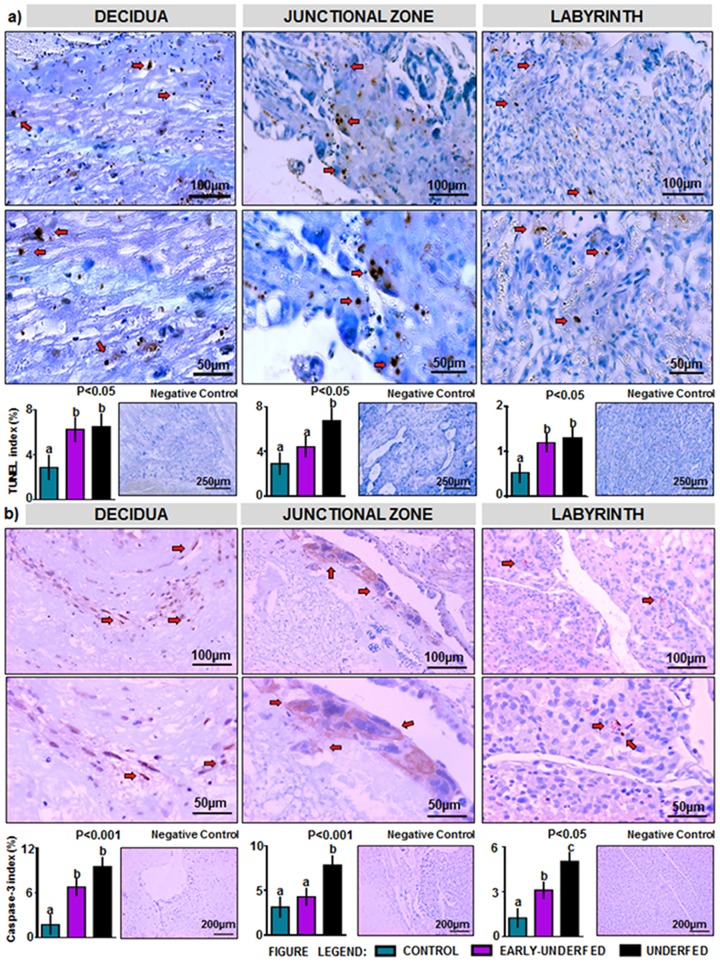
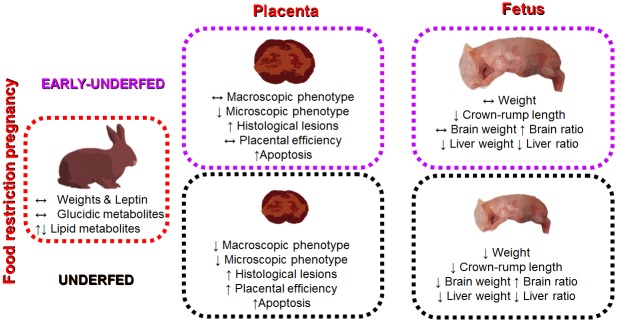
The major goal of animal production is to obtain abundant and healthy meat for consumers. Maternal food restriction (MFR) is often applied in farms to reduce production costs. However, the suitability of MFR in livestock animals is questionable, as this management may compromise maternal fitness due to a severe negative energetic balance and can induce Intrauterine Growth Restriction (IUGR) and prenatal programming in the offspring. Here, we sought to determine, using pregnant rabbits, the consequences of MFR on maternal endocrine and metabolic status and conceptus development. Pregnant dams were distributed into three groups: CONTROL (ad libitum feeding throughout the entire pregnancy; mean pregnancy length being around 31 days), UNDERFED (50% MFR during the entire pregnancy) and EARLY-UNDERFED (50% MFR only during the preimplantation period, Days 0-7). Maternal leptin concentrations and glycemic and lipid profiles were determined throughout pregnancy, whilst conceptus development was assessed ex-vivo at Day 28. Placental parameters were determined by macroscopic and histological evaluations and apoptotic assessments (TUNEL and Caspase-3). The main results of the study showed that, despite MFR altered maternal plasma lipid concentration (P<0.05), there were no effects on maternal bodyweight, plasma leptin concentration or glycemic profile. Fetal crown-rump lengths were reduced in both undernourished groups (P<0.001), but a significant reduction in fetal weight was only observed in the UNDERFED group (P<0.001). Growth in both undernourished groups was asymmetrical, with reduced liver weight (P<0.001) and significantly increased brain: fetal weight-ratio (P<0.001) and brain: liver weight-ratio (P<0.001) when compared to the CONTROL group. A significant reduction in placental weight was only observed in the UNDERFED group (P<0.001), despite both undernourished groups showing higher apoptotic rates at decidua and labyrinth zone (P<0.05) than the CONTROL group. Thus, these groups evidenced signs of placental degeneration, necrosis and stromal collapse. In summary, MFR may encourage the mother to make strategic decisions to safeguard her metabolic status and fitness at the expense of growth reduction in the litter, resulting in enhanced apoptotic and pathological processes at placental level and IUGR.
Conflict of interest statement
There is no conflict of interest that would prejudice the information offered in the paper, excepting that AG-B is a PLOS ONE Editorial Board member. However, this does not alter the authors’ adherence to all the PLOS ONE policies on sharing data and materials.
Figures
References
-
- Barker DJ. The developmental origins of adult disease. J Am Coll Nutr. 2004;23(6 Suppl):588s–95s. - PubMed
MeSH terms
Substances
LinkOut - more resources
Full Text Sources
Other Literature Sources
Medical
Research Materials
