


Iron Status in Attention-Deficit/Hyperactivity Disorder: A Systematic Review and Meta-Analysis
- PMID: 28046016
- PMCID: PMC5207676
- DOI: 10.1371/journal.pone.0169145
Iron Status in Attention-Deficit/Hyperactivity Disorder: A Systematic Review and Meta-Analysis
Abstract
Background: Attention-deficit/hyperactivity disorder (ADHD) is one of the most common psychiatric disorders in children. However, the pathogenesis of ADHD remains unclear. Iron, an important trace element, is implicated in brain function and dopaminergic activity. Recent studies have investigated the association between iron deficiency and ADHD, but the results are inconsistent.
Methods: A systemic search of MEDLINE, EMBASE, Web of Science and Cochrane Library databases was supplemented by manual searches of references of key retrieved articles. Study quality was evaluated using the Newcastle-Ottawa Scale. The standardised mean difference (SMD) and 95% confidence intervals (CIs) were calculated using a random-effects model. H2 and I2 were used to evaluate the heterogeneity, and sensitivity, subgroup and meta-regression analyses were conducted to explore the reason of heterogeneity.
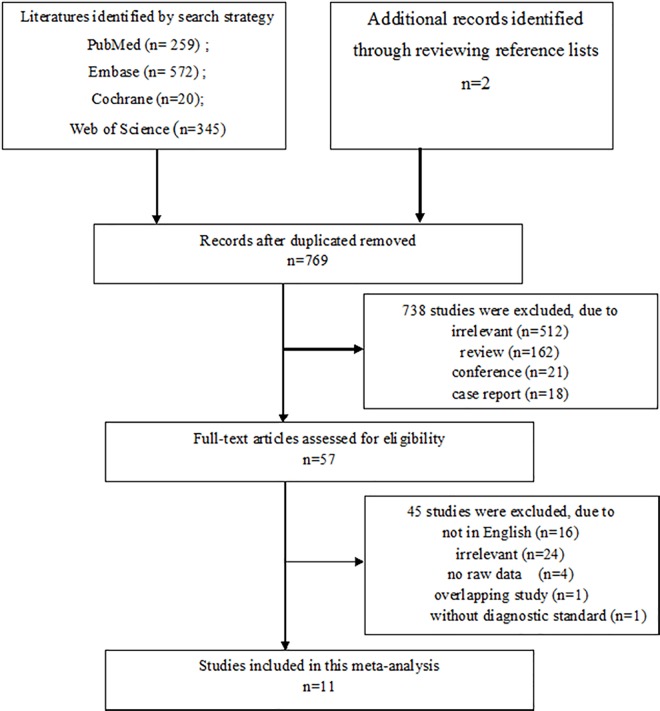
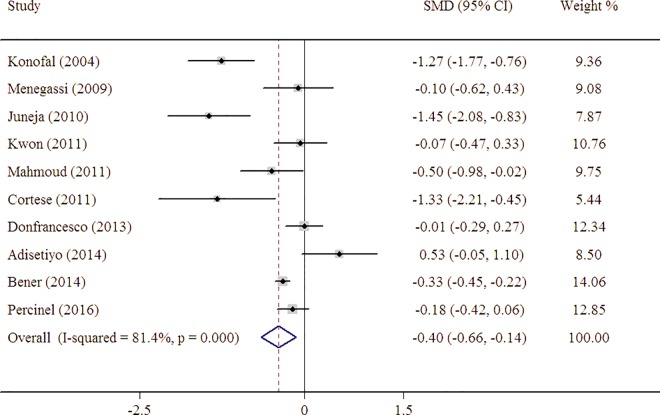
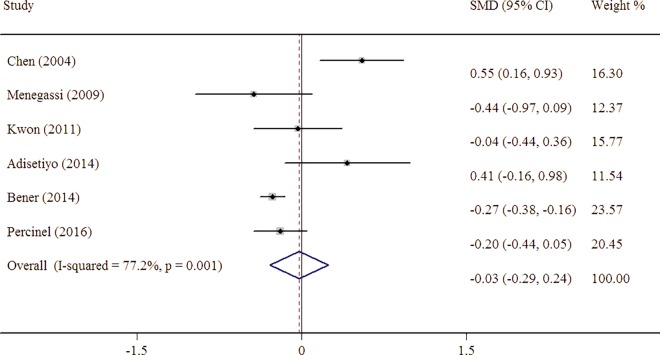
Results: The search yielded 11 studies published before July 25, 2016. Of these, 10 studies, comprising 2191 participants and 1196 ADHD cases, reported serum ferritin levels, and six studies, comprising 617 participants and 369 ADHD cases, reported serum iron levels. Serum ferritin levels were lower in ADHD cases (SMD = -0.40, 95% CI = -0.66 to -0.14). However, we found no correlation between serum iron levels and ADHD (SMD = -0.026, 95% CI = -0.29 to 0.24). Meta-regression analysis indicated that publication year, age, gender, sample size, and Hb levels did not significantly influence the pooled estimates of serum ferritin.
Conclusion: Lower serum ferritin rather than serum iron is associated with ADHD in children.
Conflict of interest statement
The authors have declared that no competing interests exist.
Figures
References
-
- Biederman J, Petty CR, Monuteaux MC, Fried R, Byrne D, Mirto T, et al. Adult psychiatric outcomes of girls with attention deficit hyperactivity disorder: 11-year follow-up in a longitudinal case-control study. The American journal of psychiatry. 2010;167(4):409–17. Epub 2010/01/19. 10.1176/appi.ajp.2009.09050736 - DOI - PubMed
Publication types
MeSH terms
Substances
LinkOut - more resources
Full Text Sources
Other Literature Sources
Medical
