


Nucleic acid scavenging microfiber mesh inhibits trauma-induced inflammation and thrombosis
- PMID: 28049065
- PMCID: PMC5260826
- DOI: 10.1016/j.biomaterials.2016.12.024
Nucleic acid scavenging microfiber mesh inhibits trauma-induced inflammation and thrombosis
Abstract
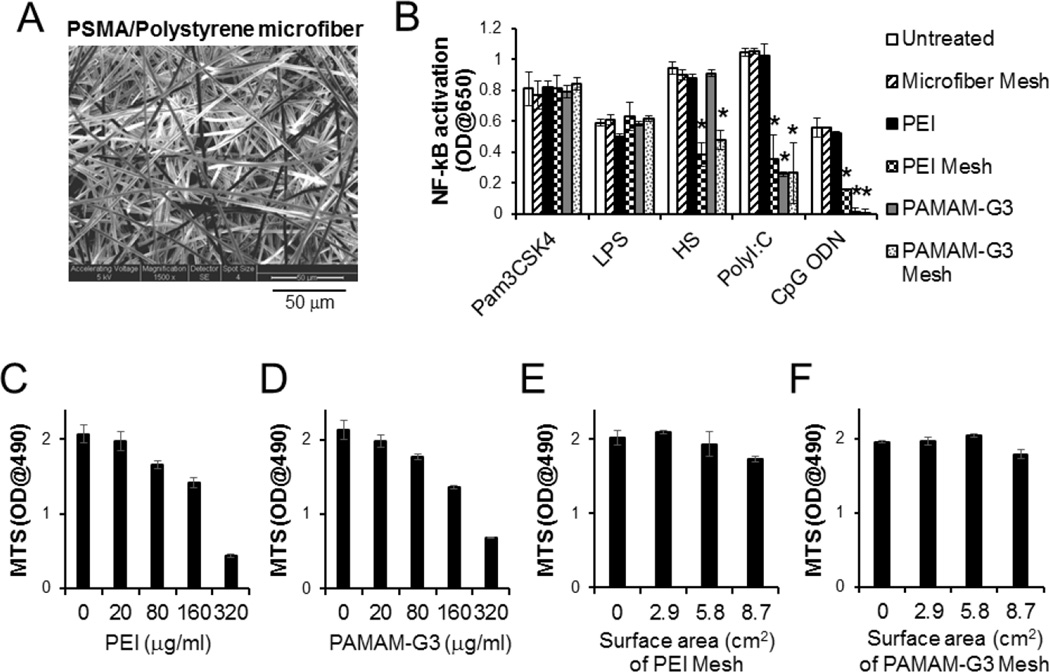
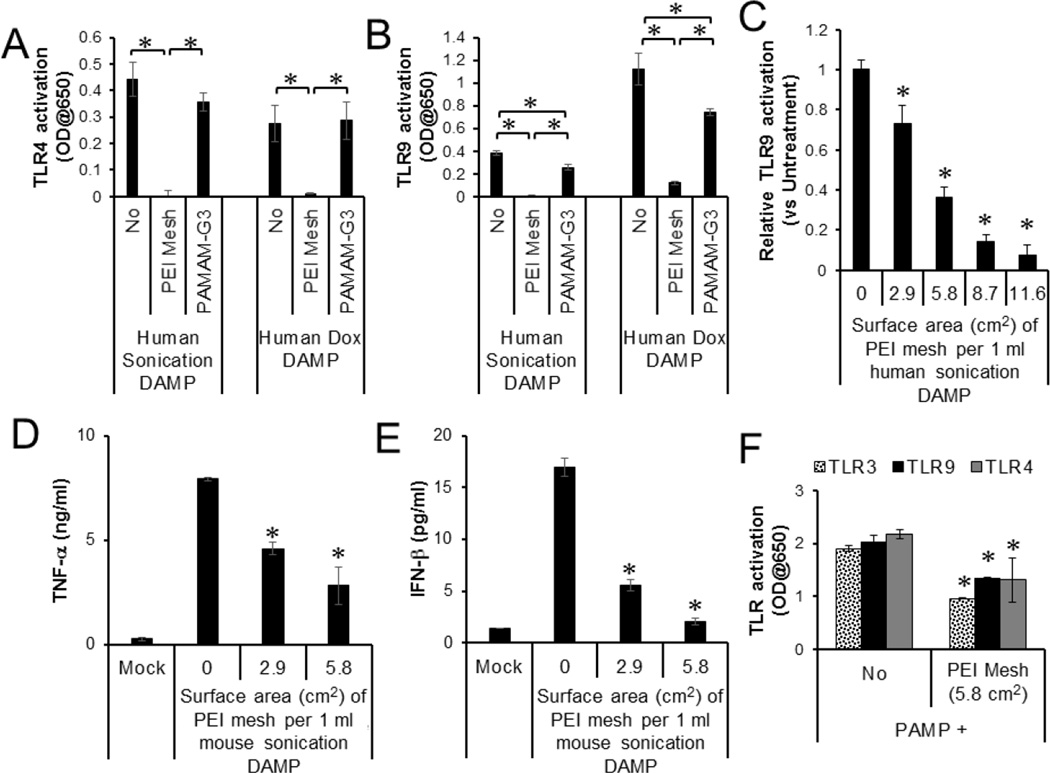
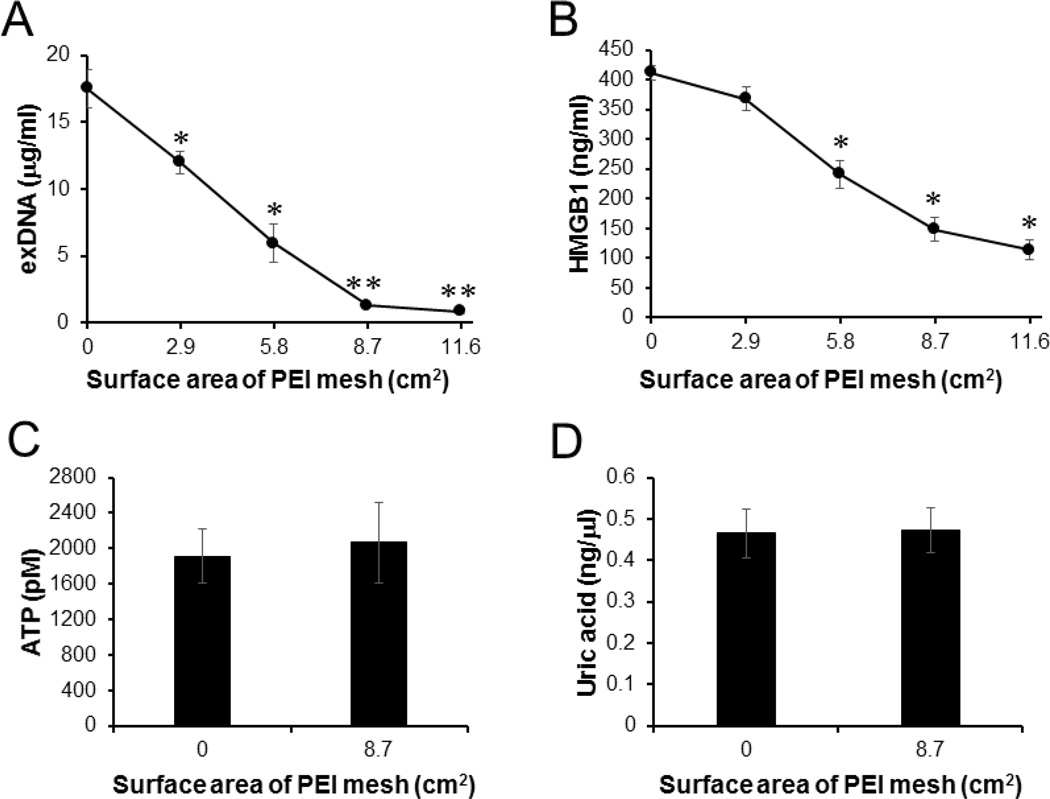
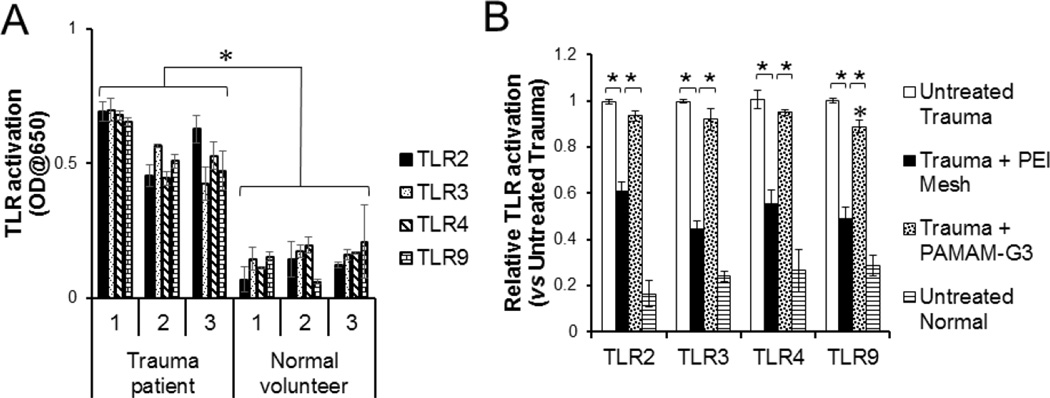
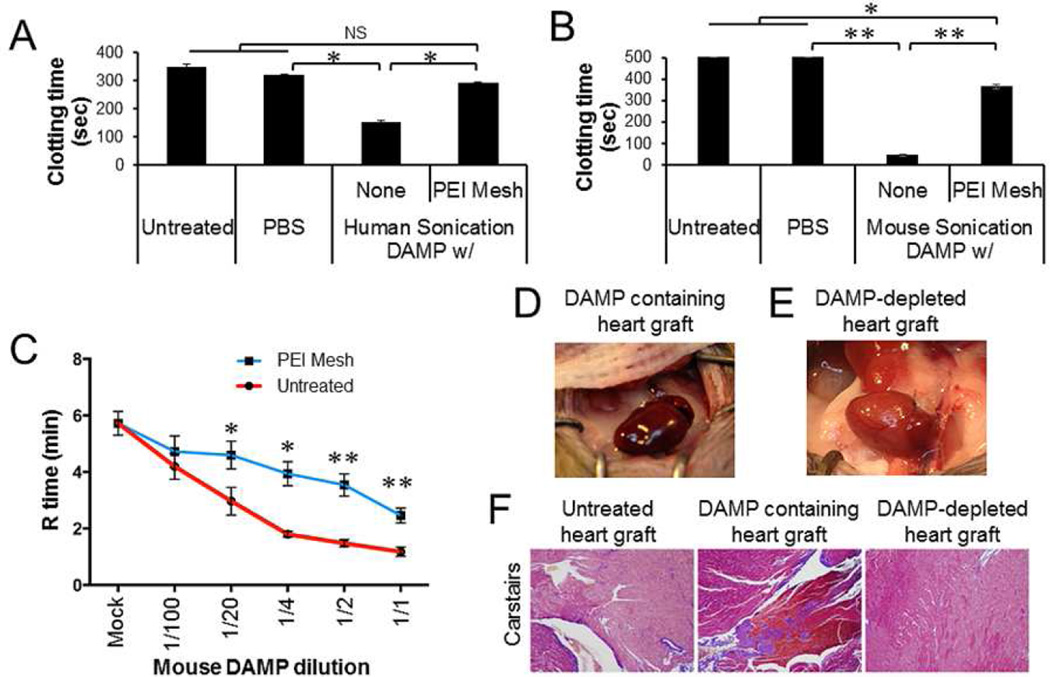
Trauma patients produce a host of danger signals and high levels of damage-associated molecular patterns (DAMPs) after cellular injury and tissue damage. These DAMPs are directly and indirectly involved in the pathogenesis of various inflammatory and thrombotic complications in patients with severe injuries. No effective therapeutic agents for the removal of DAMPs from blood or tissue fluid have been developed. Herein, we demonstrated that nucleic acid binding polymers, e.g., polyethylenimine (PEI) and polyamidoamine dendrimers, immobilized onto electrospun microfiber mesh can effectively capture various DAMPs, such as extracellular DNAs and high mobility group box 1 (HMGB1). Furthermore, treatment with PEI-immobilized microfiber mesh abrogated the ability of DAMPs, released from dead and dying cells in culture or found in patients following traumatic injury, to activate innate immune responses and coagulation in vitro and in vivo. Nucleic acid scavenging microfiber meshes represent an effective strategy to combat inflammation and thrombosis in trauma.
Keywords: Inflammation; Microfiber mesh; Nucleic acid scavenger; Thrombosis; Toll like receptor.
Copyright © 2016 Elsevier Ltd. All rights reserved.
Conflict of interest statement
We have no conflict of interest to declare.
Figures
Comment in
-
DAMPening the effects of trauma-induced inflammation.Sci Transl Med. 2017 Jan 11;9(372):eaal4992. doi: 10.1126/scitranslmed.aal4992. Sci Transl Med. 2017. PMID: 28077683
References
-
- Kawai T, Akira S. TLR signaling. Seminars in immunology. 2007;19:24–32. - PubMed
-
- Liaw PC, Ito T, Iba T, Thachil J, Zeerleder S. DAMP and DIC: The role of extracellular DNA and DNA-binding proteins in the pathogenesis of DIC. Blood reviews. 2015 - PubMed
-
- Leulier F, Lemaitre B. Toll-like receptors--taking an evolutionary approach. Nat Rev Genet. 2008;9:165–178. - PubMed
Publication types
MeSH terms
Substances
Grants and funding
LinkOut - more resources
Full Text Sources
Other Literature Sources
Medical
