


A systems approach to obesity
- PMID: 28049754
- PMCID: PMC5207008
- DOI: 10.1093/nutrit/nuw049
A systems approach to obesity
Abstract
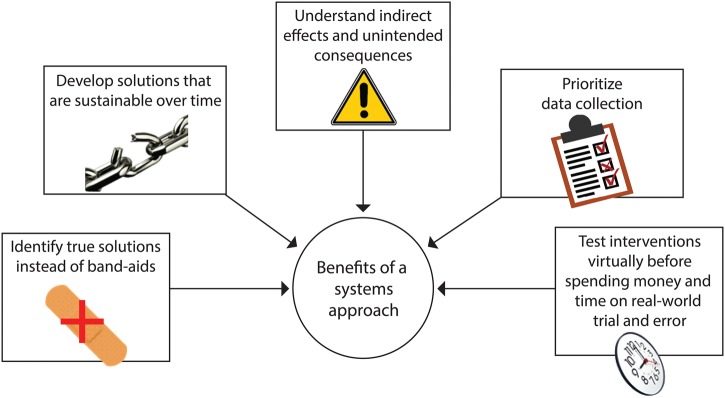
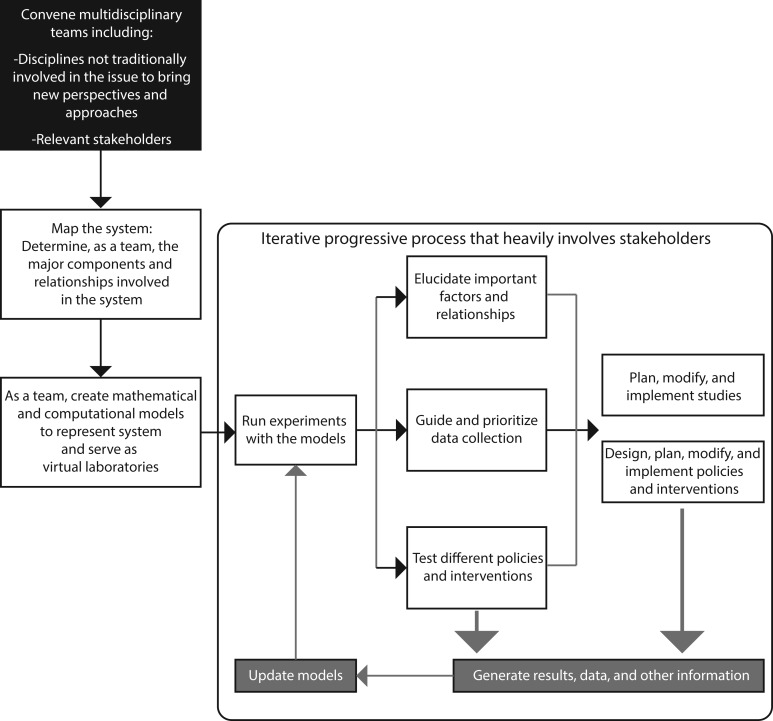
Obesity has become a truly global epidemic, affecting all age groups, all populations, and countries of all income levels. To date, existing policies and interventions have not reversed these trends, suggesting that innovative approaches are needed to transform obesity prevention and control. There are a number of indications that the obesity epidemic is a systems problem, as opposed to a simple problem with a linear cause-and-effect relationship. What may be needed to successfully address obesity is an approach that considers the entire system when making any important decision, observation, or change. A systems approach to obesity prevention and control has many benefits, including the potential to further understand indirect effects or to test policies virtually before implementing them in the real world. Discussed here are 5 key efforts to implement a systems approach for obesity prevention: 1) utilize more global approaches; 2) bring new experts from disciplines that do not traditionally work with obesity to share experiences and ideas with obesity experts; 3) utilize systems methods, such as systems mapping and modeling; 4) modify and combine traditional approaches to achieve a stronger systems orientation; and 5) bridge existing gaps between research, education, policy, and action. This article also provides an example of how a systems approach has been used to convene a multidisciplinary team and conduct systems mapping and modeling as part of an obesity prevention program in Baltimore, Maryland.
Keywords: global health; modeling; obesity; systems science.
© The Author(s) 2016. Published by Oxford University Press on behalf of the International Life Sciences Institute. All rights reserved. For Permissions, please e-mail: journals.permissions@oup.com.
Figures
References
-
- Kelly T, Yang W, Chen CS, et al. Global burden of obesity in 2005 and projections to 2030. Int J Obes. 2008;32:1431–1437. - PubMed
-
- World Health Organization. Media Centre: Obesity and Overweight. 2015. http://www.who.int/mediacentre/factsheets/fs311/en/. Accessed June 1, 2015.
-
- de Onis M, Blossner M, Borghi E. Global prevalence and trends of overweight and obesity among preschool children. Am J Clin Nutr. 2010;92:1257–1264. - PubMed
Publication types
MeSH terms
Grants and funding
LinkOut - more resources
Full Text Sources
Other Literature Sources
Medical
