


Serum uric acid levels are associated with obesity but not cardio-cerebrovascular events in Chinese inpatients with type 2 diabetes
- PMID: 28051185
- PMCID: PMC5209679
- DOI: 10.1038/srep40009
Serum uric acid levels are associated with obesity but not cardio-cerebrovascular events in Chinese inpatients with type 2 diabetes
Abstract
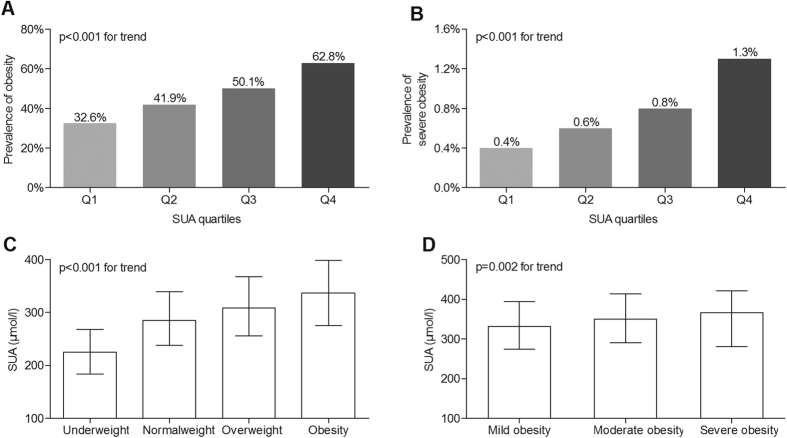
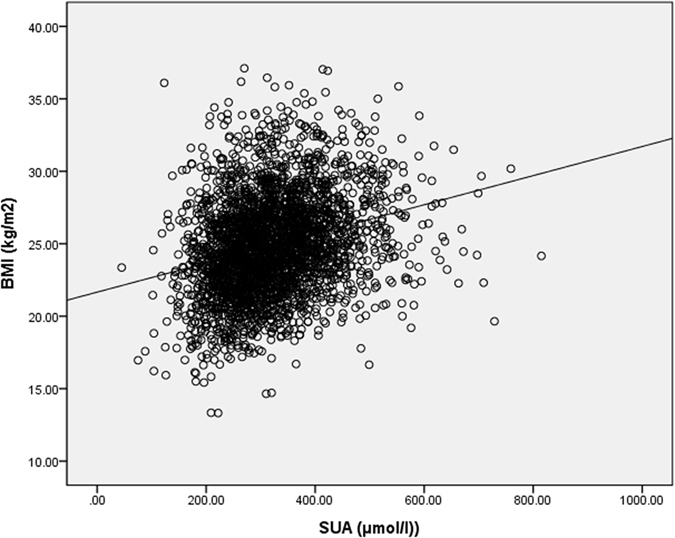
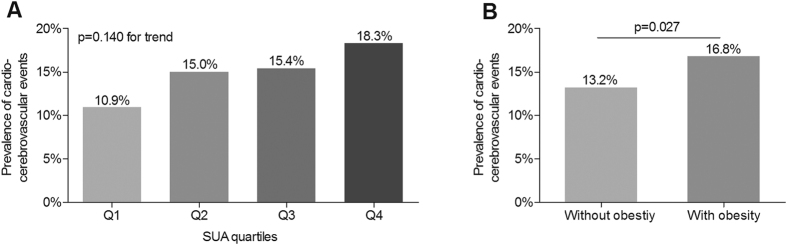
We aim to explore the associations between serum uric acid (SUA) and obesity and cardio-cerebrovascular events (CCEs) in Chinese inpatients with type 2 diabetes mellitus (T2DM). 2 962 inpatients with T2DM were stratified into quartile based on SUA concentrations. There were significant increases in the prevalence of both obesity (32.6%, 41.9%, 50.1%, and 62.8%, respectively, p < 0.001 for trend) and severe obesity (0.4%, 0.6%, 0.8%, and 1.3%, respectively, p < 0.001 for trend) across the SUA quartiles. A fully adjusted multiple logistic regression analysis revealed that SUA quartiles were independently associated with the presence of obesity (p < 0.001). The prevalence of CCEs was significantly higher in the obese diabetics than in the nonobese diabetics (16.8% vs. 13.2%, p = 0.027). After controlling for multiple confounding factors, BMI levels were also significantly correlated with the presence of CCEs (p = 0.020). However, there was no significant association of SUA quartiles/SUA levels with the presence of CCEs in T2DM. This study suggested that SUA levels were independently associated with obesity but not with CCEs in patients with T2DM. In selected populations such as subjects with T2DM, the role of uric acid in cardiovascular complications might be attributable to other cardiovascular risk factors, such as obesity.
Figures
References
-
- Dai X. et al.. Association between serum uric acid and the metabolic syndrome among a middle- and old-age Chinese population. Eur J Epidemiol 28, 669–76 (2013). - PubMed
-
- Costanzo P. et al.. The obesity paradox in type 2 diabetes mellitus: relationship of body mass index to prognosis: a cohort study. Ann Intern Med 162, 610–8 (2015). - PubMed
Publication types
MeSH terms
Substances
LinkOut - more resources
Full Text Sources
Other Literature Sources
Medical
