Cytotoxic lanostane-type triterpenoids from the fruiting bodies of Ganoderma lucidum and their structure-activity relationships
- PMID: 28052025
- PMCID: PMC5354642
- DOI: 10.18632/oncotarget.14336
Cytotoxic lanostane-type triterpenoids from the fruiting bodies of Ganoderma lucidum and their structure-activity relationships
Abstract
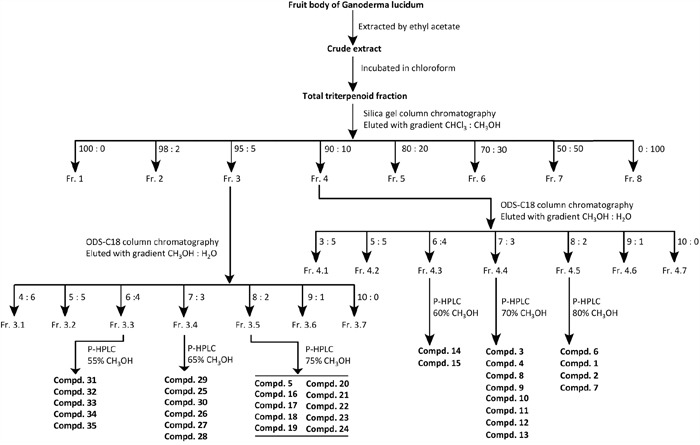
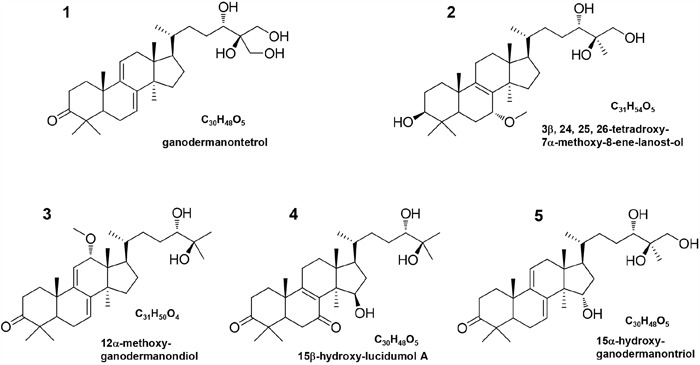
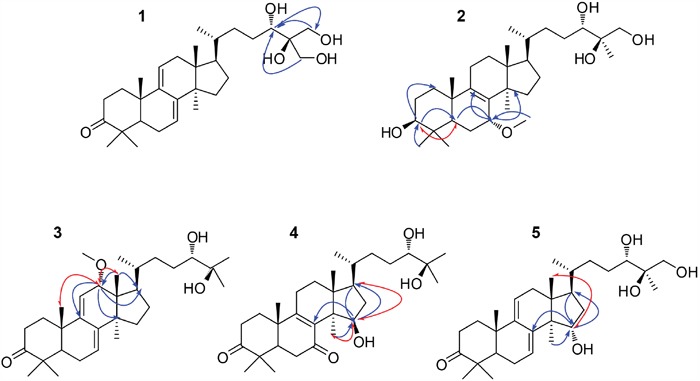
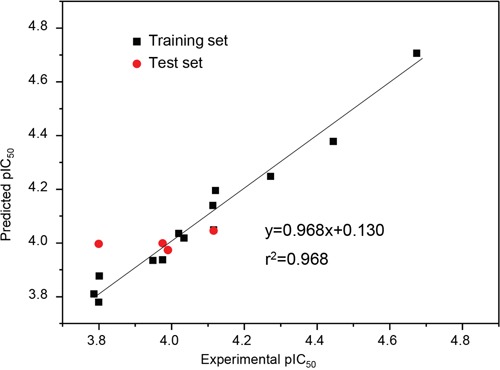
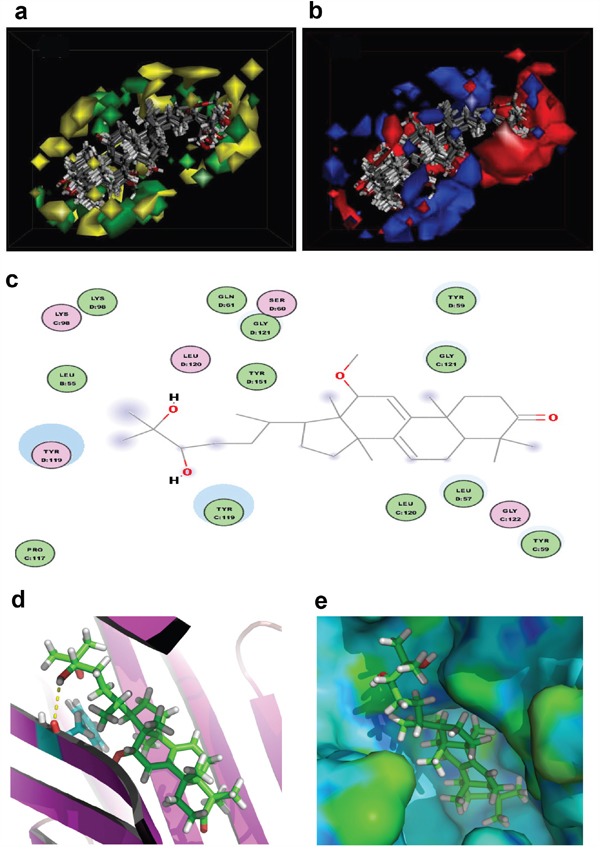
We conducted a study of Ganoderma lucidum metabolites and isolated 35 lanostane-type triterpenoids, including 5 new ganoderols (1-5). By spectroscopy, we compared the structures of these compounds with known related compounds in this group. All of the isolated compounds were assayed for their effect against the human breast carcinoma cell line MDA-MB-231 and hepatocellular carcinoma cell line HepG2. Corresponding three-dimensional quantitative structure-activity relationship (3D-QSAR) models were built and analyzed using Discovery Studio. These results provide further evidence for anti-cancer constituents within Ganoderma lucidum, and may provide a theoretical foundation for designing novel therapeutic compounds.
Keywords: 3D-QSAR; Ganoderma lucidum; cytotoxicity; lanostane-type triterpenoids.
Conflict of interest statement
The authors declare no conflicts of interest.
Figures
Comment in
-
Characterizing novel anti-oncogenic triterpenoids from ganoderma.Cell Cycle. 2018;17(5):527-528. doi: 10.1080/15384101.2017.1315493. Cell Cycle. 2018. PMID: 28402700 Free PMC article. No abstract available.
References
-
- Cheng S, Sliva D. Ganoderma lucidum for cancer treatment: we are close but still not there. Integr Cancer Ther. 2015;14:249–257. - PubMed
-
- Gill BS, Sharma P, Kumar R, Kumar S. Misconstrued versatility of Ganoderma lucidum: a key player in multi-targeted cellular signaling. Tumour Biol. 2016;37:2789–2804. - PubMed
-
- Boh B. Ganoderma lucidum: a potential for biotechnological production of anti-cancer and immunomodulatory drugs. Recent Pat Anti-Cancer Drug Discovery. 2013;8:255–287. - PubMed
-
- Rios JL, Andujar I, Recio MC, Giner RM. Lanostanoids from fungi: a group of potential anticancer compounds. J Nat Prod. 2012;75:2016–2044. - PubMed
MeSH terms
Substances
LinkOut - more resources
Full Text Sources
Other Literature Sources
Medical
Miscellaneous