Myeloid-Derived Suppressor Cells
- PMID: 28052991
- PMCID: PMC5426480
- DOI: 10.1158/2326-6066.CIR-16-0297
Myeloid-Derived Suppressor Cells
Abstract
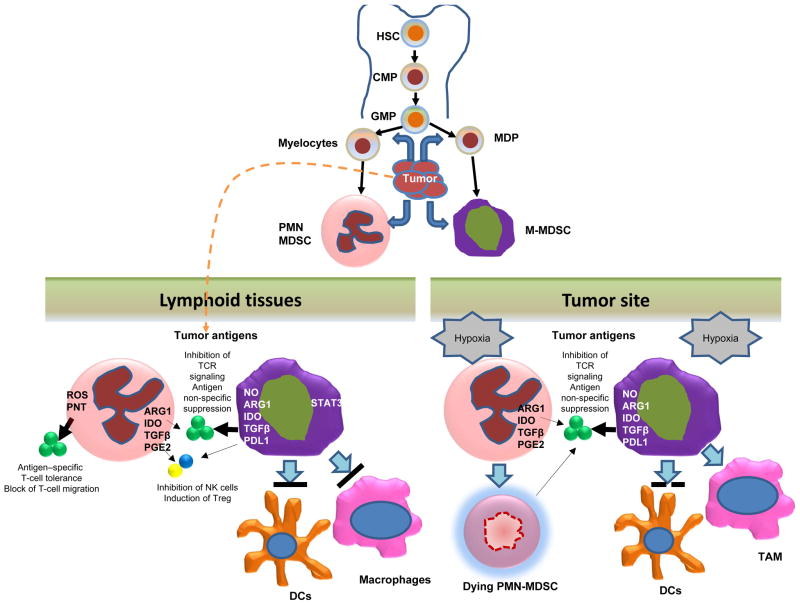
Myeloid cells developed evolutionarily as a major mechanism to protect the host. They evolved as a critical barrier against infections and are important contributors to tissue remodeling. However, in cancer, myeloid cells are largely converted to serve a new master-tumor cells. This process is epitomized by myeloid-derived suppressor cells (MDSC). These cells are closely related to neutrophils and monocytes. MDSCs are not present in the steady state of healthy individuals and appear in cancer and in pathologic conditions associated with chronic inflammation or stress. These cells have emerged as an important contributor to tumor progression. Ample evidence supports a key role for MDSCs in immune suppression in cancer, as well as their prominent role in tumor angiogenesis, drug resistance, and promotion of tumor metastases. MDSCs have a fascinating biology and are implicated in limiting the effects of cancer immunotherapy. Therefore, targeting these cells may represent an attractive therapeutic opportunity. Cancer Immunol Res; 5(1); 3-8. ©2016 AACR.
©2016 American Association for Cancer Research.
Conflict of interest statement
Author declare no financial interests relevant to the subject of this paper
Figures
References
-
- Gabrilovich D, Ishida T, Oyama T, Ran S, Kravtsov V, Nadaf S, et al. Vascular endothelial growth factor inhibits the development of dendritic cells and dramatically affects the differentiation of multiple hematopoietic lineages in vivo. Blood. 1998;92:4150–66. - PubMed
Publication types
MeSH terms
Substances
Grants and funding
LinkOut - more resources
Full Text Sources
Other Literature Sources
Medical