SPARC expression in gastric cancer predicts poor prognosis: Results from a clinical cohort, pooled analysis and GSEA assay
- PMID: 28053291
- PMCID: PMC5342547
- DOI: 10.18632/oncotarget.12191
SPARC expression in gastric cancer predicts poor prognosis: Results from a clinical cohort, pooled analysis and GSEA assay
Abstract
Background: The prognostic role of Secreted Protein Acidic and Rich in Cysteine (SPARC) in gastric cancer (GC) remains controversial. We investigated the clinical significance, the survival relevance, and potential function of SPARC in GC with resected samples, online gene set GSE62254, and cell line SGC7901.
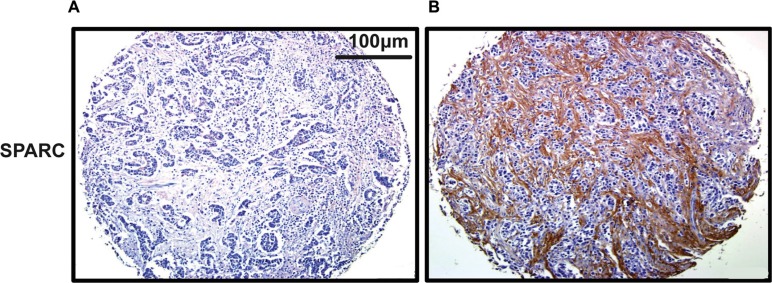
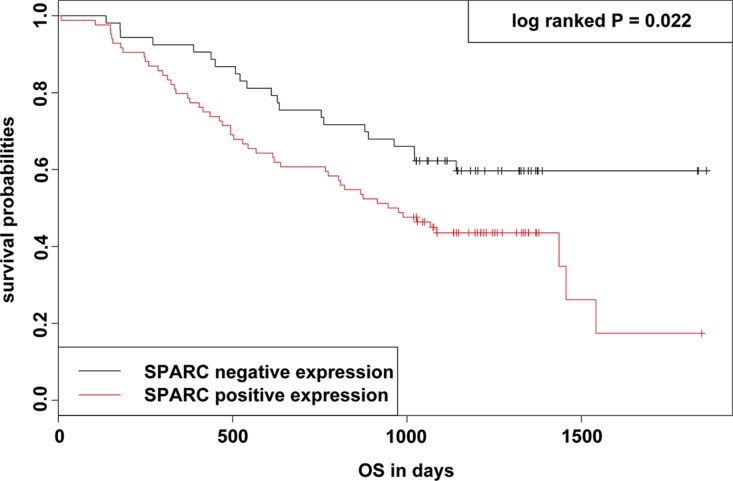
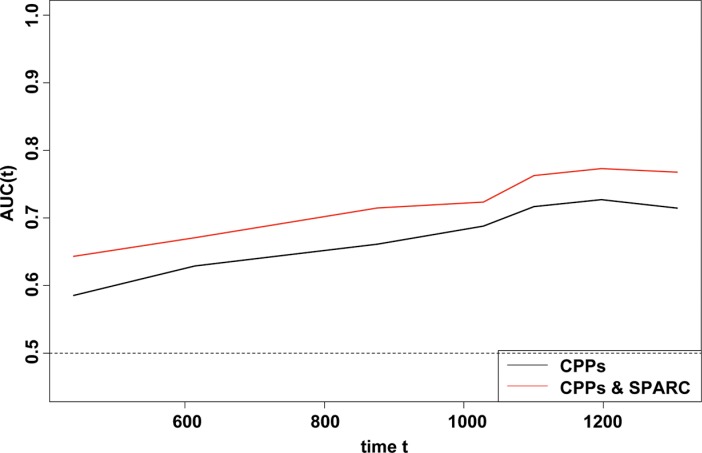
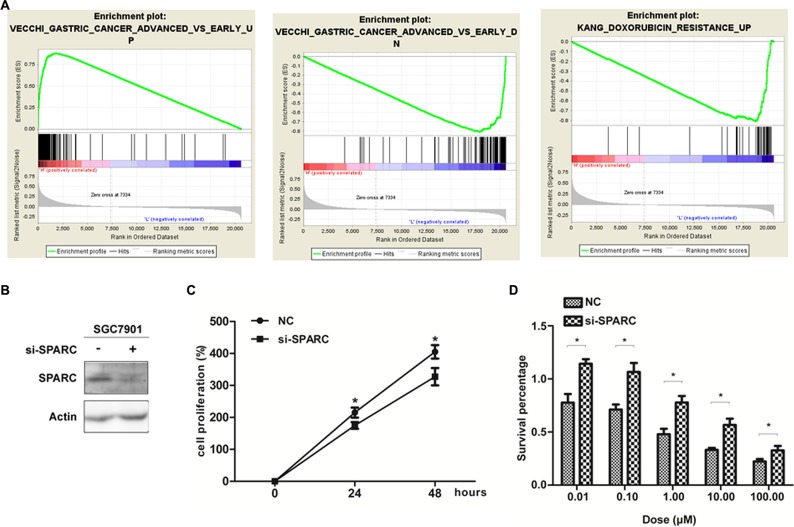
Results: High immunostaining of SPARC significantly correlated with tumor differentiation (P = 0.004), and independently predicted shorter overall survival (OS) (HR = 1.446, P = 0.022), based on the current IHC evaluation. The accuracy of the results was further validated with 1000 times bootstrapping and the time-dependent receiver-operating characteristics (ROC) curves. The meta-analysis (pooled HR = 1.60, 95% CI: 1.01-2.53) confirmed SPARC as the predictor for reduced OS in GC. Moreover, the association between enhanced SPARC expression and Adriamycin (Adr) sensitivity was revealed by GSEA, and then confirmed by comparative cellular experiments, such as the protein level analysis of SGC7901and SGC7901/Adr cell line.
Materials and methods: Immunohistochemistry (IHC) method was used to detect SPARC expression in 137 GC cases. Meta-analysis was performed based on 5 studies published in English on PubMed up to March 2016. GSEA was performed using online data set GSE62254 and GC-related functional gene sets derived from molecular signatures database (MSigDB). Western Blot was carried out to compare protein-level differences between gastric carcinoma SGC7901 cell line and Adr resistant SGC7901/Adr cell line. MTT assay was done to confirm the induction of SPARC on Adr sensitivity.
Conclusions: Increased SPARC expression in GC led to a worse clinical outcome of patients and might induce Adr sensitivity of GC cells.
Keywords: GSEA; SPARC; gastric cancer; immunohistochemistry; prognosis.
Conflict of interest statement
The authors declare that they have no conflicts of interest.
Figures

References
-
- Shen L, Shan YS, Hu HM, Price TJ, Sirohi B, Yeh KH, Yang YH, Sano T, Yang HK, Zhang X, Park SR, Fujii M, Kang YK, et al. Management of gastric cancer in Asia: resource-stratified guidelines. Lancet Oncol. 2013;14:e535–547. - PubMed
-
- Bidard FC, Pierga JY, Soria JC, Thiery JP. Translating metastasis-related biomarkers to the clinic—progress and pitfalls. Nat Rev Clin Oncol. 2013;10:169–179. - PubMed
-
- Chlenski A, Cohn SL. Modulation of matrix remodeling by SPARC in neoplastic progression. Semin Cell Dev Biol. 2010;21:55–65. - PubMed
-
- Guarneri V, Dieci MV, Conte P. Enhancing intracellular taxane delivery: current role and perspectives of nanoparticle albumin-bound paclitaxel in the treatment of advanced breast cancer. Expert Opin Pharmacother. 2012;13:395–406. - PubMed
-
- Tang L, Feng J. SPARC in Tumor Pathophysiology and as a Potential Therapeutic Target. Curr Pharm Des. 2014;20:6182–90. - PubMed
MeSH terms
Substances
LinkOut - more resources
Full Text Sources
Other Literature Sources
Medical
Research Materials
Miscellaneous