Review
. 2016 Dec 20:12:87-110.
doi: 10.2147/IJN.S117495. eCollection 2017.

Mesoporous silica nanoparticles for stimuli-responsive controlled drug delivery: advances, challenges, and outlook

Affiliations
Review

Mesoporous silica nanoparticles for stimuli-responsive controlled drug delivery: advances, challenges, and outlook

Yuanhui Song et al. Int J Nanomedicine. .

Abstract

With the development of nanotechnology, the application of nanomaterials in the field of drug delivery has attracted much attention in the past decades. Mesoporous silica nanoparticles as promising drug nanocarriers have become a new area of interest in recent years due to their unique properties and capabilities to efficiently entrap cargo molecules. This review describes the latest advances on the application of mesoporous silica nanoparticles in drug delivery. In particular, we focus on the stimuli-responsive controlled release systems that are able to respond to intracellular environmental changes, such as pH, ATP, GSH, enzyme, glucose, and H2O2. Moreover, drug delivery induced by exogenous stimuli including temperature, light, magnetic field, ultrasound, and electricity is also summarized. These advanced technologies demonstrate current challenges, and provide a bright future for precision diagnosis and treatment.

Keywords: chemotherapy; controlled release; drug delivery system; mesoporous silica nanoparticle; stimuli-responsive.


Conflict of interest statement

The authors report no conflicts of interest in this work.

Figures
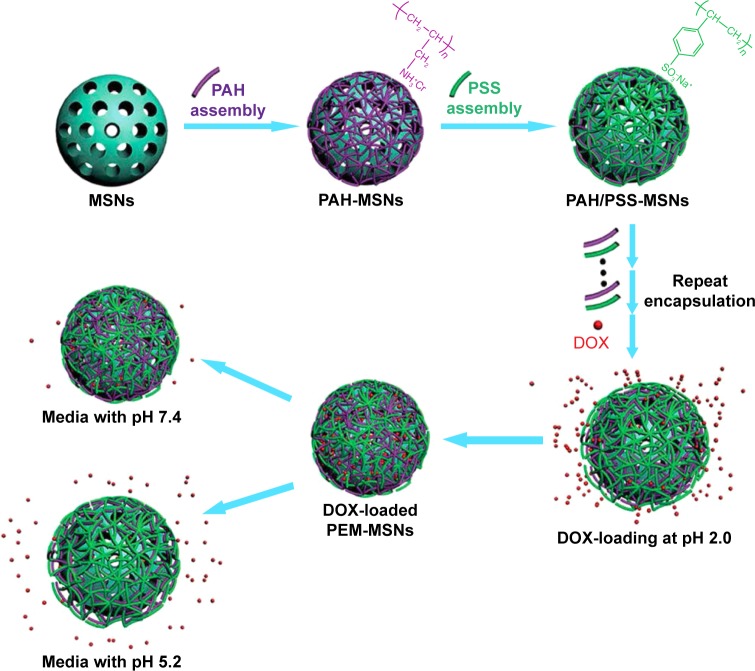
Figure 1
Figure 1
Schematic illustration for the fabrication of pH-responsive carrier systems based on PEM-MSN. Notes: The polyelectrolyte pairs of PAH/PSS were alternately deposited onto the MSN surface via the LBL technique, DOX was then loaded into the mesoporous channels and inside the polymer shell of PEM-MSN at pH 2.0, thus constructing a pH-responsive drug-delivery system from which the release of DOX is accelerated under acidic conditions. Reproduced from Feng W, Zhou X, He C, et al. Polyelectrolyte multilayer functionalized mesoporous silica nanoparticles for pH-responsive drug delivery: layer thickness-dependent release profiles and biocompatibility. J Mater Chem B. 2013;9:5886–5898, DOI http://dx.doi.org/10.1039/C3TB21193B, with permission of The Royal Society of Chemistry. Abbreviations: MSN, mesoporous silica nanoparticle; PAH, polyallylamine hydrochloride; PSS, polystyrene sulfonate; LBL, layer by layer; DOX, doxorubicin hydrochloride; PEM, polyelectrolyte multilayer.
Figure 2
Figure 2
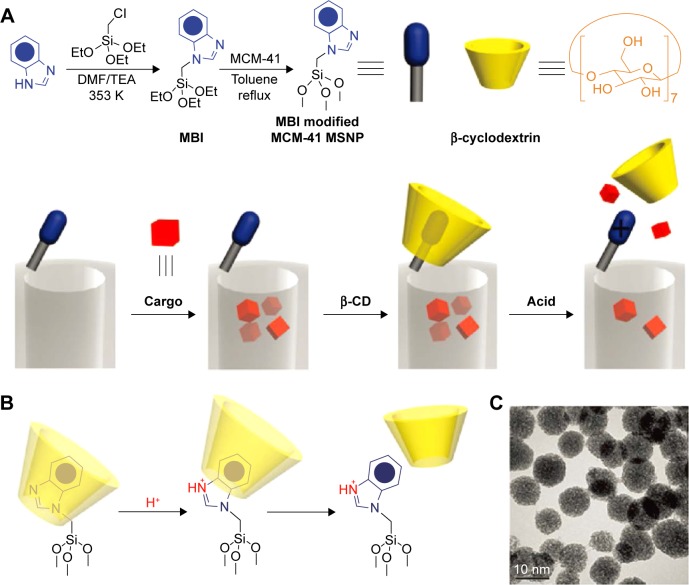
A graphical representation of the pH-responsive MSNP nanovalve. Notes: (A) Synthesis of the stalk, loading of the cargo, capping of the pore, and release of the cap under acidic conditions. The average nanopore diameter of the MSNP is ~2.2 nm and the periphery diameter of the secondary side of β-cyclodextrin is ~1.5 nm. Thus, for a cargo with a diameter >0.7 nm, a single nanovalve should be adequate to achieve effective pH-modulated release. (B) Details of the protonation of the stalk and release of the β-cyclodextrin. (C) TEM image of capped MSNP. The scale bar is 10 nm. Reprinted with permission from Meng H, Xue M, Xia T, et al. Autonomous in vitro anticancer drug release from mesoporous silica nanoparticles by pH-sensitive nanovalves. J Am Chem Soc. 2010;132(36):12690–12697. Copyright 2010 American Chemical Society. Abbreviations: TEM, transmission emission tomography; β-CD, β-cyclodextrin; MSNP, Mesoporous silica nanoparticle, MBI, 1-Methyl-1H-benzimidazole.
Figure 3
Figure 3
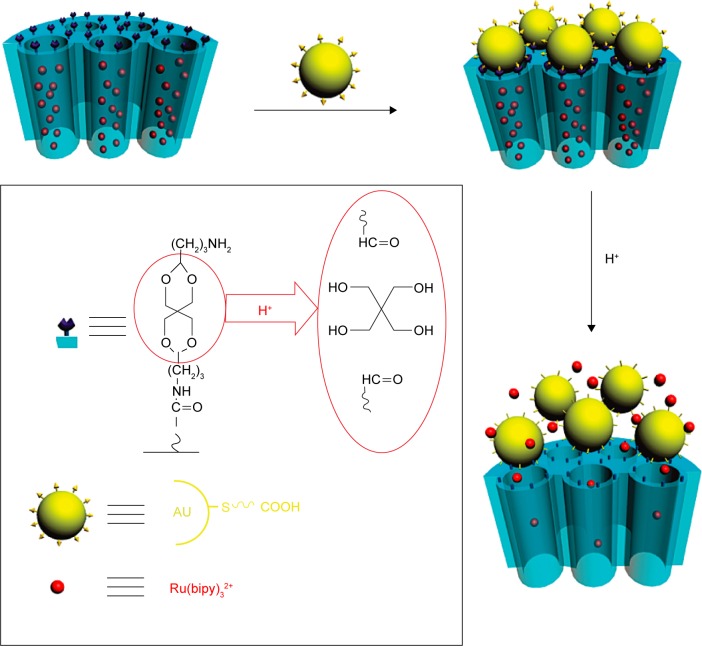
Schematic illustration of pH-responsive nanogated ensemble based on gold-capped mesoporous silica through acid-labile acetal linker. Note: Reprinted with permission from Liu R, Zhang Y, Zhao X, Agarwal A, Mueller LJ, Feng P. pH-responsive nanogated ensemble based on gold-capped mesoporous silica through an acid-labile acetal linker. J Am Chem Soc. 2010;132(5):1500–1501. Copyright 2010 American Chemical Society.
Figure 4
Figure 4
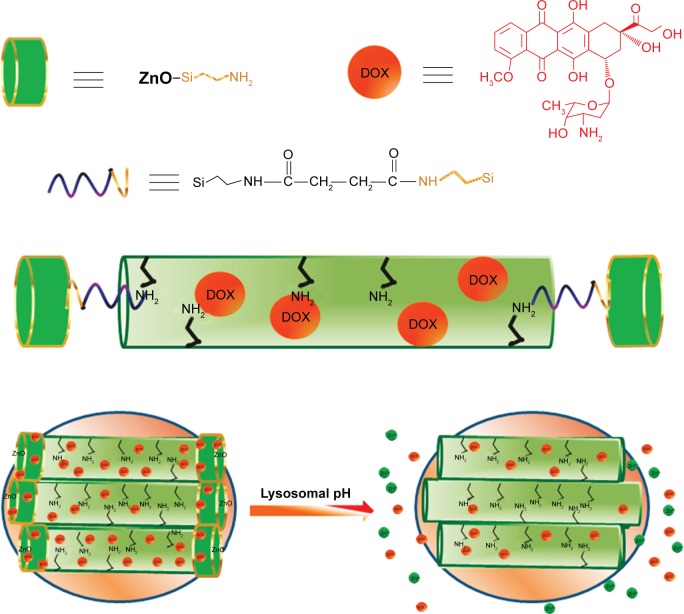
Schematic illustration of the synthesis of ZnO@MSN-DOX and working protocol for pH-triggered release of the DOX from ZnO@MSN-DOX to the cytosol via selective dissolution of ZnO QDs in the acidic intracellular compartments of cancer cells. Note: Reprinted with permission from Muhammad F, Guo M, Qi W, et al. pH-Triggered controlled drug release from mesoporous silica nanoparticles via intracelluar dissolution of ZnO nanolids. J Am Chem Soc. 2011;133(23):8778–8781. Copyright 2011 American Chemical Society. Abbreviations: MSN, mesoporous silica nanoparticle; DOX, doxorubicin hydrochloride; QDs, quantum dots.
Figure 5
Figure 5
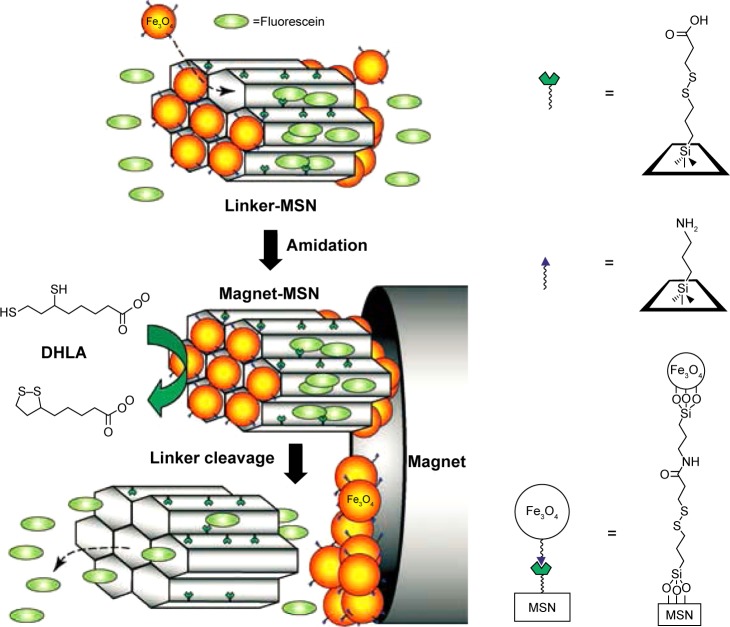
Schematic of the redox-responsive delivery system (magnet-MSN) based on mesoporous silica nanorods capped with superparamagnetic iron oxide nanoparticles. Notes: The controlled-release mechanism of the system is based on the reduction of the disulfide linkage between the Fe3O4 nanoparticle caps and the linker-MSN hosts by reducing agents such as DHLA. Reprinted with permission from John Wiley and Sons. Giri S, Trewyn BG, Stellmaker MP, Lin VS. Stimuli-responsive controlled-release delivery system based on mesoporous silica nanorods capped with magnetic nanoparticles. Angew Chem Int Ed Engl. Copyright © 2005 WILEY-VCH Verlag GmbH & Co. KGaA, Weinheim. Abbreviations: MSN, mesoporous silica nanoparticle; DHLA, dihydroplipoic acid.
Figure 6
Figure 6
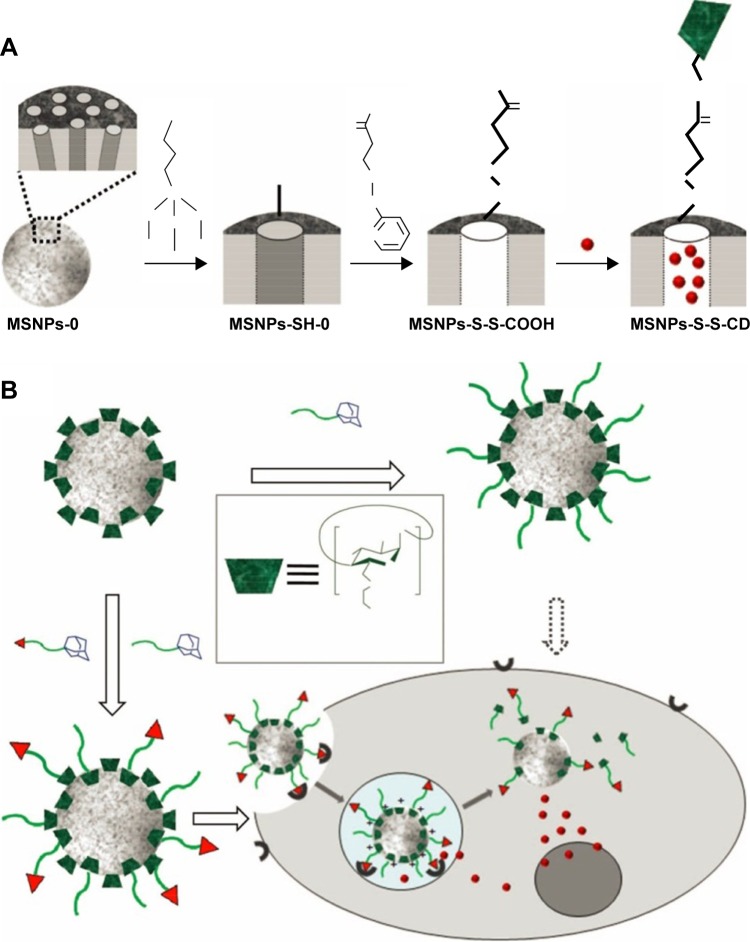
(A) Synthetic representation of the cargo-loaded MSNPs-S-S-CD. Reaction conditions: 1) MPTMS in toluene; 2) 2-carboxyethyl-2-pyridyl disulfide in ethanol, followed by the removal of the surfactant CTAB; 3) loading of cargo molecules, followed by additions of β-CD(NH2)7 and 1-(3-(dimethylamino)propyl)-3-ethylcarbodiimide hydrochloride (EDC⋅HCl). MSNPs-0 and MSNPs-SH-0 mean that the mesopores are occupied with the CTAB template. (B) Schematic illustration of multifunctional MSNPs-CD-PEG-FA for targeted and controlled drug delivery. Reprinted with permission from John Wiley and Sons. Zhang Q, Liu F, Nguyen KT, et al. Multifunctional mesoporous silica nanoparticles for cancer-targeted and controlled drug delivery. Adv Funct Mater. Copyright © 2012 WILEY-VCH Verlag GmbH & Co. KGaA, Weinheim. Abbreviations: β-CD, β-cyclodextrin; MSNPs, mesoporous silica nanoparticles; CD, cyclodextrin; MPTMS, (3-Mercaptopropyl)trimethoxysilane; CTAB; cetyltrimethylammonium bromide.
Figure 7
Figure 7
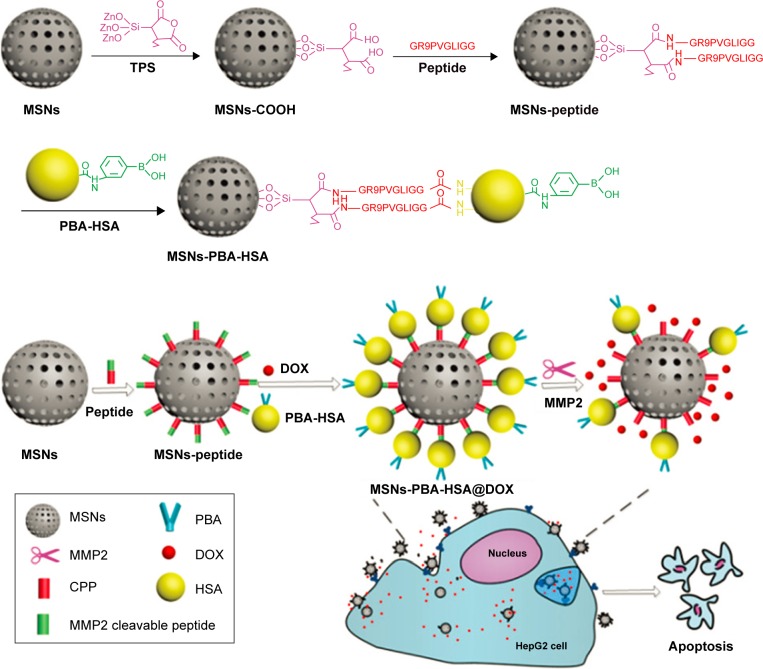
Schematic illustration of the functionalization routes of an MSN-based drug-delivery system and its enzyme-mediated biological responses. Note: Reproduced from Liu J, Zhang B, Luo Z, et al. Enzyme responsive mesoporous silica nanoparticles for targeted tumor therapy in vitro and in vivo. Nano scale. 2015;7(8):3614–3626, with permission of The Royal Society of Chemistry, DOI http://dx.doi.org/10.1002/adfm.201201316. Abbreviations: MSN, mesoporous silica nanoparticle; MMP, matrix metalloprotein; PBA, phenyl boronic acid; HSA, human serum albumin; DOX, doxorubicin hydrochloride; CPP, cell penetration peptide; TPS, 3-triethoxysilylpropylsuccinic anhydride.
Figure 8
Figure 8
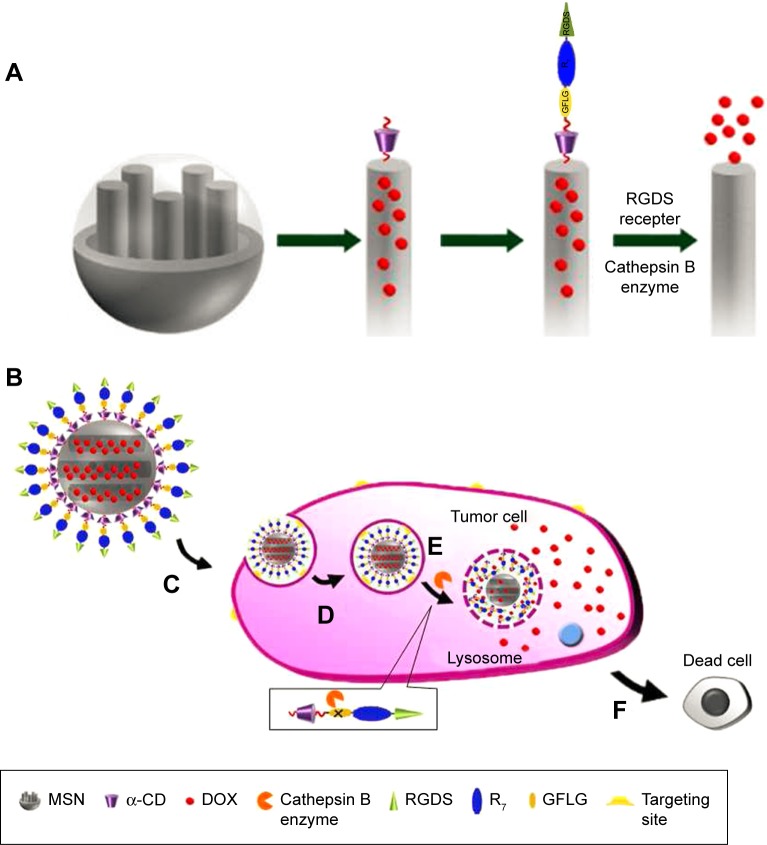
(A) Functionalization procedure of the MSN. (B) Drug-loaded MSN under physiological condition. (C) RGDS-targeted to the tumor cell. (D) Endocytosis into specific tumor cell. (E) Cathepsin B enzyme-triggered drug release in cytoplasm. (F) Apoptosis of the tumor cell. Reprinted with permission from Cheng YJ, Luo GF, Zhu JY, et al. Enzyme-induced and tumor-targeted drug delivery system based on multifunctional mesoporous silica nanoparticles. ACS Appl Mater Interfaces. 2015;7(17):9078–9087. Copyright 2015 American Chemical Society. Abbreviations: MSN, mesoporous silica nanoparticle; DOX, doxorubicin hydrochloride; α-CD, α-cyclodextrin; RGDS, Arg-Gly-Asp-Ser; GFLG, Gly-Phe-Leu-Gly.
Figure 9
Figure 9
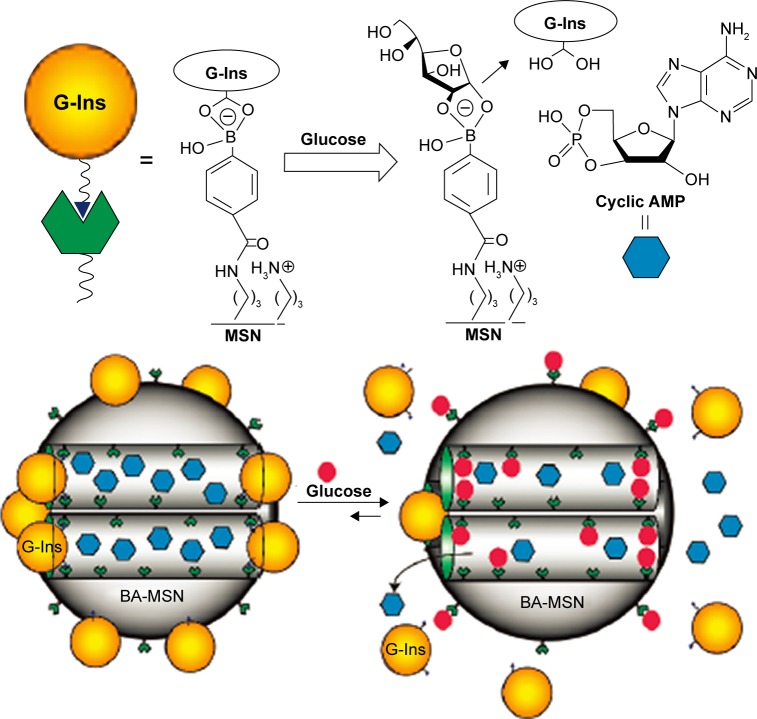
Schematic representation of the glucose-responsive MSN-based delivery system for controlled release of bioactive G-Ins and cyclic AMP. Note: Reprinted with permission from Cheng YJ, Zhao Y, Trewyn BG, Slowing II, Lin VS. Mesoporous silica nanoparticle-based double drug delivery system for glucose-responsive controlled release of insulin and cyclic AMP. J Am Chem Soc. 2009;131(24):8398–8400. Copyright 2009 American Chemical Society. Abbreviations: MSN, mesoporous silica nanoparticle; G-Ins, gluconic acid–modified insulin; BA-MSN, boronic acid-functionalized MSN.
Figure 10
Figure 10
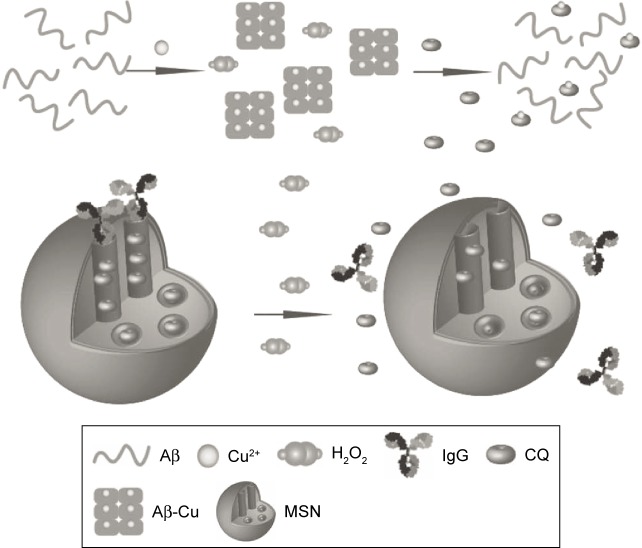
Schematic representation of H2O2-induced release of guest molecules clioquinol (CQ) from the pores of MSN capped with IgG. Notes: CQ can chelate Cu2+ to disassemble Aβ plaques and inhibit H2O2 production. Reprinted with permission from John Wiley and Sons. Geng J, Li M, Wu L, Chen C, Qu X. Mesoporous silica nanoparticle-based H2O2 responsive controlled-release system used for Alzheimer’s disease treatment. Adv Healthc Mater. Copyright © 2012 WILEY-VCH Verlag GmbH & Co. KGaA, Weinheim. Abbreviations: MSN, mesoporous silica nanoparticle; IgG, immunoglobulin G; Aβ, amyloid-beta.
Figure 11
Figure 11
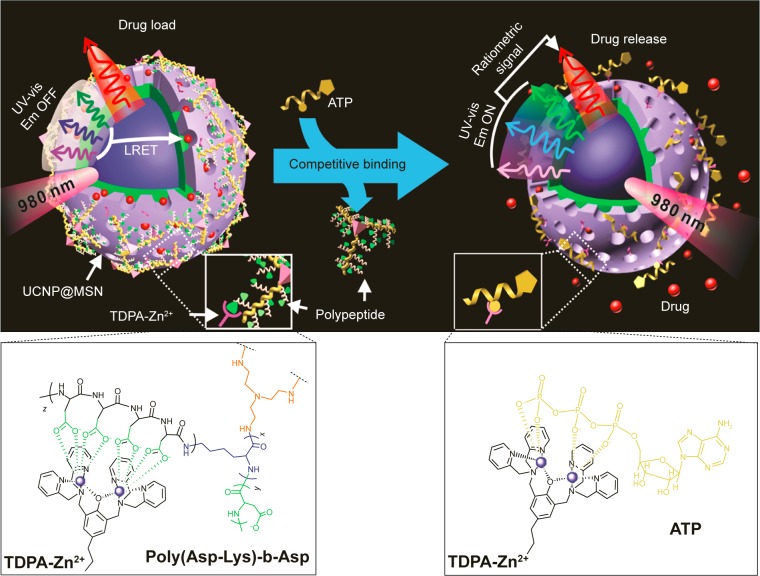
Schematic representation of the real-time monitoring of ATP-responsive drug release from polypeptide-wrapped TDPA-Zn2+-UCNP@MSN. Notes: Small molecule drugs were entrapped within the mesopores of the silica shell by branched polypeptide capping the pores through a multivalent interaction between the oligo-aspartate side chain in the polypeptide and the TDPA-Zn2+ complex on nanoparticles surface. The UV-vis emission from the multicolor UCNP under 980 nm of excitation was quenched because of the LRET between the loaded drugs and the UCNP. Addition of small molecular nucleoside-polyphosphates such as ATP led to a competitive binding of ATP to the TDPA-Zn2+ complex, which displaced the surface-bound compact polypeptide because of the high binding affinity of ATP to the metallic complex. The drug release was accompanied with an enhancement in the UV-vis emission of UCNP, which allows for real-time monitoring of the drug release via a ratiometric signal using the NIR emission of UCNP as an internal reference. Reprinted with permission from Lai J, Shah BP, Zhang Y, Yang L, Lee KB. Real-time monitoring of ATP-responsive drug release using mesoporous-silica-coated multicolor upconversion nanoparticles. ACS Nano. 2015;9(5):5234–5245. Copyright 2015 American Chemical Society. Abbreviations: MSN, mesoporous silica nanoparticle; UV-vis, ultraviolet-visible; UCNP, up-conversion nanoparticle; TDPA-Zn2+, zinc-dipicolylamine analogue; Em, emission; LRET, luminescence resonance energy transfer; NIR, near infrared.
Figure 12
Figure 12
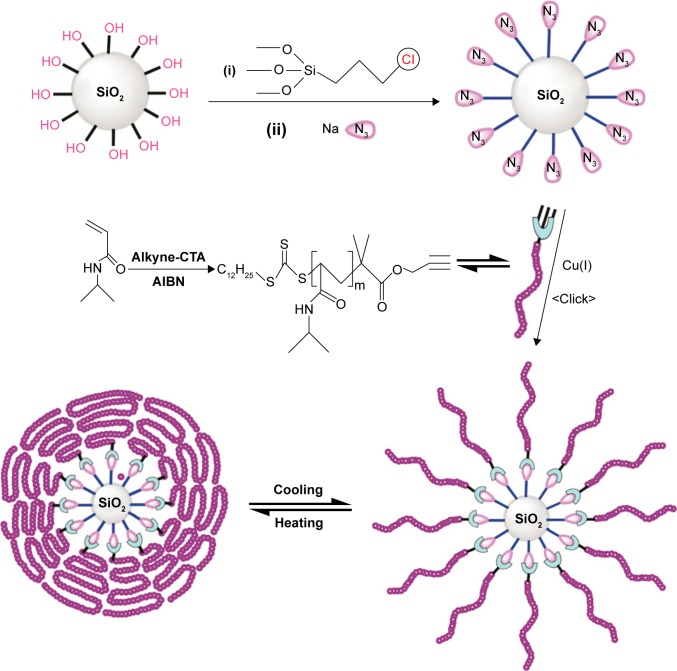
Schematic illustration of the synthesis of hybrid silica nanoparticles coated with thermoresponsive PNIPAM brushes via RAFT polymerization and click chemistry. Notes: Reprinted with permission from Chen J, Liu M, Chen C, Gong H, Gao C. Synthesis and characterization of silica nanoparticles with well-defined thermoresponsive PNIPAM via a combination of RAFT and click chemistry. ACS Appl Mater Interfaces. 2011;3(8):3215–3223. Copyright 2011 American Chemical Society. The expression of (i) and (ii) indicates the addition order of the reaction materials. Abbreviations: PNIPAM, poly N-isopropyl acrylamide; RAFT, reversible addition-fragmentation chain transfer; AIBN, azobisisobutyronitrile.
Figure 13
Figure 13
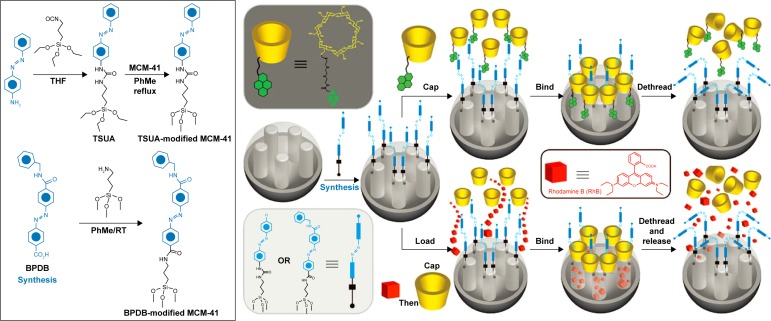
Synthesis of TSUA- and BPDB-modified MCM-41. Notes: Two approaches to the operation and function of the AB-modified MCM-41 NPs carrying nanovalves. Py-β-CD or β-CD threads onto the trans-AB stalks to seal the nanopores. Upon irradiation (351 nm), the isomerization of AB units from trans to cis leads to the dissociation of Py-β-CD or β-CD rings from the stalks, thus opening the gates to the nanopores and releasing the cargo. Reprinted with permission from Ferris DP, Zhao YL, Khashab NM, Khatib HA, Stoddart JF, Zink JI. Light-operated mechanized nanoparticles. J Am Chem Soc. 2009;131(5):1686–1688. Copyright 2009 American Chemical Society. Abbreviations: TSUA, 4-(3-triethoxysilylpropylureido) azobenzene; BPDP, (E)-4-((4-(benzylcarbamoyl)phenyl)diazenyl) benzoic acid; β-CD, β-cyclodextrin; AB, azobenzene, NP, nanoparticle; THF, tetrahydro furan; RT, room temperature; PhMe, toluene.
Figure 14
Figure 14
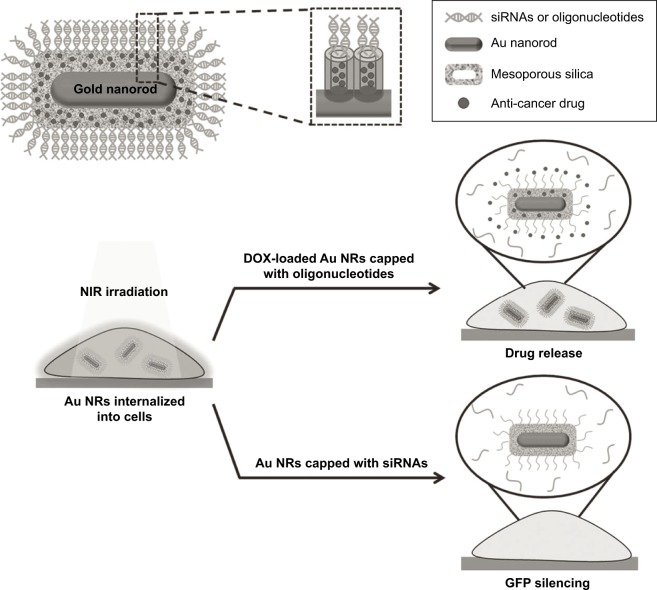
Schematic illustration of Au nanorods (Au NRs) with an oligonucleotide-capped silica shell and the corresponding near infrared (NIR) light-controlled intracellular drug and siRNA release. Note: Reprinted with permission from John Wiley and Sons. Chang YT, Liao PY, Sheu HS, Tseng YJ, Cheng FY, Yeh CS. Near-infrared light-responsive intracellular drug and siRNA release using Au nanoensembles with oligonucleotide-capped silica shell. Adv Mater. Copyright © 2012 WILEY-VCH Verlag GmbH & Co. KGaA, Weinheim.
Figure 15
Figure 15
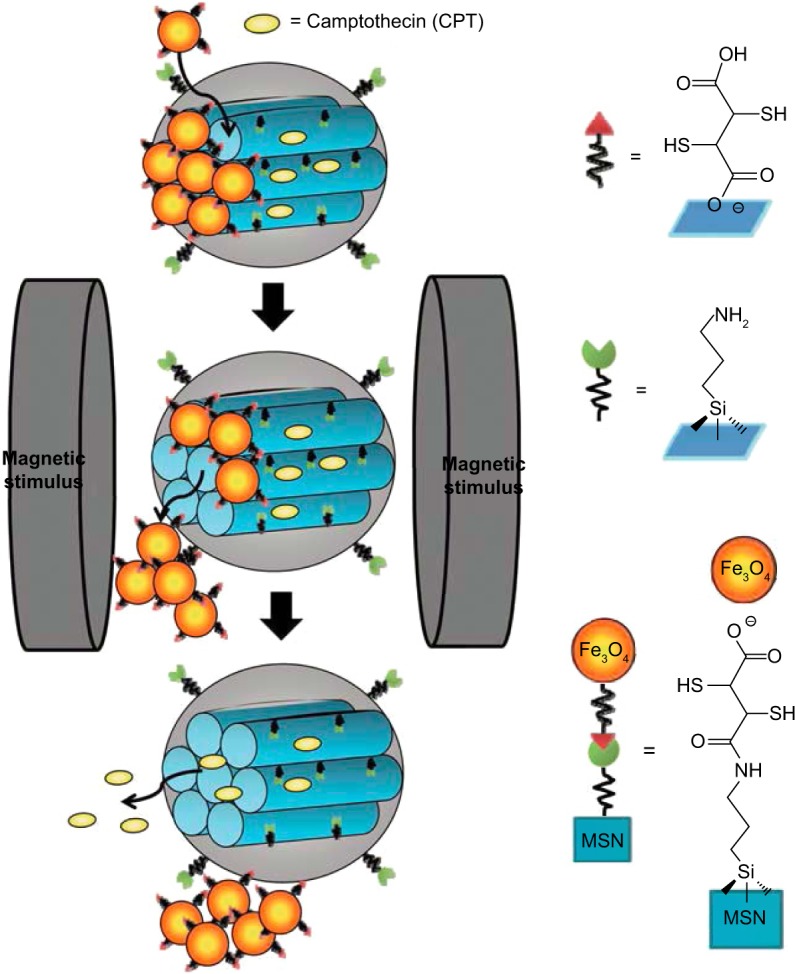
Schematic illustration of the synthesis and structure of the Fe3O4 NPs-capped mesoporous silica drug nanocarriers. Note: The drug release from MSN@Fe3O4 nanocarriers can be remotely controlled under a magnetic stimulus. Reproduced with permission from Chen PJ, Hu SH, Hsiao CS, Chin YY, Liu DM, Chen SY. Multifunctional magnetically removable nanogated lids of Fe3O4-capped mesoporous silica nanoparticles for intracellular controlled release and MR imaging. J Mater Chem. 2011;21(8):2535–2543. With permission of The Royal Society of Chemistry. DOI http://dx.doi.org/10.1039/C0JM02590A. Abbreviations: NP, nanoparticle; MSN, mesoporous silica nanoparticle.
Figure 16
Figure 16
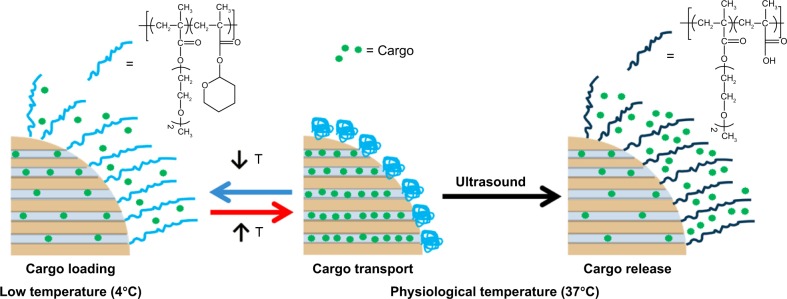
Schematic illustration of the behavior of dual-responsive release system in aqueous medium. Note: Reprinted with permission from Paris JL, Cabañas MV, Manzano M, Vallet-Regí M. Polymer-grafted mesoporous silica nanoparticles as ultrasound-responsive drug carriers. ACS Nano. 2015;9(11):11023–11033. Copyright 2015 American Chemical Society. Abbreviation: T, temperature.

References

    1. Chabner BA, Roberts TG., Jr Timeline: chemotherapy and the war on cancer. Nat Rev Cancer. 2005;5(1):65–72. - PubMed
    1. Cho K, Wang X, Nie S, Chen ZG, Shin DM. Therapeutic nanoparticles for drug delivery in cancer. Clin Cancer Res. 2008;14(5):1310–1316. - PubMed
    1. Peer D, Karp JM, Hong S, Farokhzad OC, Margalit R, Langer R. Nanocarriers as an emerging platform for cancer therapy. Nat Nanotechnol. 2007;2(12):751–760. - PubMed
    1. Ninomiya K, Kawabata S, Tashita H, Shimizu N. Ultrasound-mediated drug delivery using liposomes modified with a thermosensitive polymer. Ultrason Sonochem. 2014;21(1):310–316. - PubMed
    1. Mo R, Jiang T, Gu Z. Enhanced anticancer efficacy by ATP-mediated liposomal drug delivery. Angew Chem Int Ed Engl. 2014;53(23):5815–5820. - PubMed