


Effects of training with the ReWalk exoskeleton on quality of life in incomplete spinal cord injury: a single case study
- PMID: 28053728
- PMCID: PMC5125066
- DOI: 10.1038/scsandc.2015.25
Effects of training with the ReWalk exoskeleton on quality of life in incomplete spinal cord injury: a single case study
Erratum in
-
Erratum for Spinal Cord Series and Cases content published prior to July 2016.Spinal Cord Ser Cases. 2016 Jul 21;2:16019. doi: 10.1038/scsandc.2016.19. eCollection 2016. Spinal Cord Ser Cases. 2016. PMID: 31265710 Free PMC article.
Abstract
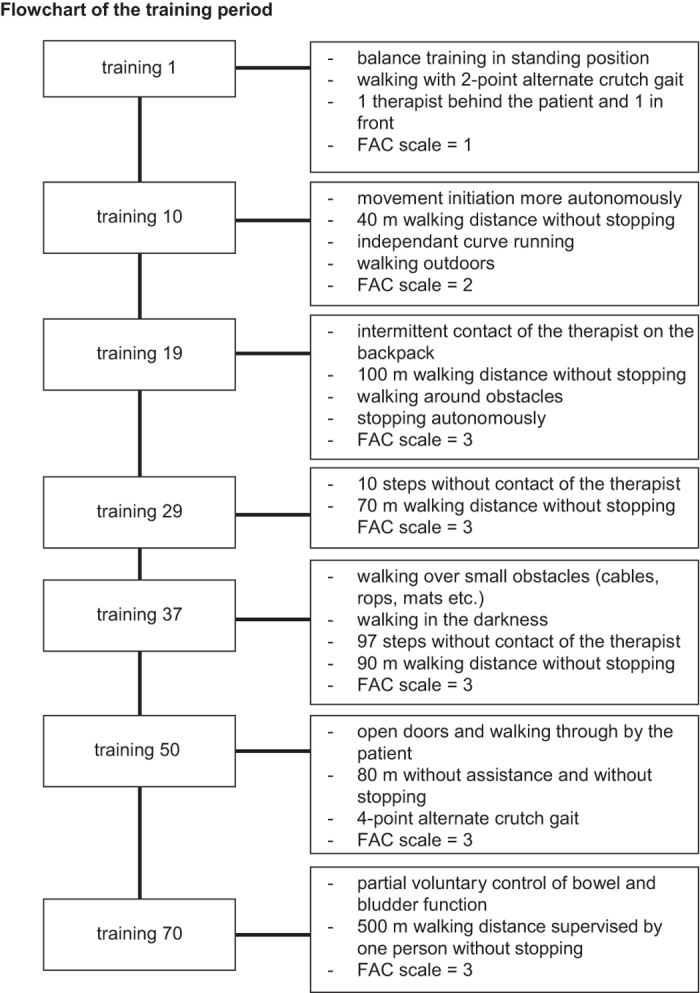
It is a single case study. An investigation to what extent the quality of life (QoL) of patients with spinal cord injury can be influenced by the training with an exoskeleton. The study was carried out at a Hospital for neurological rehabilitation, Germany. One patient (male, 22 years), initially unable to walk independently after traumatic spinal cord injury with neurological level Th11 (ASIA Impairment Scale C) was recruited for this study 1 year after injury. The progress of the first 6 months of ReWalk training was documented and as primary outcome measure the QoL was measured with SF-36 questionnaire. Secondary outcome measures were ASIA scale, Berg-Balance-Scale and Dynamic Gait Index. At the end of the studyperiod the patient was able to walk independently supervised by one person. QoL, mobility, risk of falling, motor skills and control of bladder and bowel functions were improved. A positive effect of robot-assisted gait training on various areas of the QoL was shown. Subsequent studies should aim to verify this effect through a higher number of patients and to different injury levels.
Figures
References
-
- Esquenazi A , Talaty M , Packel A , Saulino M . The ReWalk powered exoskeleton to restore ambulatory function to individuals with thoracic-level motor-complete spinal cord injury. Am J Phys Med Rehabil 2012; 91: 911–921. - PubMed
-
- Bullinger M , Kirchberger I . SF-36 Fragebogen zum Gesundheitszustand-Handan-weisung. Hogrefe-Verlag für Psychologie: Göttingen, 1998.
-
- Boakye M , Leigh BC , Skelly AC . Quality of life in persons with spinal cord injury: comparisons with other populations. J Neurosurg Spine 2012; 17: 29–37. - PubMed
-
- Morfeld M , Bullinger M , Nantke J , Brahler E . The version 2.0 of the SF-36 Health Survey: results of a population-representative study. Soz Praventivmed 2005; 50: 292–300. - PubMed
-
- Kiresuk T , Sherman R . Goal attainment scaling: a general method of evaluating comprehensive mental health programmes. Community Mental Health J 1968; 4: 443–453. - PubMed
LinkOut - more resources
Full Text Sources
Other Literature Sources
