


The Role of Stress Regulation on Neural Plasticity in Pain Chronification
- PMID: 28053788
- PMCID: PMC5178373
- DOI: 10.1155/2016/6402942
The Role of Stress Regulation on Neural Plasticity in Pain Chronification
Abstract
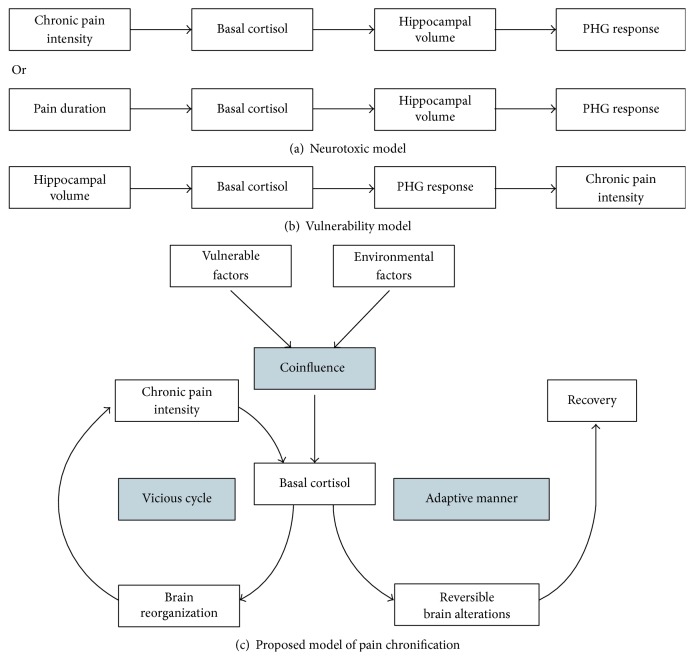
Pain, especially chronic pain, is one of the most common clinical symptoms and has been considered as a worldwide healthcare problem. The transition from acute to chronic pain is accompanied by a chain of alterations in physiology, pathology, and psychology. Increasing clinical studies and complementary animal models have elucidated effects of stress regulation on the pain chronification via investigating activations of the hypothalamic-pituitary-adrenal (HPA) axis and changes in some crucial brain regions, including the amygdala, prefrontal cortex, and hippocampus. Although individuals suffer from acute pain benefit from such physiological alterations, chronic pain is commonly associated with maladaptive responses, like the HPA dysfunction and abnormal brain plasticity. However, the causal relationship among pain chronification, stress regulation, and brain alterations is rarely discussed. To call for more attention on this issue, we review recent findings obtained from clinical populations and animal models, propose an integrated stress model of pain chronification based on the existing models in perspectives of environmental influences and genetic predispositions, and discuss the significance of investigating the role of stress regulation on brain alteration in pain chronification for various clinical applications.
Conflict of interest statement
The authors declare that there are no competing interests regarding the publication of this paper.
Figures
References
-
- Melzack R. Pain and stress: a new perspective. In: Gatchel R. J., Turk D. C., editors. Psychological Factors in Pain. New York, NY, USA: Guildford Press; 1999. pp. 89–106.
Publication types
MeSH terms
LinkOut - more resources
Full Text Sources
Other Literature Sources
Medical
Miscellaneous
