Genomic analysis of exceptional responders to radiotherapy reveals somatic mutations in ATM
- PMID: 28055970
- PMCID: PMC5354661
- DOI: 10.18632/oncotarget.14400
Genomic analysis of exceptional responders to radiotherapy reveals somatic mutations in ATM
Abstract
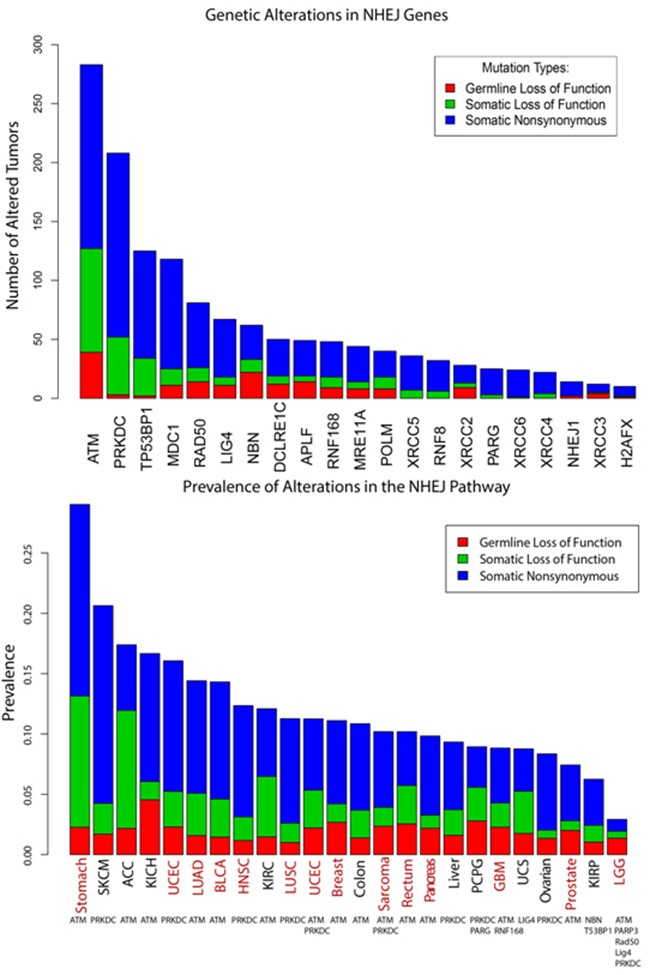
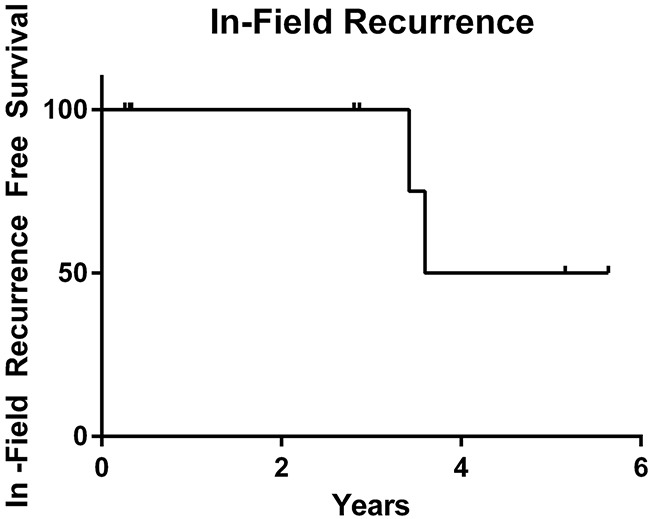
Radiation therapy is a mainstay of cancer treatment, yet the molecular determinants of clinical response are poorly understood. We identified exceptional responders to radiotherapy based on clinical response, and investigated the associated tumor sequencing data in order to identify additional patients with similar mutations. Among head and neck squamous cell cancer patients receiving palliative radiotherapy at our institution, we identified one patient with documented complete metabolic response. Targeted sequencing analysis of the tumor identified a somatic frame-shift mutation in ATM, a gene known to be associated with radio-sensitivity in the germline. To validate the association of somatic ATM mutation with radiotherapy response, we identified eight patients with ATM truncating mutations who received radiotherapy, all of whom demonstrated excellent responses with a median local control period of 4.62 years. Analysis of 22 DNA repair genes in The Cancer Genome Atlas (TCGA) data revealed mutations in 15.9% of 9064 tumors across 24 cancer types, with ATM mutations being the most prevalent. This is the first study to suggest that exceptional responses to radiotherapy may be determined by mutations in DNA repair genes. Sequencing of DNA repair genes merits attention in larger cohorts and may have significant implications for the personalization of radiotherapy.
Keywords: radiation therapy; somatic ATM mutations.
Conflict of interest statement
The authors have no conflicts of interest to report.
Figures
References
-
- Chen AM, Vaughan A, Narayan S, Vijayakumar S. Palliative radiation therapy for head and neck cancer: toward an optimal fractionation scheme. Head & neck. 2008;30:1586–1591. - PubMed
-
- Stevens CM, Huang SH, Fung S, Bayley AJ, Cho JB, Cummings BJ, Dawson LA, Hope AJ, Kim JJ, O’Sullivan B, Waldron JN, Ringash J. Retrospective study of palliative radiotherapy in newly diagnosed head and neck carcinoma. International journal of radiation oncology, biology, physics. 2011;81:958–963. - PubMed
-
- Cheng DT, Mitchell TN, Zehir A, Shah RH, Benayed R, Syed A, Chandramohan R, Liu ZY, Won HH, Scott SN, Brannon AR, O’Reilly C, Sadowska J, et al. Memorial Sloan Kettering-Integrated Mutation Profiling of Actionable Cancer Targets (MSK-IMPACT): A Hybridization Capture-Based Next-Generation Sequencing Clinical Assay for Solid Tumor Molecular Oncology. J Mol Diagn. 2015;17:251–264. - PMC - PubMed
-
- Taylor AM, Harnden DG, Arlett CF, Harcourt SA, Lehmann AR, Stevens S, Bridges BA. Ataxia telangiectasia: a human mutation with abnormal radiation sensitivity. Nature. 1975;258:427–429. - PubMed
Publication types
MeSH terms
Substances
Grants and funding
LinkOut - more resources
Full Text Sources
Other Literature Sources
Medical
Research Materials
Miscellaneous