


Healthcare Costs for Treating Relapsing Multiple Sclerosis and the Risk of Progression: A Retrospective Italian Cohort Study from 2001 to 2015
- PMID: 28056103
- PMCID: PMC5215923
- DOI: 10.1371/journal.pone.0169489
Healthcare Costs for Treating Relapsing Multiple Sclerosis and the Risk of Progression: A Retrospective Italian Cohort Study from 2001 to 2015
Abstract
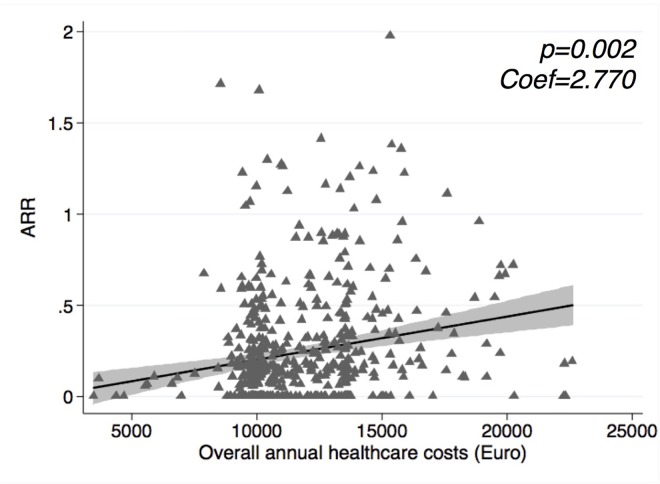
Background: Disease modifying treatments (DMTs) are the main responsible for direct medical costs in multiple sclerosis (MS). The current investigation aims at evaluating possible associations between healthcare costs for treating relapsing remitting MS (RRMS) and disease evolution.
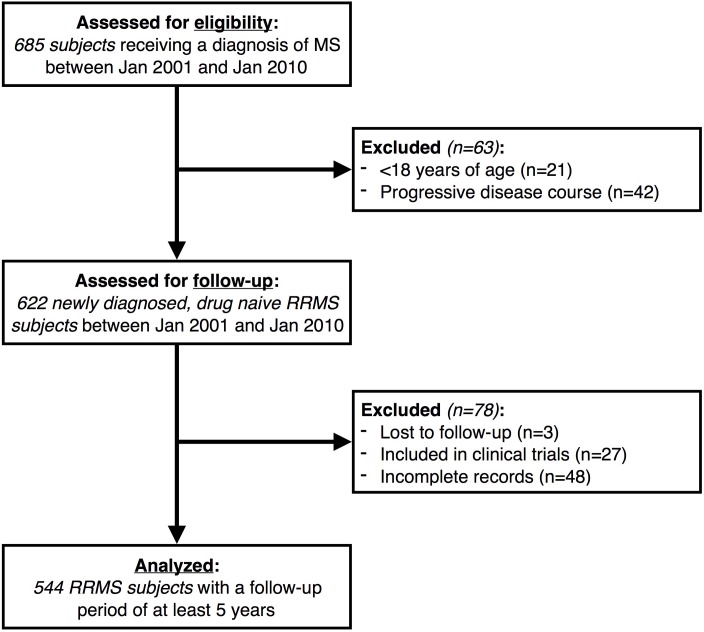
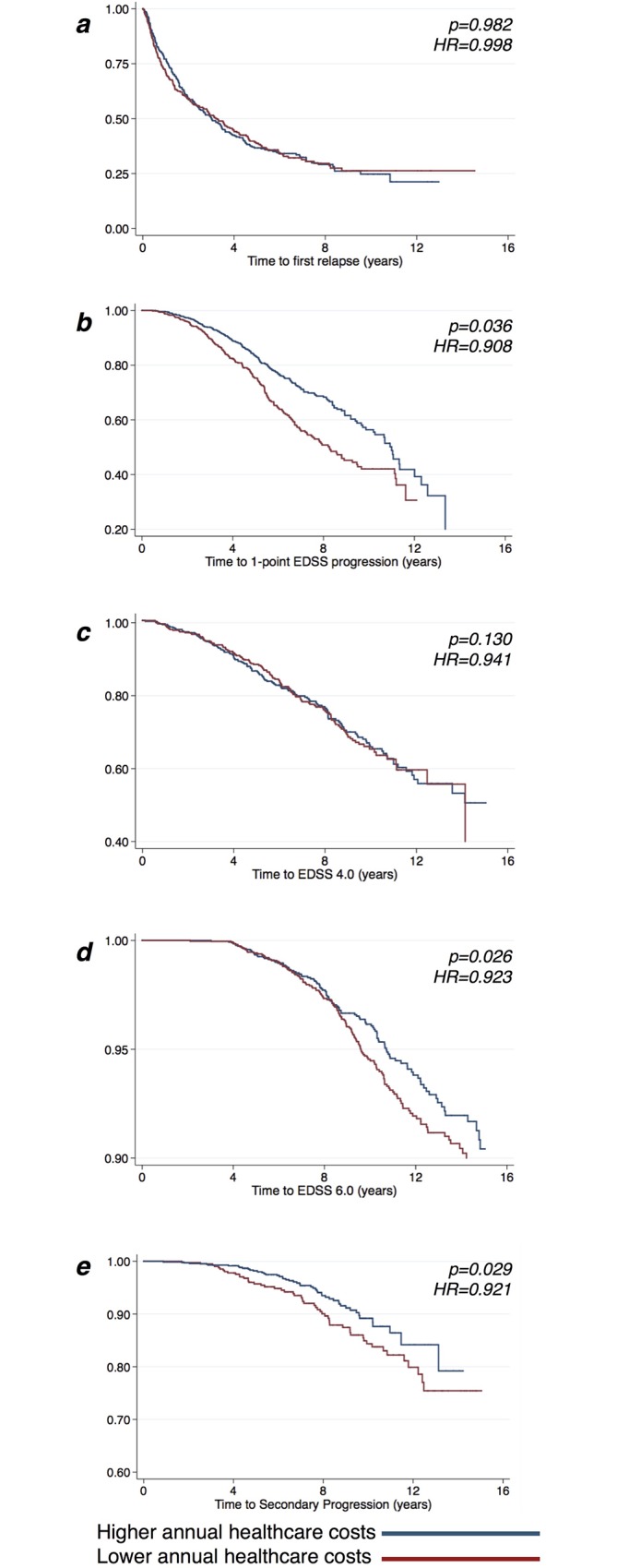
Methods: The present cohort study retrospectively included 544 newly diagnosed RRMS patients, prospectively followed up for 10.1±3.3 years. Costs for DMT administration and management were calculated for each year of observation. Following clinical endpoints were recorded: time to first relapse, 1-point EDSS progression, reaching of EDSS 4.0, reaching of EDSS 6.0, and conversion to secondary progressive MS (SP). Covariates for statistical analyses were age, gender, disease duration and EDSS at diagnosis.
Results: At time varying Cox regression models, 10% increase in annual healthcare costs was associated with 1.1% reduction in 1-point EDSS progression (HR = 0.897; p = 0.018), with 0.7% reduction in reaching EDSS 6.0 (HR = 0.925; p = 0.030), and with 1.0% reduction in SP conversion (HR = 0.902; p = 0.006).
Conclusion: Higher healthcare costs for treating MS have been associated with a milder disease evolution after 10 years, with possible reduction of long-term non-medical direct and indirect costs.
Conflict of interest statement
The authors have declared that no competing interests exist.
Figures
References
MeSH terms
LinkOut - more resources
Full Text Sources
Other Literature Sources
Medical
