


Metasynthesis of the Views about Treatment of Anorexia Nervosa in Adolescents: Perspectives of Adolescents, Parents, and Professionals
- PMID: 28056106
- PMCID: PMC5215824
- DOI: 10.1371/journal.pone.0169493
Metasynthesis of the Views about Treatment of Anorexia Nervosa in Adolescents: Perspectives of Adolescents, Parents, and Professionals
Abstract
Background: Anorexia nervosa in adolescents can be a difficult-to-treat disease. Because qualitative research is a well-established method for deepening our understanding of subjective experiences, such as eating disorders and their treatment, we sought to perform a systematic review of qualitative studies to synthesize the views of adolescents with this disease, their parents, and their healthcare providers about its treatment.
Methods: We performed a thematic synthesis to develop the central themes that summarize all of the topics raised in the articles included in our review. The quality of the articles was assessed by the Critical Appraisal Skills Program.
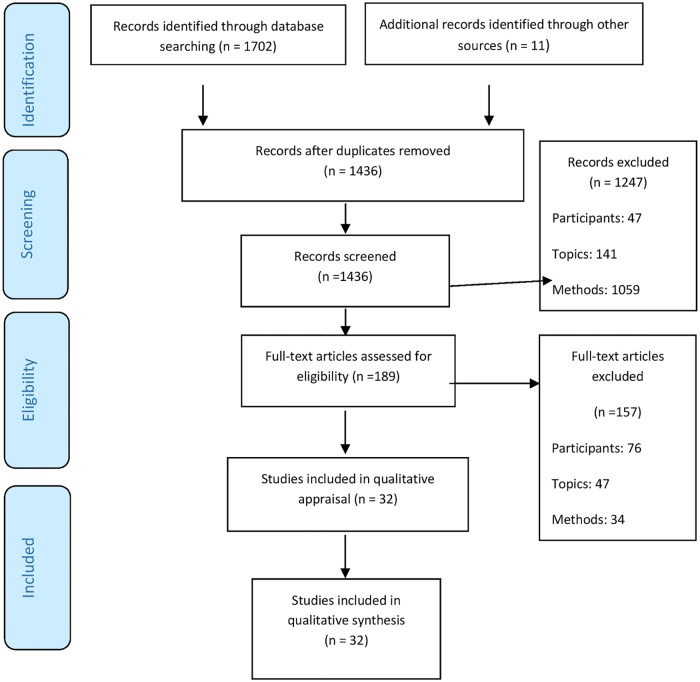
Results: We included 32 articles from seven different countries. Two central themes were inductively developed from the analysis: (1) the treatment targets (i.e., symptoms and patients in context), and (2) a therapeutic tool-a relationship, specifically the core concept of the therapeutic relationship.
Conclusion: Our results underline the difficulty in establishing a therapeutic alliance, the barriers to it, especially the risk that professionals, adolescents, and parents will not converse about treatment; although such a dialogue appears to be an essential component in the construction of a therapeutic alliance.
Conflict of interest statement
The authors have declared that no competing interests exist.
Figures
References
-
- Steinhausen H. Outcome of Eating Disorders. Child and Adolescent Psychiatric Clinics of North America 2009;1(18) 225–42. - PubMed
-
- Strober M, Freeman R, Morrell W. The long-term course of severe anorexia nervosa in adolescents: survival analysis of recovery, relapse, and outcome predictors over 10–15 years in a prospective study. Int J Eat Disord. 1997;22(4):339–360. - PubMed
MeSH terms
LinkOut - more resources
Full Text Sources
Other Literature Sources
