


Working conditions and public health risks in slaughterhouses in western Kenya
- PMID: 28056885
- PMCID: PMC5217581
- DOI: 10.1186/s12889-016-3923-y
Working conditions and public health risks in slaughterhouses in western Kenya
Abstract
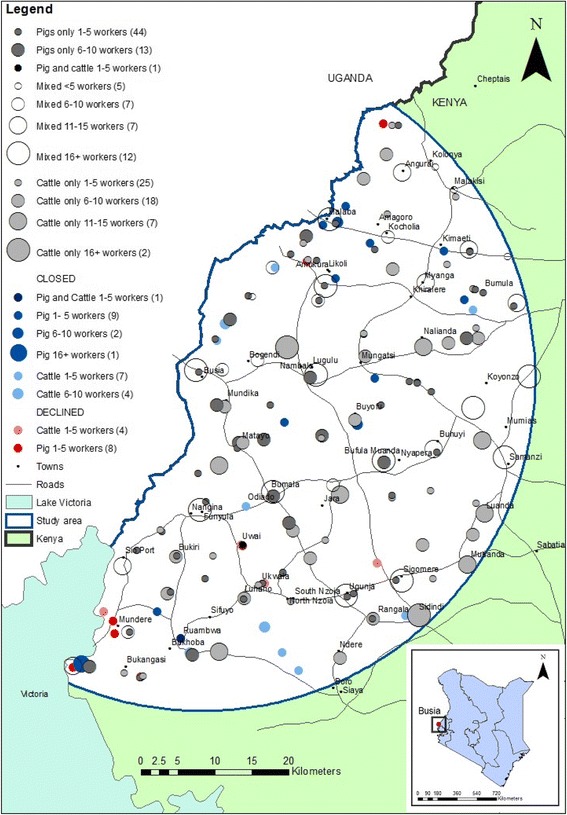
Background: Inadequate facilities and hygiene at slaughterhouses can result in contamination of meat and occupational hazards to workers. The objectives of this study were to assess current conditions in slaughterhouses in western Kenya and the knowledge, and practices of the slaughterhouse workers toward hygiene and sanitation.
Methods: Between February and October 2012 all consenting slaughterhouses in the study area were recruited. A standardised questionnaire relating to facilities and practices in the slaughterhouse was administered to the foreperson at each site. A second questionnaire was used to capture individual slaughterhouse workers' knowledge, practices and recent health events.
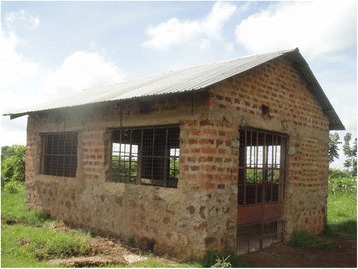
Results: A total of 738 slaughterhouse workers from 142 slaughterhouses completed questionnaires. Many slaughterhouses had poor infrastructure, 65% (95% CI 63-67%) had a roof, cement floor and walls, 60% (95% CI 57-62%) had a toilet and 20% (95% CI 18-22%) had hand-washing facilities. The meat inspector visited 90% (95% CI 92-95%) of slaughterhouses but antemortem inspection was practiced at only 7% (95% CI 6-8%). Nine percent (95% CI 7-10%) of slaughterhouses slaughtered sick animals. Only half of workers wore personal protective clothing - 53% (95% CI 51-55%) wore protective coats and 49% (95% CI 46-51%) wore rubber boots. Knowledge of zoonotic disease was low with only 31% (95% CI 29-33%) of workers aware that disease could be transmitted from animals.
Conclusions: The current working conditions in slaughterhouses in western Kenya are not in line with the recommendations of the Meat Control Act of Kenya. Current facilities and practices may increase occupational exposure to disease or injury and contaminated meat may enter the consumer market. The findings of this study could enable the development of appropriate interventions to minimise public health risks. Initially, improvements need to be made to facilities and practices to improve worker safety and reduce the risk of food contamination. Simultaneously, training programmes should target workers and inspectors to improve awareness of the risks. In addition, education of health care workers should highlight the increased risks of injury and disease in slaughterhouse workers. Finally, enhanced surveillance, targeting slaughterhouse workers could be used to detect disease outbreaks. This "One Health" approach to disease surveillance is likely to benefit workers, producers and consumers.
Keywords: Abattoir; Food hygiene; Kenya; Occupational safety; Slaughterhouse.
Figures

References
-
- Stevenson A. Oxford English Dictionary. Oxford: Oxford University Press; 2013.
-
- Long D. The role of state sponsored and cooperatively organized support services in meat production, processing, and marketing in developing countries. In: Mack S, editor. Strategies for sustainable animal agriculture in developing countries Proceedings of the FAO Expert Consultation. Rome: Food and Agiculture Organisation of United Nations; 1990.
-
- Broadway MJ. The British Slaughtering Industry: A Dying Business? Geography. 2002;87(3):268–280.
-
- Broadway MJ, Ward T. Recent changes in the structure and location of the US meatpacking industry. Geography. 1990;75(1):76–79.
-
- Fitzgerald AJ. A Social History of the Slaughterhouse: From Inception to Contemporary Implications. Research in Human Ecology. 2010;17(1):58–69.
MeSH terms
Grants and funding
LinkOut - more resources
Full Text Sources
Other Literature Sources
Medical
