


Malaria epidemiology in central Myanmar: identification of a multi-species asymptomatic reservoir of infection
- PMID: 28056979
- PMCID: PMC5217255
- DOI: 10.1186/s12936-016-1651-5
Malaria epidemiology in central Myanmar: identification of a multi-species asymptomatic reservoir of infection
Abstract
Background: The spread of artemisinin-resistant Plasmodium falciparum is a global health concern. Myanmar stands at the frontier of artemisinin-resistant P. falciparum. Myanmar also has the highest reported malaria burden in Southeast Asia; it is integral in the World Health Organization's plan to eliminate malaria in Southeast Asia, yet few epidemiological data exist for the general population in Myanmar.
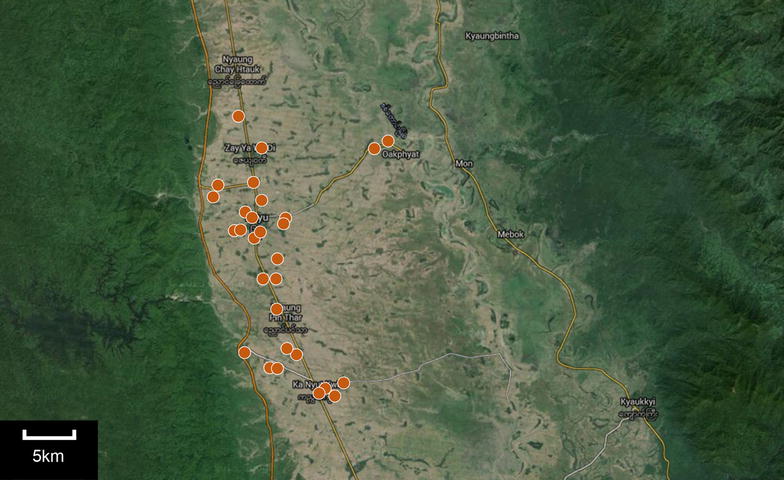
Methods: This cross-sectional, probability household survey was conducted in Phyu township, Bago Region (central Myanmar), during the wet season of 2013. Interviewers collected clinical and behavioural data, recorded tympanic temperature and obtained dried blood spots for malaria PCR and serology. Plasmodium falciparum positive samples were tested for genetic mutations in the K13 region that may confer artemisinin resistance. Estimated type-specific malaria PCR prevalence and seroprevalence were calculated, with regression analysis to identify risk factors for seropositivity to P. falciparum. Data were weighted to account for unequal selection probabilities.
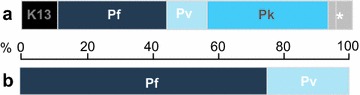
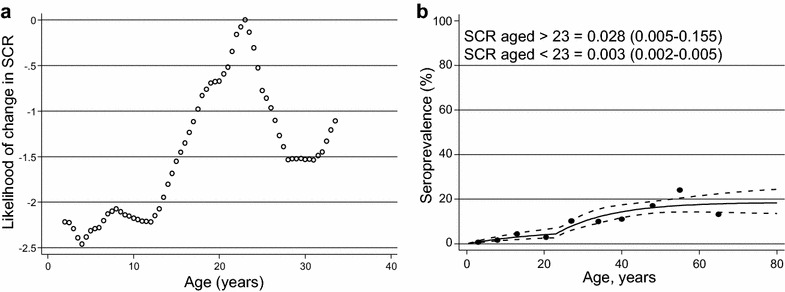
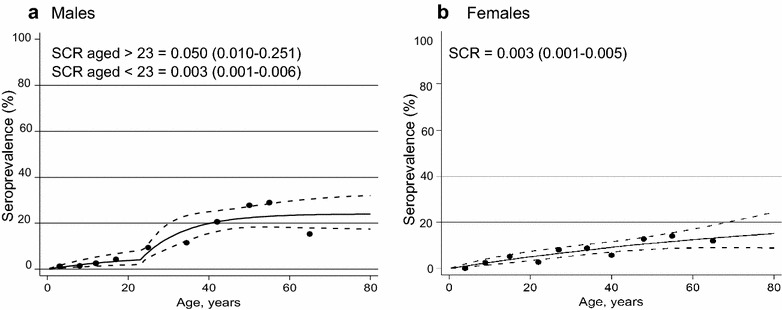
Results: 1638 participants were sampled (500 households). Weighted PCR prevalence was low (n = 41, 2.5%) and most cases were afebrile (93%). Plasmodium falciparum was the most common species (n = 19. 1.1%) and five (26%) P. falciparum samples harboured K13 mutations. Plasmodium knowlesi was detected in 1.0% (n = 16) and Plasmodium vivax was detected in 0.4% (n = 7). Seroprevalence was 9.4% for P. falciparum and 3.1% for P. vivax. Seroconversion to P. falciparum was 0.003/year in the whole population, but 16-fold higher in men over 23 years old (LR test p = 0.016).
Discussion: This is the first population-based seroprevalence study from central Myanmar. Low overall prevalence was discovered. However, these data suggest endemic transmission continues, probably associated with behavioural risk factors amongst working-age men. Genetic mutations associated with P. falciparum artemisinin resistance, the presence of P. knowlesi and discrete demographic risk groups present opportunities and challenges for malaria control. Responses targeted to working-age men, capable of detecting sub-clinical infections, and considering all species will facilitate malaria elimination in this setting.
Keywords: Artemisinin; Elimination; Malaria; Myanmar; Prevalence; Resistance; Risk factors; Serology; Transmission.
Figures
References
-
- WHO. Strategy for malaria elimination in the greater Mekong Sub region (2015–2030). Geneva: World Health Organization; 2015.
-
- WHO. Guidelines for the treatment of malaria. Geneva: World Health Organization; 2015. - PubMed
MeSH terms
LinkOut - more resources
Full Text Sources
Other Literature Sources
Medical
Research Materials
