


Incidence of kidney stones in kidney transplant recipients: A systematic review and meta-analysis
- PMID: 28058231
- PMCID: PMC5175239
- DOI: 10.5500/wjt.v6.i4.790
Incidence of kidney stones in kidney transplant recipients: A systematic review and meta-analysis
Abstract
Aim: To evaluate the incidence and characteristics of kidney stones in kidney transplant recipients.
Methods: A literature search was performed using MEDLINE, EMBASE, and Cochrane Database of Systematic Reviews from the inception of the databases through March 2016. Studies assessing the incidence of kidney stones in kidney transplant recipients were included. We applied a random-effects model to estimate the incidence of kidney stones.
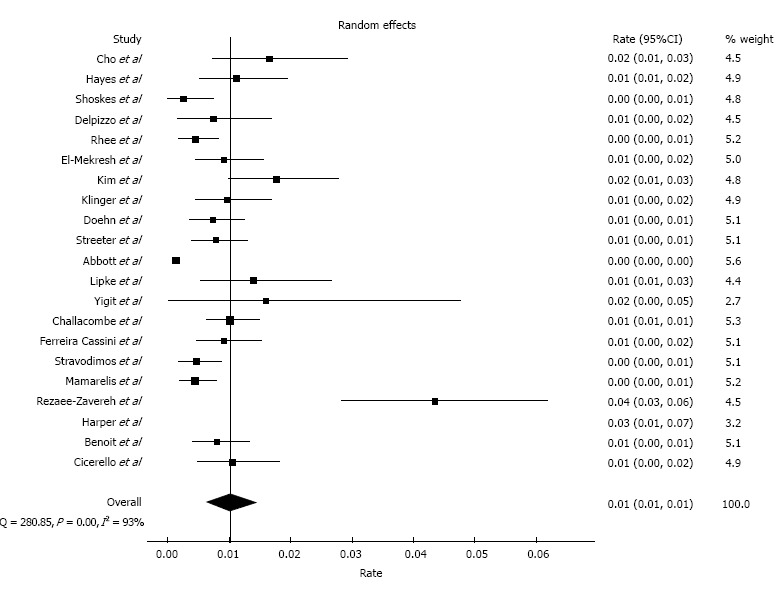
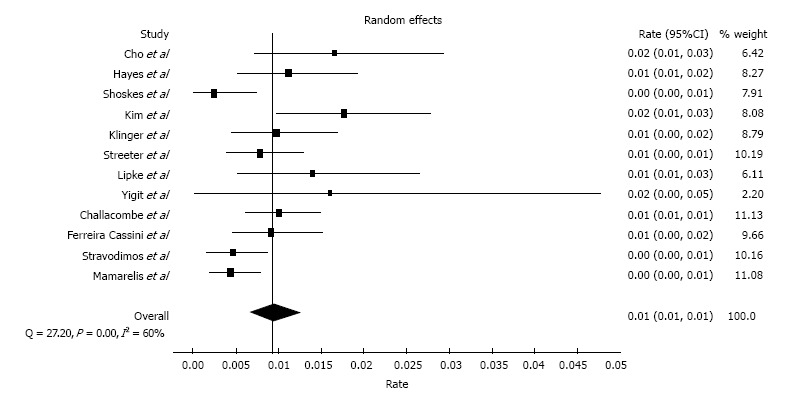
Results: Twenty one studies with 64416 kidney transplant patients were included in the analyses to assess the incidence of kidney stones after kidney transplantation. The estimated incidence of kidney stones was 1.0% (95%CI: 0.6%-1.4%). The mean duration to diagnosis of kidney stones after kidney transplantation was 28 ± 22 mo. The mean age of patients with kidney stones was 42 ± 7 years. Within reported studies, approximately 50% of kidney transplant recipients with kidney stones were males. 67% of kidney stones were calcium-based stones (30% mixed CaOx/CaP, 27%CaOx and 10%CaP), followed by struvite stones (20%) and uric acid stones (13%).
Conclusion: The estimated incidence of kidney stones in patients after kidney transplantation is 1.0%. Although calcium based stones are the most common kidney stones after transplantation, struvite stones (also known as "infection stones") are not uncommon in kidney transplant recipients. These findings may impact the prevention and clinical management of kidney stones after kidney transplantation.
Keywords: Incidence; Kidney stones; Kidney transplantation; Nephrolithiasis; Transplantation.
Conflict of interest statement
Conflict-of-interest statement: All authors report no conflicts-of-interest.
Figures
References
-
- Lieske JC, Peña de la Vega LS, Slezak JM, Bergstralh EJ, Leibson CL, Ho KL, Gettman MT. Renal stone epidemiology in Rochester, Minnesota: an update. Kidney Int. 2006;69:760–764. - PubMed
-
- Sakhaee K. Nephrolithiasis as a systemic disorder. Curr Opin Nephrol Hypertens. 2008;17:304–309. - PubMed
-
- Goldfarb DS. Increasing prevalence of kidney stones in the United States. Kidney Int. 2003;63:1951–1952. - PubMed
LinkOut - more resources
Full Text Sources
Other Literature Sources
Miscellaneous
