


Prognosis of patients in a medical intensive care unit
- PMID: 28058366
- PMCID: PMC5175105
- DOI: 10.14744/nci.2015.79188
Prognosis of patients in a medical intensive care unit
Abstract
Objective: The aim of this study is to evaluate the demographic characteristics of critically ill patients and to determine intensive care unit (ICU) mortality and its predictors.
Methods: This study was undertaken in the Istanbul Medeniyet University Göztepe Training and Research Hospital Medical ICU. Between May 2012 and January 2013, 111 patients (53 female, 58 male; mean age, 73.79±14.73, mean length of ICU length stay, 9.1±10.7; prevalence of geriatric patients, 77.5%) were admitted to the ICU. The common indications for ICU admission, prevalence of mechanical ventilation support, hematological and biochemical parameters and their effects on mortality were assessed.
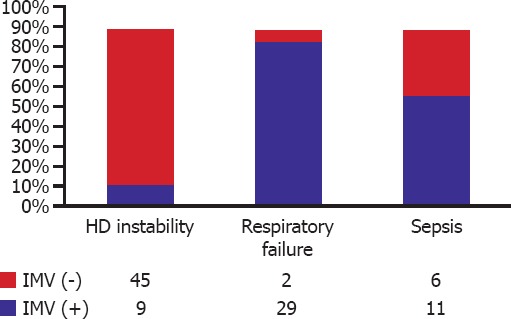
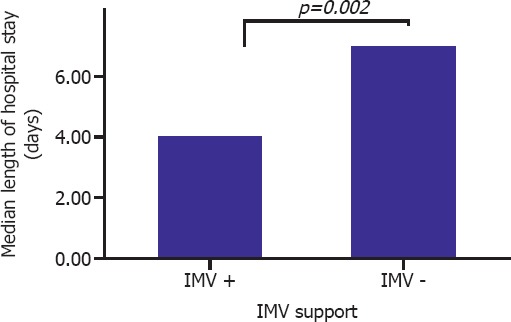
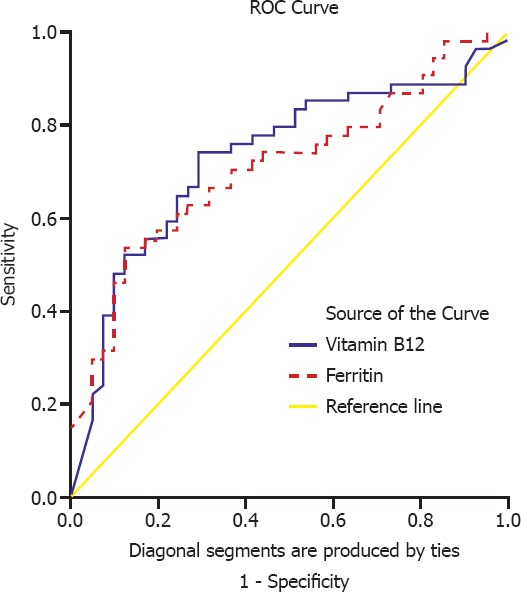
Results: The common indications for ICU admission were hemodynamic instability (48.6%), respiratory failure (27.9%) and sepsis (15.3%). Hypertension (46.8%) was the most common comorbidity. Prevalance rates of heart failure and diabetes mellitus were 32.4% and 25.2% respectively. Mortality rate was 52.3% in all patients. Approximately 80% of all deaths was observed within the first fifteen-day. In additon, mortality rate (85.7%) was prominent within patients in need of the mechanical ventilation support. Mechanical ventilation requirement, increased ferritin and vitamin B12 levels were independent risk factors for mortality in critically ill patients (p<0.01, for all).
Conclusion: Mortality rate was higher in medical ICU. Herein, increased prevalence of geriatric population, concomitant comorbidities and mechanical ventilation requirements may play role.
Keywords: Comorbidity; mechanical ventilation; medical intensive care unit; morbidity.
Conflict of interest statement
No conflict of interest was declared by the authors.
Figures
References
-
- Brilli RJ, Spevetz A, Branson RD, Campbell GM, Cohen H, Dasta JF, et al. Critical care delivery in the intensive care unit:defining clinical roles and the best practice model. Crit Care Med. 2001;29:2007–19. - PubMed
-
- Tran DD, Groeneveld AB, van der Meulen J, Nauta JJ, Strack van Schijndel RJ, Thijs LG. Age, chronic disease, sepsis, organ system failure, and mortality in a medical intensive care unit. Crit Care Med. 1990;18:474–9. - PubMed
-
- Uysal N, Gündoğdu N, Börekçi Ş, Dikensoy Ö, Bayram N, Uyar M, et al. Prognosis of Patients in a Medical Intensive Care Unit of a Tertiary Care Centre. Yoğun Bakım Derg. 2010;1:1–5.
-
- Pasceri V, Willerson JT, Yeh ET. Direct proinflammatory effect of C-reactive protein on human endothelial cells. Circulation. 2000;102:2165–8. - PubMed
LinkOut - more resources
Full Text Sources
Other Literature Sources